Get Full Government Meeting Transcripts, Videos, & Alerts Forever!
Get email alerts on the Wildlife Conservation topic
No spam. Unsubscribe anytime.
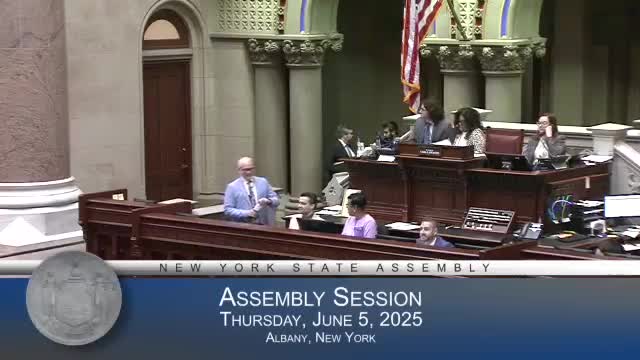
Assembly bans recreational taking of horseshoe crabs; extends DEC regulatory authority
Summary
Lawmakers passed a bill extending DEC's regulatory authority and prohibiting the taking of horseshoe crabs except for bona fide scientific or educational purposes starting in 2026; sponsors cited conservation and alternative synthetic testing reagents, while some members asked for biomedical carve‑outs.
The Assembly passed legislation that extends Department of Environmental Conservation authority to regulate crabs by regulation and adds a 2026 prohibition on taking horseshoe crabs except for bona fide education or scientific purposes as determined by DEC.
Sponsor explanation and scientific context
Sponsor Miss Glick told the chamber the bill "extends for 2 years the authority of the department to regulate, regular crabs including horseshoe crabs, but beginning in 2026, it prohibits the taking of horseshoe crabs except for a bona fide education or scientific purpose as determined by DEC and the regulations." She and supporters cited declining horseshoe crab populations in parts of the region and the species' importance to migrating shorebirds such as the red knot.
Biomedical testing and alternatives
Several members asked whether biomedical users that rely on horseshoe‑crab blood (a reagent used to detect endotoxins) would still be able to access materials for vaccine and medical testing. The sponsor and supporters said synthetic reagents now exist and have been adopted by some firms, and the U.S. Pharmacopeia recently authorized synthetic alternatives; advocates argued this reduces the need for harvesting horseshoe crabs. Opponents, including members with commercial fisheries, asked for a narrowly tailored carve‑out for biomedical emergency uses; the sponsor said research and scientific exceptions remain in the bill for bona‑fide scientific or educational purposes.
Vote and outcome
The Assembly recorded the final vote as Ayes 98; Noes 47, and the bill passed.
Implementation and next steps
The measure extends DEC regulatory authority and creates a statutory prohibition effective in 2026 with limited scientific and educational exceptions. DEC will determine and administer any permits for research or education and monitor population and harvest impacts.
Ending note
Sponsor supporters described the bill as a conservation measure aimed at protecting a keystone species and species that depend on horseshoe‑crab eggs during migration; opponents urged careful attention to biomedical and local economic impacts.