Lifetime Citizen Portal Access — AI Briefings, Alerts & Unlimited Follows
Office of Advisory Neighborhood Commissions to keep FY26 funding; plans new ANC websites and portable hybrid-meeting kits
Loading...
Summary
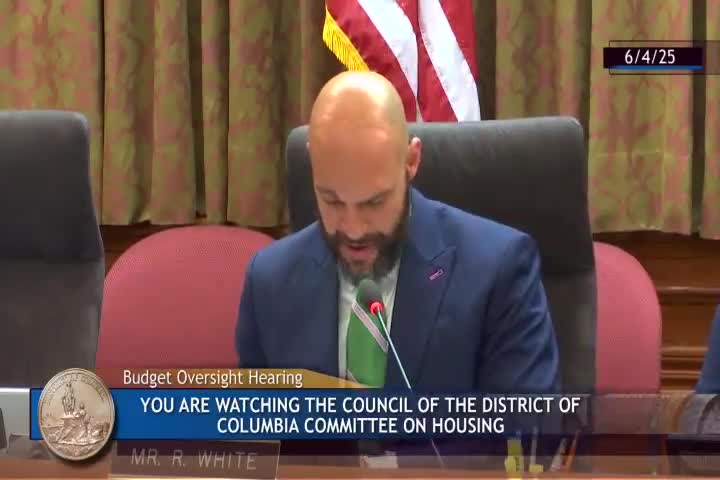
The Office of Advisory Neighborhood Commissions told the Committee on Housing on June 4 that the mayor’s FY26 budget maintains OANC funding at FY25 levels and described a short-term plan to deploy new ANC websites, a second-generation QFR portal and lower-cost, portable hybrid-meeting kits for commissions.
The Director of the Office of Advisory Neighborhood Commissions (OANC) told the Committee on Housing on June 4 that the mayor’s FY26 proposal preserves OANC funding at FY25 levels and maintains annual allotments paid to Advisory Neighborhood Commissions (ANCs).
OANC staff said allotments will continue to be distributed on a per-capita basis and that the proposed FY26 budget aligns with the OANC request; the office reported a current allotment pool of approximately $915,688 and said ANCs receive about $1.33 per resident based on the last census. The office described investments made in FY25 — including filling vacant positions, adding a chief of staff and a training specialist — and said several one-time technical projects will be completed using nonlapsing funds rather than new recurring allocations.
OANC described three major near-term projects to the committee: an updated ANC website rollout, a second-generation quarterly financial report (QFR) portal and a new, lower-cost hybrid-meeting kit strategy. The office said it will work with the Office of the Chief Technology Officer (OCTO) and an MOU partner (Okto) to build a set of ANC sites; the initial plan calls for five pilot sites to be deployed by the end of the calendar year and a public database of community benefit agreements and ABRA settlement agreements before the end of the month.
On hybrid meetings, OANC said the original large, staff-operated kit purchased previously was expensive and difficult to move; the office said it has identified a more portable, lower-cost solution (an Owl Labs-based configuration with added equipment) that can be acquired through the technical assistance fund. OANC staff told the committee the goal is for ANCs that wish to own equipment to do so, while OANC will maintain a small inventory of loaner kits and continue to provide technical assistance during the FY26 transition.
OANC also described continued work on the QFR portal that hosts quarterly financial reports from ANCs; the office said posted QFRs are public documents and that the portal is moving toward a second-generation solution that addresses gaps identified in the existing system. OANC staff said quarterly reports will continue to be posted promptly and that internal review processes have been tightened to reduce errors and ensure files are accessible to auditors and the public.
The committee asked about the timeline for the websites and for hybrid equipment distribution; OANC said it plans to launch five pilot websites this calendar year and will continue to support commissions through September as they incorporate hybrid meeting technology. The office said it has no unfilled full-time vacancies at present but expects limited turnover later in the year as part-time and hybrid arrangements change. No formal committee actions occurred; the committee and OANC staff agreed to coordinate on outreach to ANCs and training materials as the technology rollout proceeds.