Lifetime Citizen Portal Access — AI Briefings, Alerts & Unlimited Follows
Washington Literacy Center urges streamlined funding and licensing to scale basic‑skills training for DC adults
Loading...
Summary
Washington Literacy Center CEO Jimmy Williams told the Committee on Executive Administration and Labor that the nonprofit needs clearer, faster licensing and funding approvals to serve adults with low literacy and job barriers, especially following a sudden contract loss in 2024.
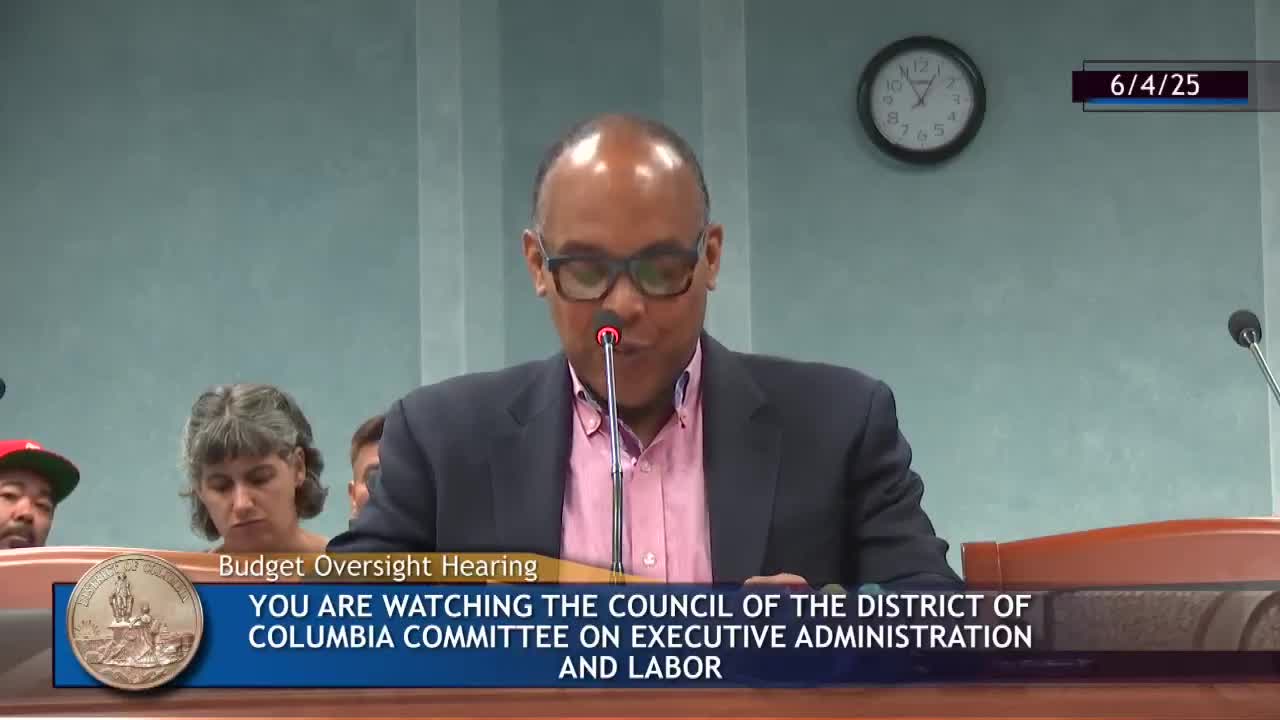
Good afternoon, Chairperson Anita Bonds and members of the committee. My name is Jimmy Williams, president and CEO of the Washington Literacy Center.
Williams told the committee that the Washington Literacy Center (WLC), which provides adult basic education, financial literacy, digital skills and job readiness for adults, experienced “a major disruption in 2024 when 1 of our major contracts ended with just six days notice.” The abrupt loss led to program and staffing cuts and interrupted services for hundreds of residents, he said.
WLC released a report in March, The Literacy Divide, that Williams said documents literacy gaps across the district: “One in four DC adults reads below the first grade level; one in three lacks basic math skills to complete a job program,” he summarized. He said residents in Wards 5, 7 and 8 are the most affected but added that needs exist across the city.
Williams described WLC’s model as “foundational skills, career preparation and civic empowerment” and said the nonprofit integrates literacy with credentialing, resume help and civic learning. He said WLC is currently pursuing licensure through the city’s Higher Education Licensing Committee (referred to in testimony) and applying for workforce grants; he asked the committee to explore ways to reduce duplication and streamline a multistep process that requires sequential certification, WIC validation and agency funding approvals (for example, from DOES and DHS).
He also warned that the Job Corps closure announcements will increase demand for local adult education and career programming and offered WLC as a ready local partner for displaced youth and families. Williams urged the council to prioritize high‑performing community‑based providers and funding pathways that can move quickly when services are needed.
Ending: Williams said WLC relies currently on corporate and private donors while awaiting decisions on public funding and certification, and he pledged to keep the committee informed about licensing and grant outcomes.