Get Full Government Meeting Transcripts, Videos, & Alerts Forever!
Get email alerts on the Revenue Options topic
No spam. Unsubscribe anytime.
Council hears range of revenue options; firefighters urge public‑safety impact fee
Summary
Staff presented a spectrum of revenue ideas — from a quarter‑cent sales tax to business license fees, transfer tax, parcel tax, hotel tax changes and ground leasing — and a firefighters’ representative urged a public‑safety development impact fee at the June 4 study session.
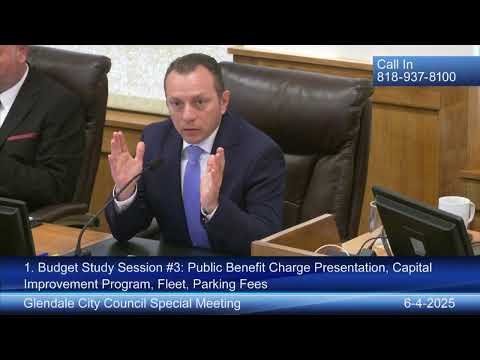
City staff reviewed a menu of potential revenue measures on June 4 as part of the FY25‑26 budget study process and heard public comment urging a public‑safety development impact fee.
What staff presented Staff outlined high‑level revenue options along with rough model ranges: a quarter‑cent sales tax that could generate an estimated $8–10 million annually if placed on the ballot; options for a business license tax with modeled revenue between roughly $2.1 million and $4.8 million (depending on the metric used, for example per‑employee or per‑square‑foot formulas); transfer‑tax estimates ranging widely by scenario from roughly $3.4 million up to $13.4 million; parcel‑tax modeling that produced a theoretical $20–30 million range depending on per‑parcel rates; and a modest boost from increasing the hotel/transient occupancy tax (estimates in staff slides ran from roughly $1 million to $2.5 million depending on the rate chosen).
Other proposals included a private‑parking gross receipts (parking) tax (discussed separately), digital billboards on government‑owned freeway frontage, the possibility of transfer of development rights or ground leasing of city property (staff estimated $3–7 million annual potential depending on how leases are structured), and a commercial vacancy tax (staff warned of legal challenges in other jurisdictions and noted legislation under consideration at the state level).
Public safety impact fee request Chris Jernigan, vice president of the Glendale Firefighters Association Local 776, urged the council to adopt a public‑safety development impact fee to help fund fire, police and emergency services that scale with new development. “This policy is not just fiscally responsible. It is essential for ensuring that our city grows, our public safety departments grow with it,” Jernigan said, noting calls per year have risen and daily on‑duty staffing has not kept pace in recent decades. City staff later estimated a public safety impact fee would generate about $45,000 per year using the permit activity in 2024 — a figure staff said was muted by Glendale’s permit mix compared with some neighboring cities that saw larger multifamily permit counts during the study window.
Caveats and next steps Staff repeatedly cautioned the council that most of these measures would require deeper legal, fiscal and policy study, and many require voter approval. Several councilmembers suggested a staged approach and prioritized measures that would secure the largest revenue with the least regressive impact. Council and staff agreed that further outreach to stakeholders — business groups, neighborhood associations and partners such as the Chamber of Commerce — would be needed before any measure advanced to a ballot or ordinance.
No final decisions were made; staff will return with further analysis of items council wants studied in greater detail.