Get Full Government Meeting Transcripts, Videos, & Alerts Forever!
Get email alerts on the Ambulance Service topic
No spam. Unsubscribe anytime.
Crossville considers city-run ambulance service after residents and medical director press need; council to vote next week
Summary
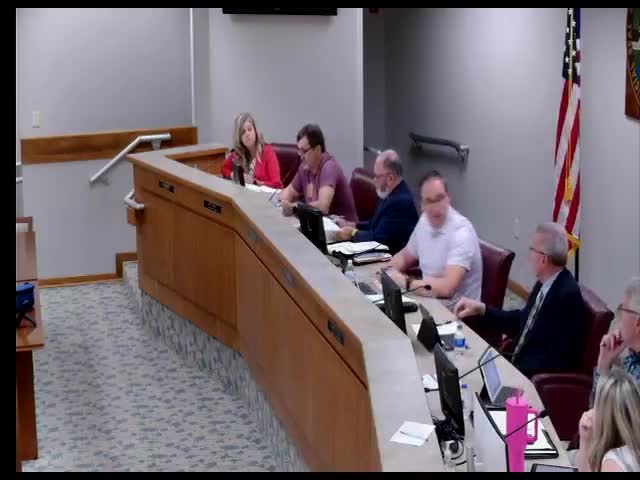
Crossville City Council moved discussion of a proposal to establish a city-operated ambulance service to next week’s voting session after public comment, medical testimony and a finance briefing highlighted both potential lifesaving benefits and substantial budget shortfalls.
Crossville City Council moved discussion of a proposal to establish a city-operated ambulance service to next week’s voting session after public comment, medical testimony and a finance briefing highlighted both potential lifesaving benefits and substantial budget shortfalls.
Resident Mickie Eldridge urged the council to approve a city ambulance based in the fire department, saying long waits and occasional equipment failures had endangered her family. “It was important to our family that we needed an ambulance to get her there,” Eldridge said, describing multiple episodes in which lack of available transport delayed care. “I just want you to know it matters to me as a taxpayer. We need city ambulance service badly.”
The council heard a medical overview from Jim Wojak, identified as the medical director for local emergency medical services and city fire/EMS, who described training and continuing education in the local system. “Every one of our personnel with C.C.E.M.S. has obtained over 100 hours of CME in 2024,” Wojak said, and he described recent awards the EMS system and personnel have received for clinical care.
City staff and departmental leaders outlined operational and financial considerations. Chris Miller, identified in the meeting as the director of EMS, said the current payer mix limits revenue from transports: “As far as the…payer group today…80% of our payer group is Medicare, TennCare, or TennCare,” he said, noting that many calls are not billable or are reimbursed at rates far below billed charges.
Finance Director Nathan (last name not specified in the record) presented several cost scenarios and revenue assumptions the council would need to cover if it establishes a municipal ambulance service. He said the city’s initial carry cost could create a roughly $1.5 million to $1.8 million shortfall annually and recommended options for covering it, including a property tax increase. “Minimum, 30¢,” Nathan said when asked what property‑tax increase would be required; he added that “each penny increase is $62,316” in annual revenue for the city. Nathan also noted startup timing and cash‑flow issues, saying the service would likely begin incurring personnel and equipment expense before transport revenue started (staffing beginning earlier than July 1, 2026, while transports would produce revenue only after implementation).
Council members asked about alternatives and fiscal impact. Several members acknowledged the public‑safety rationale but pressed for specifics on how the city would pay for recurring personnel, equipment and billing shortfalls. One council member warned that if the city provides ambulances inside municipal boundaries, the county could reduce its support, changing call volumes and potentially worsening staffing and budget outcomes for county EMS.
Operational risks were also flagged. Miller said city action could reduce county call volume and, in his view, lead to significant staffing impacts in the county EMS operation: “I very much could see a lot of people losing their job,” he said, explaining that the largest share of current call volume is inside the city.
Council action: the item was formally scheduled for the next regular voting session so the council can consider a formal motion and possible funding mechanism. At the work session several council members asked staff to provide more detailed financing options (tax scenarios, use of reserves, potential billing revenues and staffing plans) before the vote.
The council also heard several related, shorter updates at the same meeting: training and credentialing levels in the existing EMS operation, that some local fire personnel receive paramedic training supported by community funds, and that billing and collection rates vary widely by payer (Medicare, Medicaid/TennCare, commercial insurance and private pay). City staff said they had consulted a billing vendor and compared budgets with a similar municipal ambulance program (Mount Juliet) to develop revenue ranges.
Council members and staff emphasized the choice before them: adopt a city ambulance with a defined plan to fund recurring costs, or defer action. The council moved the item to next week’s voting session for a formal decision.
Ending: The council did not vote on establishment at the work session; members instead asked staff to return with a detailed fiscal plan for a vote at the next regular meeting.