Get Full Government Meeting Transcripts, Videos, & Alerts Forever!
Get email alerts on the Environmental Plastics Fee topic
No spam. Unsubscribe anytime.
Richmond adopts 5¢ disposable plastic bag fee, effective Jan. 1, 2026
Summary
The Richmond City Council voted 8–1 to approve an ordinance imposing a 5¢ fee on disposable bags at grocery, drug and convenience stores; revenue is limited by state law to environmental cleanup, litter reduction, education and reusable bags for SNAP and WIC recipients.
The Richmond City Council on Monday voted to adopt an ordinance imposing a 5¢ fee on disposable plastic bags distributed at grocery stores, drugstores and convenience stores, effective Jan. 1, 2026.
Council members said the measure is intended to reduce litter and stormwater impacts while funding environmental cleanup and programs to distribute reusable bags to SNAP and WIC participants.
The ordinance requires a 5¢ charge per bag. Of that amount, 4¢ per bag will flow to the city and 1¢ per bag may be retained by the retailer, according to Laura Thomas, director of the Office of Sustainability.
“[The fee] is in an effort to help reduce chronic litter that we're seeing throughout the community, reduce the impact on our critical stormwater and water infrastructure, to help reduce capital maintenance costs, and to improve the overall environmental quality,” Thomas said in introducing the proposal. She told council staff would conduct outreach to businesses and the public during a six-month education period before the fee takes effect.
Thomas and staff estimated the program could generate roughly $400,000 in the first year and $100,000–$150,000 in subsequent years as bag use declines. State law limits city uses of the revenue; the ordinance directs funds to environmental cleanups, education and to provide reusable bags for SNAP and WIC recipients.
The ordinance also follows state-prescribed exemptions. It excludes prepackaged or bulk foods, prescription bags, durable thicker plastic bags (often used as reusable grocery bags) and bags sold in multipacks for trash or pet waste. The city will not administer the tax collection; retailers will report bag counts to the Virginia Department of Taxation, which will remit the city’s share.
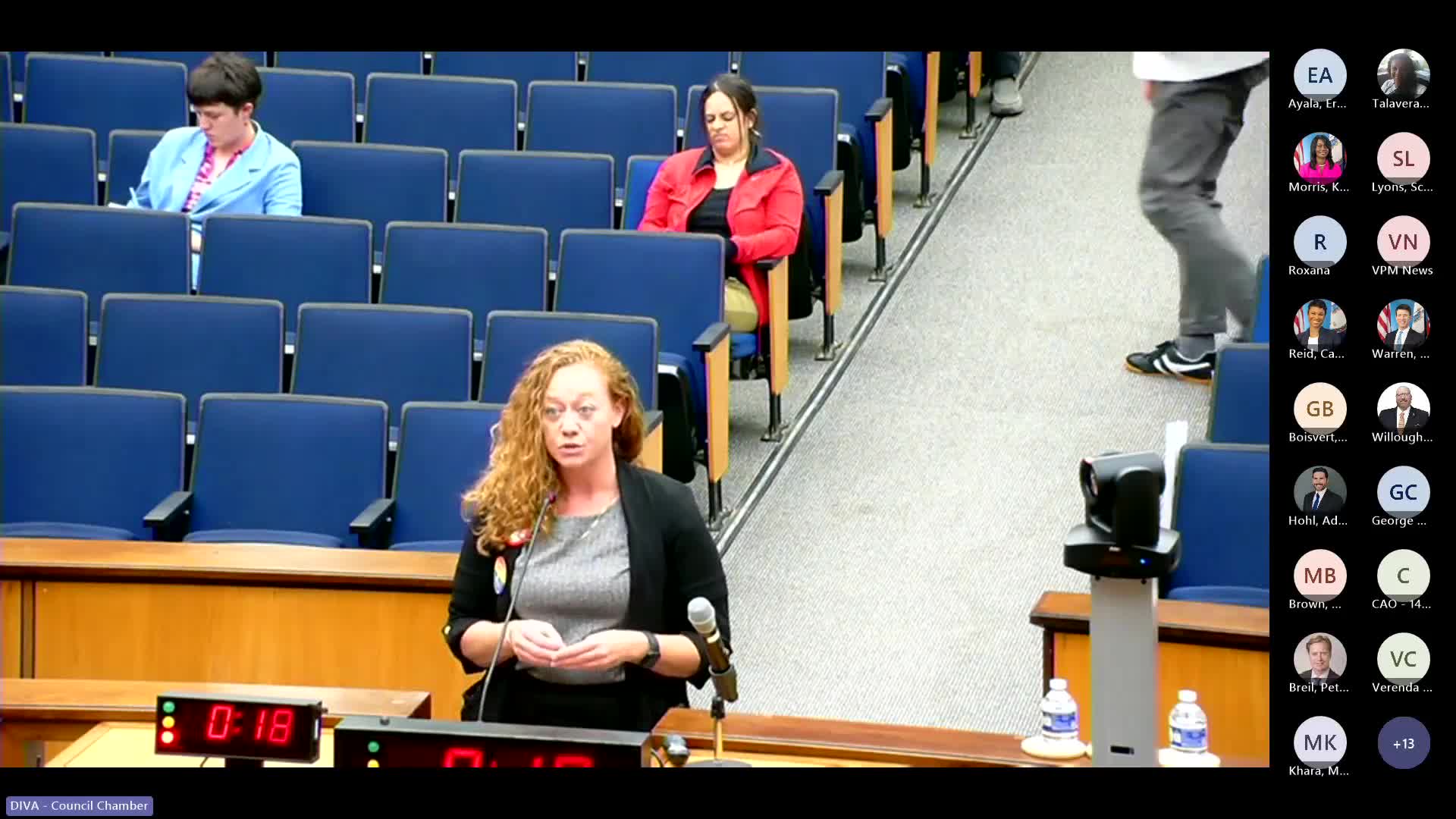
The proposal drew support and concern during council debate and public comment. Steve Marzoff, chair of the Clean City Commission, and Ashley Coles, a commission member, testified in favor. Council member Trammell urged more help for seniors and residents who may be disproportionately affected by the charge. “Those 5¢ add up a whole lot, especially when they don't have it right now,” she said, describing calls from seniors worried about the added cost.
Thomas said the administration will conduct targeted outreach to small retailers and intends to distribute reusable bags to community members, noting the revenue earmarked for SNAP and WIC recipients must follow state rules. She told council the Office of Sustainability will commit operational funds to provide reusable bags to seniors and others who do not qualify under SNAP/WIC, and will work with Economic Development to reach small businesses.
Council members debated the regressive nature of flat fees but many argued behavior change and reduced infrastructure costs justify the measure. Councilman Breton said the approach taxes something the city wants less of and that other jurisdictions showed usage declines after similar fees were enacted.
The ordinance passed on a recorded vote: 8 in favor, 1 opposed (Council member Robertson). The council directed staff to return with outreach and implementation details, including a list of impacted retailers and a plan for distributing reusable bags to vulnerable residents.
The council adopted the ordinance as Ordinance No. 2025-599; the administration said it will publish implementation and outreach materials after passage.