
Stoughton Area School District board approves three-year SRO agreement, adopts related policy after extensive debate
Get AI-powered insights, summaries, and transcripts
Sign Up Free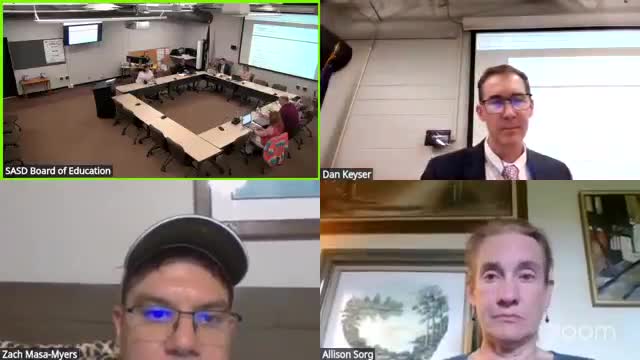
Summary
The Stoughton Area School District board voted 5–3 to approve a three‑year school resource officer (SRO) intergovernmental agreement and separately adopted an SRO policy. Board members and staff debated safeguards for student data, measurement of program impact and how the position would be funded and allocated across buildings.
The Stoughton Area School District Board of Education voted 5–3 to approve an intergovernmental agreement to place a school resource officer (SRO) in district schools for a three‑year term, and then voted to adopt a companion SRO policy.
Board members and staff debated safeguards for student information, how the SRO’s time would be allocated across five buildings, and how the district would measure whether the position affects student belonging and safety. The board’s approval included a stated expectation that the SRO would be subject to district policies on access to confidential records and that the district and police department would share training costs as mutually agreed.
The board’s decision follows two years of committee-level discussion and public and internal surveys showing mixed feedback on SROs. District administrators said the agreement’s structure includes periodic reporting and a defined three‑year review point so the parties can reassess the arrangement.
“In this agreement, one of the stipulations is that the SRO falls under our school district policies,” a district administrator said during the meeting, adding that any inappropriate sharing of student records would trigger an internal investigation and likely notification to the officer’s department. The administrator said the district intends to require training and onboarding so an SRO understands which student records are confidential and how information should be shared only on a need‑to‑know basis.
Board members pressed for more specific performance measures. Several asked how the district would know whether an SRO improves a sense of belonging or school safety. The district said it will use existing survey questions about belonging and safety, track behavioral records that involve law enforcement, and request periodic public reports from the SRO to the board. The agreement itself includes a reporting expectation, and staff described a plan to bring implementation details and SRO activity summaries to the board multiple times during the year.
Cost and allocation were also discussed. District staff estimated the total cost at roughly $65,000 on the district’s side (the agreement contemplates a cost share with the city), and said the position’s time would likely be weighted toward secondary schools while rotating through other buildings. The district emphasized the hire and the SRO’s exact duties will shape how time is allocated and what the SRO can credibly deliver at elementary versus secondary levels.
Several board members and the district acknowledged that an SRO may increase some students’ sense of safety while decreasing others’. One board member said that reality makes close monitoring essential if the board approves the program.
The motion to approve the SRO agreement passed on roll call 5–3. The board then moved and approved the SRO policy; the superintendent noted that policies remain subject to future revision and that any member can request changes. The agreement as approved includes a three‑year term that ends unless both parties take action to continue it.
The district said legal counsel suggested a technical clarification to the agreement to refer to mutually agreed training within the cost‑share language, and that an incorrect policy title in an earlier draft had been corrected before the vote.
Next steps the district described include: working with city partners to select an officer over the summer if the board’s vote stands; establishing onboarding and training expectations for the officer; and presenting periodic activity summaries and measures tied to belonging and safety questions in district surveys.
The board’s approval does not appropriate a single identified funding source in the meeting minutes; staff said the cost would be modeled into the district’s upcoming budget planning cycle. A separate motion to convene a closed session followed later in the meeting.
The full roll‑call vote on the SRO agreement was recorded as: Yes — Don Garcia; Mr. Masa Myers; Tim Buban; Allison Sorg; Jill Patterson. No — Dr. Sharon Mylan Bartlett; Jim Moser; Mia Croyle. The board declared the motion carried 5–3.
The board’s discussion and the votes occurred during the open session and are expected to be followed by implementation work if the board’s majority stands by the decision.