Get Full Government Meeting Transcripts, Videos, & Alerts Forever!
Get email alerts on the Planning Board Ordinance topic
No spam. Unsubscribe anytime.
Council holds public hearing on building-code amendments that expand planning board functions and remove an applicant's automatic'review right
Summary
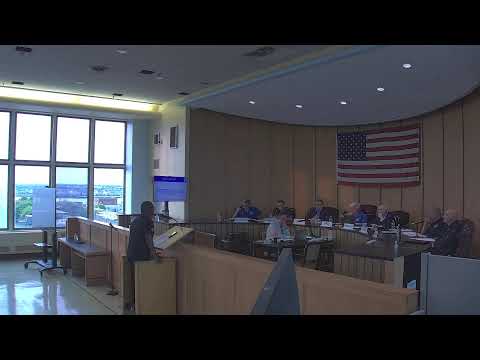
The City Council held a public hearing June 3 on proposed amendments to the City of Long Beach Code of Ordinances that give the recently created planning board clearer authority over architectural review and change the appeal process for applicants.
The City Council held a public hearing June 3 on proposed amendments to the City of Long Beach Code of Ordinances that give the recently created planning board clearer authority over architectural review and change the appeal process for applicants.
Deputy Corporation Counsel Joe Lupo told the council the revisions clarify that the planning board will act in its capacity as the architectural review board for exterior aesthetic reviews and that certain nonresidential uses in unmodified existing facilities will not require planning-board review. Lupo said the amendments also remove a separate findings-of-fact process that currently lets a denied applicant request a re-review by the same board.
Lupo said the change is intended to make the architectural-review process consistent with other independent boards (planning and zoning) whose decisions are final and subject to court review. “Once the board votes, that’s it,” Lupo said, adding that an applicant who believes a decision was “arbitrary and capricious” may pursue an Article 78 court petition.
Council Member Lester questioned whether a developer could evade planning-board review by making incremental 24% increases in gross square footage repeatedly. Scott Kemmons of the building department said the 25% threshold and related procedures are already in the existing code and that, in practice, building-permit inspections and subsequent requirements (parking, density, setback variances) would trigger additional review; he agreed the city could tighten that gap if council wished.
Public commenter James Hodge told the council he was concerned about representation on the planning board, saying he did not believe any African American residents sat on the board and urging the council to broaden appointments. An unidentified resident asked who decides when an application is routed to the architectural-review function; Lupo said the building department applies objective criteria and that some matters (for example, a required zoning variance) would go to the zoning board while planning review occurs when planning criteria are triggered.
Why it matters: The changes affect how exterior-design reviews are processed, who has final decision-making power and which administrative steps an applicant may use before seeking judicial review. Lupo said the intent is to avoid repeat administrative re-reviews of the same application and to align the architectural-review process with other boards’ procedures.
No ordinance vote occurred during the June 3 hearing; the council closed the public hearing and moved the item to the regular calendar. Council members asked staff to note potential tightening of thresholds (for example, adding a time limit or cumulative limit on successive enlargements) and to confirm the statutory references and referral criteria in the draft ordinance.