Get Full Government Meeting Transcripts, Videos, & Alerts Forever!
Get email alerts on the Planning Mercedic Cup topic
No spam. Unsubscribe anytime.
Board upholds planning commission approval for Mercedic property; owner granted permits to legalize existing structures
Summary
After a de novo hearing and public comment, the Ventura County Board of Supervisors denied an appeal and affirmed the planning commission’s approval of a conditional use permit and plan development permit for preexisting structures on a Topa Vista Road parcel; the owner agreed to relocate two equestrian shade structures to increase setbacks.
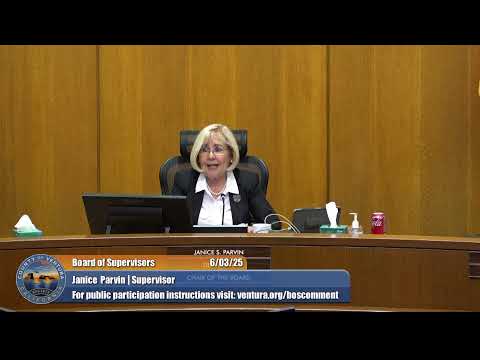
The Ventura County Board of Supervisors denied an appeal and affirmed the planning commission’s approval June 3 of a conditional use permit and plan development permit authorizing existing residential and equestrian structures on a 5.66‑acre parcel in the Upper Ojai Valley.
Planning Division Manager Michael Conger told the board the case began as a planning‑director hearing in 2024 after the owner sought to legalize several structures built without permits. The project comprises a single‑family dwelling (which will later become an accessory dwelling unit when a new principal residence is built), accessory residential structures (garage, sheds, storage container) and six animal shade structures used for horse keeping. Because portions of the property fall within the county’s habitat connectivity and wildlife corridor (HCWC) overlay, some development required discretionary review.
At the planning‑commission hearing, the applicant proposed relocating two of the animal shade structures closest to a neighboring parcel; the commission approved the revised site plan in February 2025. Appellant Richard Howard argued the scale and proximity of horse keeping would create nuisance and public‑health impacts for his proposed adjacent home, and he sought a refund of an appeal filing fee. County staff and outside reviewers — including Environmental Health and Watershed Protection — said the applicant had submitted a structural, dust‑control and manure‑management plan and that agencies found the measures acceptable.
Planning staff recommended a Class 3 categorical exemption under CEQA (new construction or conversion of small structures) and concluded the project is consistent with the general plan and zoning criteria. After public comment (neighbors and equestrian users largely supported the applicant), the board voted to deny the appeal, adopt the CEQA finding and grant the conditional use permit and plan development permit subject to the conditions in the staff report.
The applicant’s representative, Eric Nagy, told the board the owner had spent roughly $173,000 to bring the property into compliance and offered to relocate the two nearest shade structures at an estimated cost of about $22,000 to address neighbors’ concerns. The applicant and planning staff said the property’s equine use is common in the rural neighborhood.
Why it matters: The decision legalizes existing development on a rural parcel while imposing approved conditions and formalizing management plans (manure, dust, vector control) that the county’s environmental and watershed units reviewed. The case illustrates common land‑use tensions in semi‑rural areas between animal‑keeping operations and neighbors seeking different uses for adjacent parcels.