Get Full Government Meeting Transcripts, Videos, & Alerts Forever!
Get email alerts on the Planning And Development topic
No spam. Unsubscribe anytime.
Washington County discusses changes to Adequate Public Facilities and building excise tax; no final vote
Summary
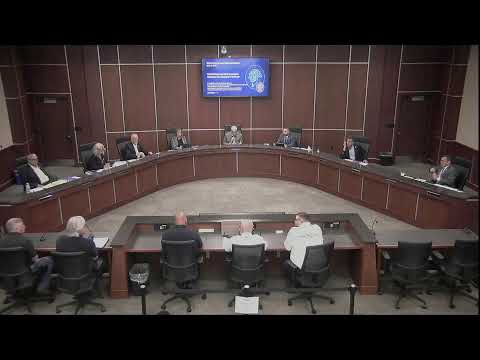
Jill Baker, director of the Department of Planning and Zoning, updated the Washington County Board of County Commissioners on proposed amendments to the Adequate Public Facilities Ordinance and the building excise tax that would eliminate the APFO alternate mitigation payment, double the county’s excise tax for new residential construction and limit annual permits for developments that push school capacity above 100%.
Jill Baker, director of the Department of Planning and Zoning, updated the Washington County Board of County Commissioners on proposed amendments to the Adequate Public Facilities Ordinance (APFO) and the Building Excise Tax Ordinance (BETO) that would change how new residential development is mitigated for school and road impacts.
Baker said staff proposes to remove the APFO’s existing alternate mitigation contribution option and replace it with two main measures: an increase in the county building excise tax from $1 to $2 per square foot and a cap that would limit developments triggering school capacity over 100% to 25 new residential building permits per development per calendar year unless the board grants an exception. She said individualized mitigation plans would still be required for projects that push a school to more than 120% of state-rated capacity and that the county would add guidance listing possible mitigation options, including direct monetary contributions, land dedication, redistricting in coordination with the Board of Education, or targeted capacity projects expected to take effect within five years.
The planning presentation included three examples to show how the changes would affect costs for homeowners and developers: (1) development on an existing lot of record would see the excise tax double from $2,000 to $4,000 for a 2,000-square-foot house; (2) a typical new lot outside a municipality showed a net decrease in combined APFO/excise costs because the APFO contribution would be eliminated while the excise tax increases; and (3) development inside incorporated municipalities — where APFO is locally administered — would be subject only to the higher excise tax. Baker recommended an effective date of Jan. 1, 2026, to allow time to update permit-tracking software and scripting so the county could automate the new requirements and avoid processing delays.
Commissioners pressed staff on implementation burdens, automation and staffing implications, and whether the public comment period should be reopened. Commissioner questions focused on which projects would be “grandfathered” if a site plan is in process, the potential need for additional permit-review staff depending on the level of customization commissioners adopt, and whether the proposed permit limits are fixed or discretionary. Baker confirmed the intent to grandfather projects that are already in process if the board adopts the changes with a future effective date and said staff believes they can implement the changes internally but needs time to update the tracking system.
The board did not adopt any ordinance at the meeting. Commissioners asked staff to return with revisions after additional meetings and said they would set a new effective date when they bring the item back. Leaders also discussed whether to reopen the public comment period; the board left that decision to a later meeting.
Why it matters: the proposals would change how Washington County shares development costs and how fast new housing can be permitted in school-districts already over capacity. The changes could raise near-term costs for some homebuyers, shift mitigation away from ad-hoc developer payments to a broader excise-tax fund, and limit the pace of development in affected subdivisions.