Get Full Government Meeting Transcripts, Videos, & Alerts Forever!
Get email alerts on the 2026 Events Activation topic
No spam. Unsubscribe anytime.
Santa Clara committee pushes community-driven plan for 2026 Super Bowl and World Cup activity
Summary
City stakeholders and staff met to begin shaping branding, resident-focused events and business activation tied to 2026 World Cup and Super Bowl activity at venues in and near Santa Clara. Staff will refine an activation plan, identify leads and return with budget estimates and a proposed brand.
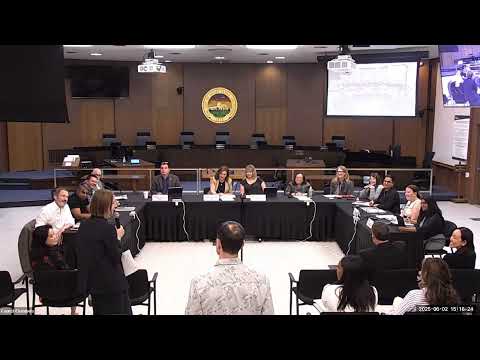
At a meeting of the Santa Clara City Council’s Economic Development and Marketing Committee, city officials, business leaders and community stakeholders discussed a community-driven activation plan to link local events, branding and business support to major 2026 sports events that will bring global attention and visitors to the region.
The meeting centered on three priorities staff described as communications and city branding, community engagement and activities for residents, and economic development and business support. Committee chair and mayoral representative Chair Gilmore said the effort should be “a community driven process” and called stakeholders “the true architects of what we're gonna build together.”
Why it matters: Santa Clara hosts venues and organizations that will be focal points for international sports visitors in 2026. Committee members and stakeholders emphasized both maximizing economic opportunity for local businesses and ensuring residents — including families and youth — can take part through free or low-cost programming.
Staff presentation and proposed activities
Liz Klotz, assistant city manager, summarized staff priorities and a proposed timeline: refine an activation plan from stakeholder input, develop an implementation road map, identify leads for major activities, and launch a branding campaign by the fall. Staff suggested several activity types to amplify existing programs: community concerts and festivals, volunteer ambassador programs, youth sports and STEM camps, library programming, art exhibits (including a proposed Triton Museum soccer-ball exhibit), a night market and licensed watch parties for World Cup games if licensing can be secured.
Rina Brio, director of economic development and sustainability, and Discover Santa Clara representatives offered sample taglines staff drafted — for example, “Santa Clara: where the world kicks off” — and asked the group to react and propose alternatives. Stakeholders repeatedly urged a brand that names Santa Clara explicitly, rather than leaving recognition to broader “Bay Area” messaging.
Community and business perspectives
Council Member Albert Gonzalez (District 1) and Vice Mayor Kelly Cox urged that Santa Clara not be a passive host: they said residents and small businesses must see tangible benefits. Cox said the city should “put our name on it” so events don’t read as generically “Bay Area” or solely San Jose/San Francisco promotions.
Business and nonprofit stakeholders suggested a mix of resident-first events and tourism-attracting activities: a resident appreciation day or discounted access tied to ZIP codes, youth clubs walking players onto fields, a youth soccer cup as a legacy tournament, restaurant week promotions, and corporate “light-up” sponsorships along access routes to the stadium. Several recommended pre- and post-event programming (kickoff and closing celebrations) so the city can “own” more of the narrative without overburdening public-safety resources during the games themselves.
Libraries, museums and universities as assets
Addie Wong, City Librarian, noted the library system’s reach; the library reported roughly 800,000 annual visits and a history of heavy community participation during prior major-event activations. Representatives from the Triton Museum and Santa Clara University described planned and potential exhibits, volunteer capacity, student media and production support, and campus venues that could host related programming. The Triton plans a decorated-soccer-ball exhibit mid-May through mid-August; the museum noted free parking and accessibility as advantages for attracting visitors.
Public-safety, logistics and legal limits
University and staff representatives warned of resource constraints. Santa Clara University said its commencement coincides with an early World Cup match and that campus public-safety resources may be constrained; the university urged coordination on traffic and neighborhood impacts. Staff reminded the group there are trademark and license restrictions associated with Super Bowl and FIFA branding; committee members asked staff to provide clear guidelines on the terminology, field access and perimeter restrictions that will affect where and when city-run or co-sponsored events can occur.
Funding and sponsorships
Participants noted funding will be a mix of city resources and sponsorships. Staff asked stakeholders to help identify sponsor leads; past efforts for Super Bowl-related activity included NFL funds for some library programs and private sponsorships for concerts. Committee members asked staff to return with the 2016 event budgets and an estimate of likely costs for the activities suggested at this meeting.
Equity and resident access
Stakeholders emphasized free or subsidized options for residents, particularly youth engagement. Ideas included free community concerts for Santa Clara residents, youth art contests and murals, a parade and an international-food festival showcasing local mom-and-pop restaurants. Parade organizers noted the annual Parade of Champions has historically attracted 12,000 attendees (and has reached as many as 40,000 in peak years) and argued it can be a central free event for residents.
Next steps and directions
Staff committed to scheduling additional meetings—likely on Mondays—refining an activation plan from stakeholder feedback, identifying leads for major activities, and returning with a proposed branding concept and implementation timeline by fall. Committee members asked staff to report back with: (1) budget figures from the 2016 Super Bowl-related city activities; (2) guidelines on stadium and event license restrictions; and (3) a proposed public outreach/branding process that can include a community design prompt and social-media engagement. The committee did not adopt formal policy or binding budget measures at this meeting.
Ending
Committee members and stakeholders agreed to reconvene in a few weeks with preliminary branding ideas and further event proposals. Staff and volunteers were asked to compile candidate events and partnership leads, and to present a budget and timeline at a future meeting.