Get Full Government Meeting Transcripts, Videos, & Alerts Forever!
Get email alerts on the Student Technology Policy topic
No spam. Unsubscribe anytime.
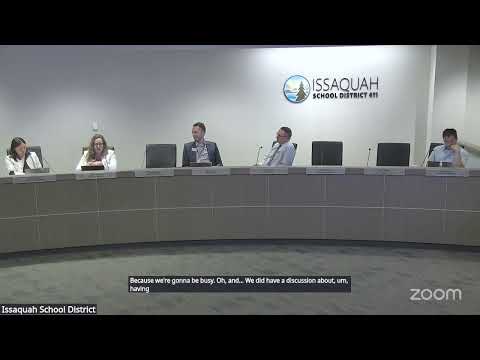
Board reviews updated personal-technology policy that limits phone use in class; enforcement left to principals
Summary
District leaders presented proposed regulations limiting personal technology in learning time: 'often away' for elementary, 'silenced and stowed' for middle school and more flexible non-instructional use at high school. School-level discipline and implementation details will be set by principals.
The Issaquah School District presented proposed regulations to limit student use of personal technology during instructional time to reduce social-media interruptions and support student well-being.
The draft language presented keeps elementary expectations at —often away—; middle-school language requires devices be silenced and stowed during class, including hallways while class is in session; high-school language allows some device use during non-instructional time and prepares students for increased autonomy.
District staff said the policy is developmental: younger students receive stricter limits, middle-school students build self-management and high-school students receive guidance and more independence. The administration said final placement of some legal language remains under review, specifically how to address unlawful recording of others without permission. "We're really wanting to find student-friendly language that makes that really clear that it is not lawful to record someone again without their express permission either audio or visual," a district official said.
Board members and students in the audience discussed practical issues including office phone access during passing time, teacher discretion for using devices to submit assignments, and whether discipline should be uniform across schools. Dr. Dana Bailey said principals will determine discipline protocols; district-level regulation will set minimum expectations but will not prescribe every enforcement step. Several students and board members urged more teacher flexibility for tasks such as scanning handwritten work.
Administrators said implementation will be phased; next year's handbooks will reflect the changes and building leaders will monitor outcomes and refine the approach. The district plans to collect feedback and assess impact through student surveys and other measures.
Ending: The board praised the policy's emphasis on student well-being and asked staff to return with final language addressing legal concerns about recording and with clearer guidance on office-phone access and teacher discretion.