Get email alerts on the Budget Dog Control topic
No spam. Unsubscribe anytime.
Budget hearing spotlights dog-control shortfall; commissioners approve interim budget changes
Summary
County staff told commissioners that the dog-control fund has declined from historical licensing levels and requires additional funding or structural change to be sustainable.
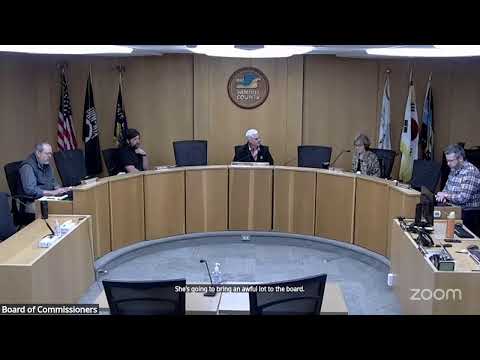
At a public hearing on the 2025–26 budget, Yamhill County staff told commissioners the county’s dog-control fund is operating at a structural deficit and presented options to stabilize the program, including bringing administrative functions in-house or increasing contracted oversight.
The county budget officer presented a 15-year review showing dog-license revenue peaked at about $243,000 in earlier years and has trended down; licensing revenue budgeted for the coming year was listed at $60,000. Because the dog-control fund is small, the budget officer said, making a more-than-10% adjustment to that fund within the current adoption process would require a supplemental action after adoption. Staff proposed identifying general-fund sources now so the board could take action post-adoption without violating the 10% rule.
The county officer provided a funding concept that would support a program built around two full-time equivalent positions (a dog-control officer and clerical support) outside the sheriff’s office, plus contracted kenneling and startup costs. That estimate produced an operational cost concept of roughly $361,300 (personnel, contracts and start-up expenses). The officer proposed using $102,500 from discretionary funds plus an additional $180,000 from other O&C (operating and capital) funds as a primer to stabilize operations while licensing and compliance activity is restored.
Sheriff's office participants told the board they have consistently sent past-due licensing notices since October of the prior year and estimated increased licensing revenue could exceed $100,000 next year if compliance efforts continue and dedicated staff handle reminders and follow-up.
Commissioners asked for additional analysis of whether shifting dog-control administration out of the sheriff’s office would produce net cost savings, and whether hybrid approaches (partial county staffing plus contractor oversight) would achieve the program’s revenue goals without large benefits-rollups.
After discussion the board reached consensus to proceed with the recommended changes and later took a formal motion to approve the proposed budget changes with one alteration: the board struck a proposed transfer line of $102,000 from the package. The motion passed unanimously. County staff said they will prepare a revised “version 40” of the budget reflecting the board’s direction and will schedule a follow-up work session to evaluate dog-control structure and implementation details; any material change above the 10% limit would require a supplemental budget and public hearing.
AI generated
The text on this page is AI generated. Summaries, highlights, analysis, and video transcripts are all produced from the original source material.
AI can make mistakes, so if you spot one, and we will fix it for everyone.
Note: the source content is unaltered by us. Any content source we link to, be it a video, an audio recording, or a document, is presented exactly as its publisher released it. That publisher is usually a government body, sometimes an individual official or another organisation.