Get Full Government Meeting Transcripts, Videos, & Alerts Forever!
Get email alerts on the Criminal Justice Reform topic
No spam. Unsubscribe anytime.
Recovery court leaders urge county funding as federal start-up grant nears end
Summary
Riley County recovery court leaders, including Judge Linda Lewis and community corrections director Megan Lewis, asked commissioners to support funding after an initial grant ends Sept. 30. Staff estimated a maximum 15‑month funding need of $247,378.42 and said the program reduces recidivism, restores families and saves incarceration costs; the
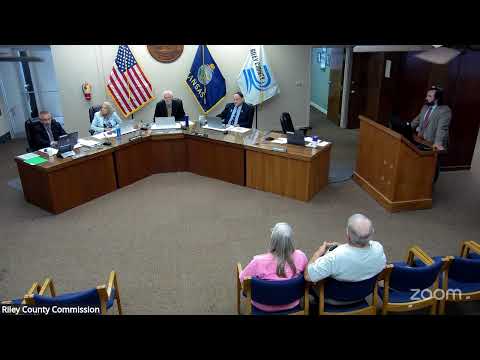
Judge Linda Lewis and Riley County recovery-court partners asked commissioners May 29 to consider local funding for the county’s recovery court after start-up grant funding is scheduled to end Sept. 30.
Judge Lewis described the program’s goals and partners, saying it “saves taxpayer dollars, and it restores lives,” and noted the court’s emphasis on intensive supervision and recovery supports for high-risk, high-need participants. She told the commission the court had graduated participants who achieved long stretches of continuous sobriety and that research shows graduates are less likely to reoffend.
Megan Lewis, director of Community Corrections, told commissioners the current grant funding ends Sept. 30 and that program leaders have calculated a maximum funding need to maintain the court through the first 12 months following that end date. “The total cost … to get not only to the end of 2025, but also the following 12 months, the maximum cost of that would be $247,378.42,” she said. Lewis and other presenters said they were actively pursuing other sources — opioid-settlement funds, city contributions and county partners — and attempting to reduce costs (for example, by negotiating lower drug‑testing rates) before requesting a firm local appropriation.
Judge Lewis and other recovery‑court supporters described program benefits beyond reduced recidivism: they cited family reunifications, increased employment among participants and long-term reductions in jail and other emergency-system use. Judge Lewis said many participants in the program are parents; presenters said three participants regained custody of children while in the program and others achieved sustained employment and housing after participation.
County staff and presenters said the program relies on a combination of federal/state start-up grants, state treatment funding (Senate Bill 123), and local match if needed. Megan Lewis said the court currently prioritizes participants who have state-funded treatment available through SB 123; the county’s request would not cover treatment costs paid by the state, but would cover local program staffing, testing, court dockets and wraparound supports.
Commissioners asked staff to continue refining the financial plan and to pursue opioid-settlement funding as a first source; staff reported contact with other jurisdictions and the city of Manhattan’s administration to explore cost-sharing. No final appropriation was made May 29; commissioners indicated support for continuing the discussion and requested more detailed numbers and proposals for how opioid-settlement funds or city contributions would be applied.
Ending County staff will return with a more detailed funding proposal, showing confirmed community contributions and revised cost estimates after ongoing negotiations and cost‑reduction efforts. Commissioners requested quarterly financial updates and additional detail before any final appropriation.