Get Full Government Meeting Transcripts, Videos, & Alerts Forever!
Get email alerts on the Animal Welfare topic
No spam. Unsubscribe anytime.
Polk County residents press commissioners for animal-control reforms, TNVR program and greater transparency
Summary
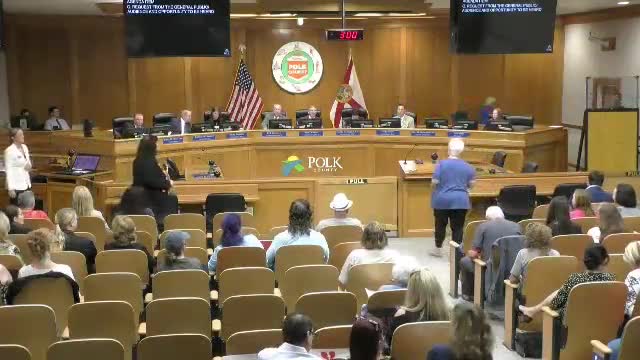
Dozens of residents of Polk County told the Board of County Commissioners on June 3 that Polk County Animal Control’s operations are in crisis and urged the board to push for stronger spay/neuter programs, an official TNVR (trap-neuter-vaccinate-return) program for community cats, more volunteer support and greater transparency.
Dozens of residents of Polk County told the Board of County Commissioners on June 3 that Polk County Animal Control’s operations are in crisis and urged the board to push for stronger spay/neuter programs, an official TNVR (trap-neuter-vaccinate-return) program for community cats, more volunteer support and greater transparency.
The appeals came during the general public-comment period. Eve Salambini, president and founder of the Street Cat Project of Polk County, said the shelter’s records and practices show “serious failures in transparency, oversight, morality, and ethical accountability.” She asked the county to publish monthly clear records, establish a countywide TNVR voucher program, adopt enforceable standards and create a public oversight committee.
Supporters cited numbers and examples from other Florida counties to press their case. George Robert Wheaton compared Polk’s outcomes with neighboring counties and said, “Hillsborough’s live outcome rate went from 51 percent in 2013 to 92 percent in 2023,” and told commissioners that Hillsborough estimates it costs $168 to trap, hold and euthanize a cat versus $65 per cat for TNVR. Several rescue volunteers and nonprofit organizers described long volunteer clearance times, instances of animals in poor condition, and frequent owner surrenders.
Why it matters: Residents and rescue groups said higher spay/neuter access, TNVR and smoother volunteer onboarding would reduce shelter intake and euthanasia, save public money and reduce the number of animals needing emergency care. Commenters tied reform to public trust in how tax and donation dollars are spent at Animal Control.
Details and requests from public speakers included: - Monthly, publicly posted shelter statistics and clear accounting of how the shelter budget is used (Eve Salambini cited a $5,500,000 figure for the broader shelter budget and asked for clarity). - A countywide TNVR program with vouchers to reduce intake and shelter euthanasia, modeled on nearby counties’ programs (advocated by multiple speakers including George Robert Wheaton and Patty James of Cat Rescue Alliance). - Faster volunteer screening and foster access; several speakers said the volunteer clearance process can take six to nine months. - Better animal descriptions, photos and foster options to improve outside networking and adoptions (Jennifer Castro, Patty James). - Adoption, microchipping and registration processes to ensure animals are returned to owners; speakers said some animals have been reclaimed or euthanized quickly after intake. - Stronger local ordinances aimed at backyard breeding, tethering and unlicensed sellers, and stiffer penalties for animal abuse (advocated by Sarah Lynn Smith and others; Smith referenced Florida Statute 823.15 in urging reductions of uncontrolled pet breeding).
Board response and limits of authority: Commissioner Braswell told the speakers the sheriff runs Animal Control and said, "The sheriff runs animal control, and he will continue to run animal control the way he sees fit." Multiple commissioners said the sheriff is an independently elected constitutional officer, and that the commission does not directly manage the sheriff’s operations. But commissioners also encouraged residents to contact their offices and said they had heard the concerns and would discuss them further.
Other context offered by speakers and volunteers: several who volunteer or foster animals said they spend personal funds on veterinary care and emergency treatment for animals pulled from Animal Control. Some described facility problems including insufficient climate control and sanitation issues; others said donations of towels and supplies were not always used as expected. One former volunteer, Debbie Hicks, said she resigned because of conditions and staffing concerns.
What the board did: The June 3 session recorded the public concerns and prompted discussion; no ordinance, contract or formal policy change was adopted at the meeting. Commissioners asked staff and constituents to continue dialogue, and they encouraged residents to follow up with the sheriff’s office and the commissioners’ offices.
Ending: Speakers said they will continue community organizing and outreach. Several indicated they are prepared to provide policy proposals and to pursue partnerships with municipal governments and nonprofit rescue groups if the board and sheriff will consider coordinated measures to lower intake and euthanasia rates.