Get Full Government Meeting Transcripts, Videos, & Alerts Forever!
Get email alerts on the Weaponization Of Government topic
No spam. Unsubscribe anytime.
Miami commissioners and residents debate ‘weaponization’ of city government; no resolution vote at sunshine meeting
Summary
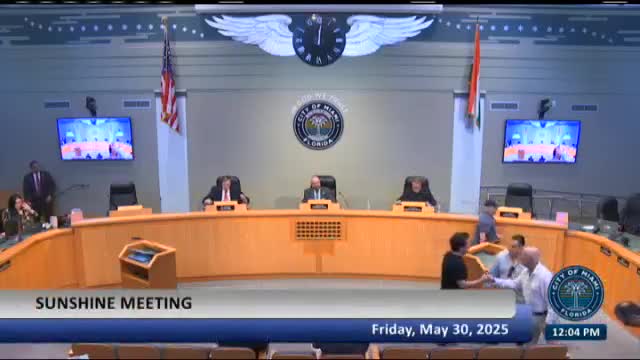
At a May 30 sunshine meeting, City of Miami commissioners and dozens of residents disputed allegations that elected officials have used code enforcement and other city powers to target political opponents and small businesses. Commissioners discussed drafting a resolution to bar such practices but took no formal vote.
The City of Miami held a sunshine meeting on May 30, 2025, to discuss allegations that city powers have been used as political weapons. Commissioner Gabriel Gabella convened the midday session with Commissioners Pardo and Commissioner Joe Carollo present and opened with a request that speakers limit remarks so the meeting could include public comment.
The meeting mattered because speakers from across the city—restaurant owners, business advocates and residents—said selective enforcement and coordinated visits by multiple city departments are disrupting small businesses and intimidating critics. Commissioner Gabella said he has been the target of investigations of his private properties and urged the commission to adopt a resolution to prevent “weaponizing city government.” He told commissioners, “I got nothing to hide,” and asked that any property review be handled by a neutral third party if undertaken.
City legal staff cautioned the panel and public against discussing ongoing litigation. Kevin Jones, deputy city attorney, reminded participants that “the only thing I will request as counsel for the City is to not discuss items that relate to open or active litigation and to not discuss items that were brought up at attorney-client sessions,” citing attorney-client privilege and litigation risk.
Public commenters described repeated enforcement actions they said are disruptive and politically motivated. Restaurant owners and hospitality representatives said multi‑agency visits—sometimes during peak service hours—have forced patrons out and damaged businesses. Noam Yimini, owner of Naomi’s Garden, recounted a late-night enforcement visit and said inspectors “came with fire, with police, with code enforcement, with everybody as if we were some huge operation.” Will Thompson, who identified himself as a local business owner and Air Force veteran, said the tactics are “not enforcement, that’s fear,” and urged the city to adopt less punitive, more educational approaches.
Other speakers tied the enforcement complaints to broader allegations of misconduct by an individual commissioner. Several residents and speakers referenced previous litigation and a jury finding described during public comment; Fernando Amandi and others urged the commission to stop what they called a pattern of retaliation. Thomas Kennedy, a resident who said he was arrested at a public event he was attending to protest, said the episode was an example of “misuse of law enforcement to falsely arrest citizens for no other reason but exercising their First Amendment right.” He added that prosecutors later closed the case after reviewing body-camera footage.
Multiple speakers urged structural reforms: an anonymous whistleblower system, clearer procedures for multi-department enforcement actions and a retooled code-enforcement process aimed at helping small businesses comply rather than immediately penalizing them. Felix Benderski, who represents more than 100 restaurants, and other hospitality stakeholders warned that current enforcement practices are pushing businesses out of the city.
Commissioner Gabella said he will pursue a resolution to bar the use of city resources for personal or political targeting and said a forensic audit of the Bayfront Park Trust—an agenda item he has raised previously—will move forward. He suggested that if property investigations occur they should be handled by county or state investigators to avoid conflicts. No formal motion or vote took place at the sunshine meeting; Gabella and others agreed to draft language and pursue formal legislation at a later date.
The city manager and legal staff signaled they would review any proposed language and emphasized legal limits on discussing pending litigation in public. The meeting closed after more than two dozen public comments; commissioners said they would hear final remarks after public comment and consider next steps at a future public meeting.
Looking ahead, speakers asked the commission to (1) draft a clear ordinance or resolution that defines and prohibits “weaponization” of city functions, (2) create better interdepartmental rules for enforcement visits to businesses, and (3) publish outside‑counsel spending and make litigation costs more transparent. Commissioners did not adopt any new ordinance or ordinance reading at the May 30 sunshine meeting.