Get Full Government Meeting Transcripts, Videos, & Alerts Forever!
Get email alerts on the Federal Budget topic
No spam. Unsubscribe anytime.
Milwaukee officials warn proposed federal budget cuts could reduce local health, nutrition and clean-energy funding
Summary
City officials told the Finance and Personnel Committee that proposals in the U.S. House budget could shrink Medicaid, SNAP and clean-energy grants that support city services, potentially shifting costs to Wisconsin and to Milwaukee's budget and residents.
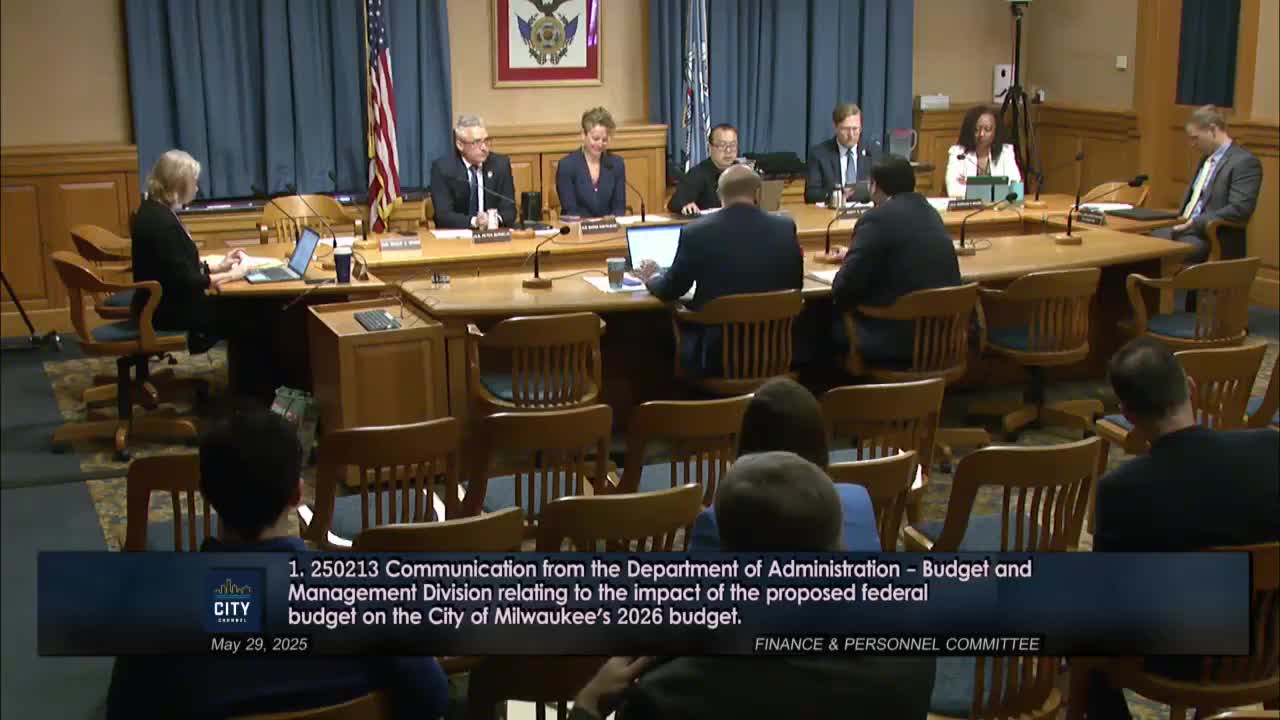
Alderwoman Marina Dimitrijevich, chair of the Common Council Finance and Personnel Committee, called a public briefing May 29 to hear how the federal budget debate may affect Milwaukee’s 2026 budget and residents’ services.
Jordan Primico, the city’s director of intergovernmental relations, told the committee the House-passed budget differs from the White House proposal and would “make permanent many of the Trump tax cuts,” and that leaders there are proposing deep cuts to Medicaid and SNAP to pay for additional tax reductions. “There are a number of different areas that would have a negative impact both on the city budget, but more impactfully would have a negative impact throughout our community and our community members,” Primico said.
The committee heard specific local risks. Joshua Benson of the Comptroller’s Office said if municipal bonds lost their tax-exempt status the city would face higher borrowing costs; Benson estimated issuing taxable debt could increase borrowing costs roughly 1.5 percentage points and said a present-value calculation of Milwaukee’s general‑obligation debt showed a difference of about $110.9 million over the portfolio (a roughly $8–9 million annualized figure on a discounted basis). The committee discussed that taxable versus tax-exempt borrowing also would likely push up utility and water rates if enterprise borrowing were affected.
Budget Director Kovac told members the administration’s memo flags potential cuts to core federal grants that support housing and community development. “Impacts to CDBG money and HOME money and housing opportunities for persons with AIDS money — that’s over $20 million between those federal grants,” Kovac said, adding that if such grants were reduced or eliminated the city could face choices about using levy dollars or cutting services.
Committee members emphasized the human consequences. Dimitrijevich said elected officials were hearing questions from constituents about how federal choices “may happen and how might it affect people,” and later added that proposed cuts represent “the unraveling of a human support system” for vulnerable residents. Primico and city leaders said they are coordinating with national municipal advocacy groups including the National League of Cities and the U.S. Conference of Mayors to press Congress to protect funds.
The committee did not take legislative action on the briefing; Alderman Moore moved to place the communication from the Department of Administration, Budget and Management Division on file and the committee agreed without recorded objection.
Why it matters: Milwaukee relies on multiple federal funding streams for public-health programs, housing services, energy and infrastructure grants, and on municipal bond markets to finance capital work. Committee members said the scale and timing of any federal reductions are uncertain, but could force difficult tradeoffs in the 2026 budget process and produce direct service impacts for residents.
What’s next: Staff said the city will continue monitoring federal budget activity and working with congressional delegation offices to seek protections for grants and bond tax treatment while departments prepare contingency planning for the 2026 budget.