Get Full Government Meeting Transcripts, Videos, & Alerts Forever!
Get email alerts on the Utilities Water Sewer topic
No spam. Unsubscribe anytime.
Chesapeake staff, consultants warn higher water and sewer rates likely to fund aging system
Summary
City staff and Stantec consultants told council the city’s current 5‑year rate plan will not cover rising capital and operating costs; consultants recommended adding 2 percentage points to the last two years of the existing plan and adopting a higher index thereafter to fund $73.5 million of identified critical needs.
Chesapeake city officials and outside consultants on Tuesday told the City Council that the local water and sewer utility faces higher-than-forecasted costs and that the city will need larger future rate increases to maintain service and fund critical repairs.
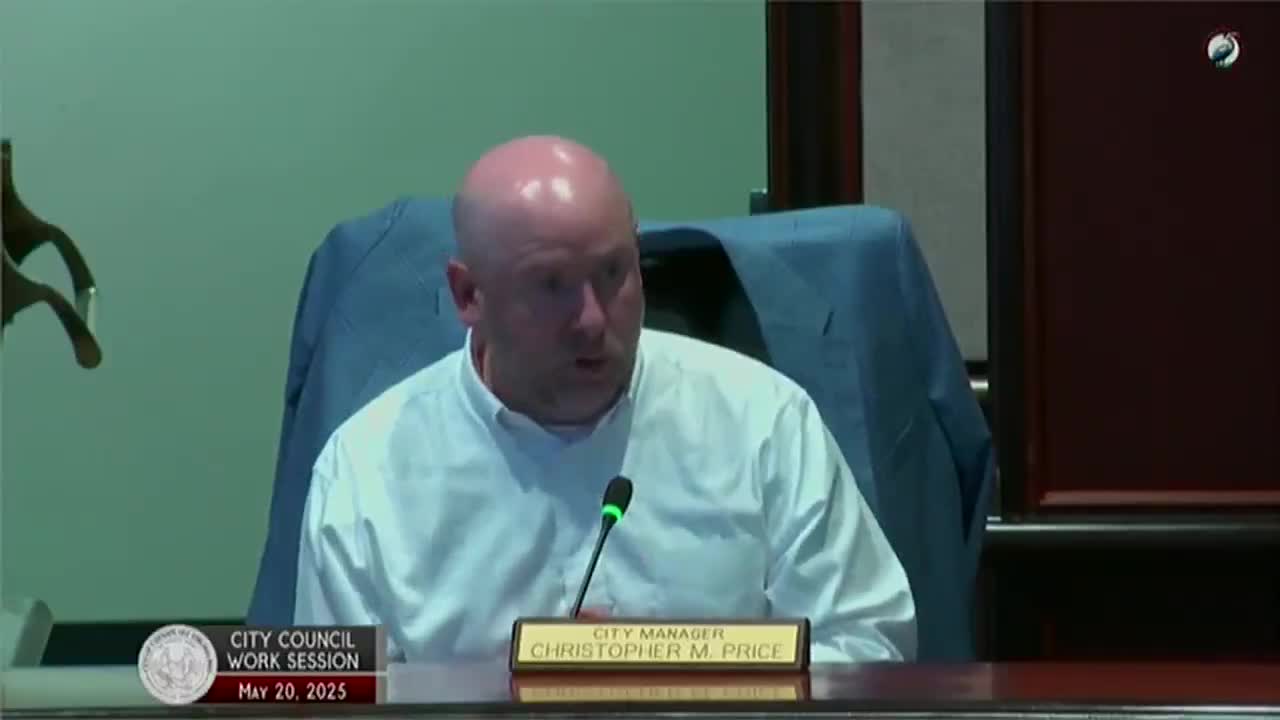
The council work session, led by City Manager Price and consultants from Stantec, reviewed an updated financial analysis that reflects post‑pandemic increases in chemical, plastic pipe and construction costs. Andrew Burnham of Stantec said the city’s 2.9 percent annual indexing in the current five‑year plan is now below industry trends and that the firm’s updated projections show an expected “new normal” index of about 4.9 percent in future years.
Why it matters: Consultants and the utilities director stressed that Chesapeake has older treatment plants and transmission mains. David Jurgens, the city’s director of public utilities, described repeated leaks and corrosion at facilities including Northwest River and Lake Gaston plants and said some electrical panels and pump stations date to the 1970s and early 1980s. Jurgens said recent emergency repairs (including a $138,000 force main repair and other multi‑thousand dollar emergency fixes) illustrate the risk of deferred capital work.
What the study shows: Stantec modeled three near‑term rate options: (A) maintain the current 2.9 percent increases through FY 2027 and move to a 4.9 percent index in FY 2028 (funds about $8.5 million of identified critical needs); (B) add 1 percentage point in FY 2026 and FY 2027 (3.9 percent those years) then 4.9 percent thereafter (funds about $42 million of needs); and (C) add 2 percentage points in FY 2026 and FY 2027 (4.9 percent those years and thereafter), which Stantec recommended because it would fund the utility’s full $73.5 million list of critical projects. Burnham summarized the firm’s recommendation: “We would suggest that you consider modifying the final 2 years of the rate plan by adding 2% to those increases for ‘26 and ‘27, and then also consider… a new 5‑year plan with that new level of indexing.”
Customer impacts and comparability: Stantec presented comparisons with neighboring utilities and estimated that the difference between the lowest and highest modeled options would be roughly $3 per month on a typical residential bill. The firm said projected bill levels under the recommended option would remain comparable with neighboring systems by 2030.
Council questions and next steps: Council members asked about tiered rates for high‑volume users, connection fees, and converting billing from bimonthly to monthly. Jurgens said the utilities department is converting manual meters to radio/readers and expects to begin converting some customers to monthly billing in about 2–3 years as meter replacements proceed. On connection fees, staff said they had not proposed changes but could analyze targeted changes (for example, different fees for unserved areas converting from wells or septic).
No formal action: City Manager Price said the session was for discussion and that no action was required at the work session; staff and consultants will return with more detailed agenda items for council consideration, including possible ordinance language and a final recommendation for rate adjustments before any rate changes are adopted.