Get Full Government Meeting Transcripts, Videos, & Alerts Forever!
Get email alerts on the District Funds topic
No spam. Unsubscribe anytime.
City manager proposes three‑fund model to standardize council district funds, event subsidies and third‑party grants
Summary
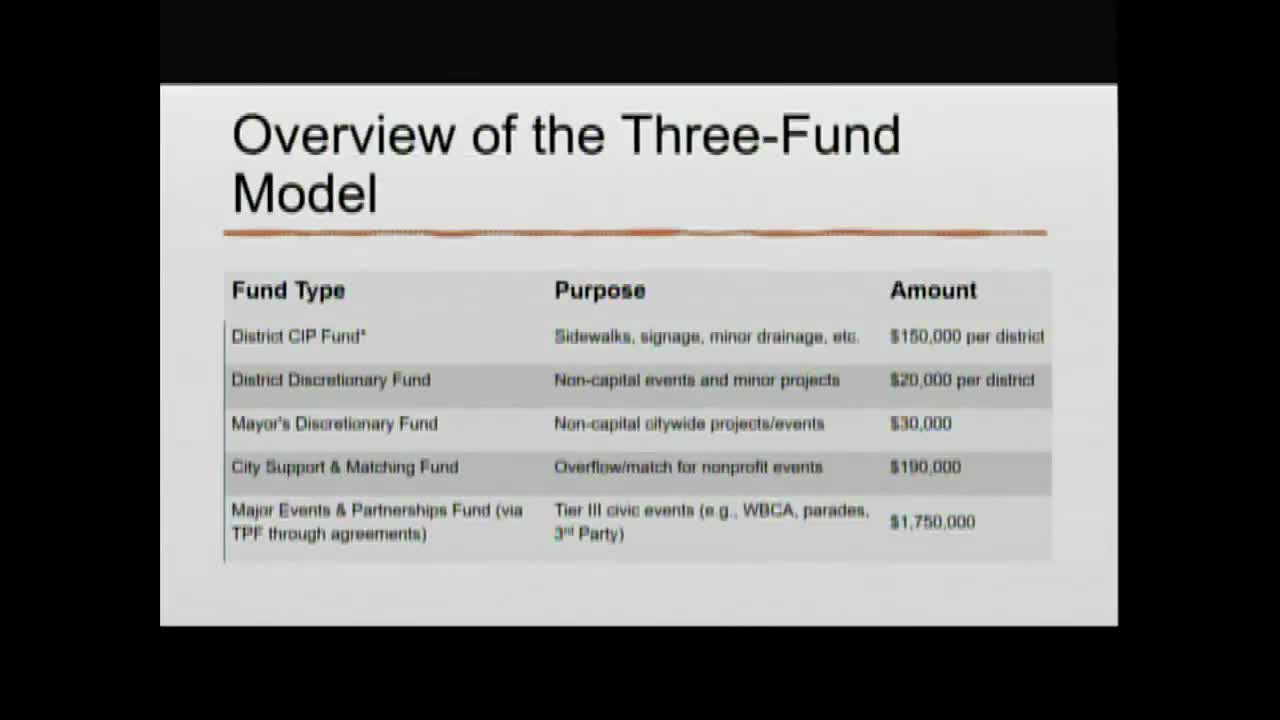
City manager presented a proposed district funding model that would cap district CIP and discretionary allocations, create a city support matching fund, and consolidate third‑party event subsidies into a single major events fund to improve transparency and performance tracking.
City Manager Ramon Neff presented a draft three‑fund model March 20 to standardize how council discretionary district funds, district CIP and city support for city partners and signature events are allocated and tracked.
Why it matters: Councilmembers and residents have repeatedly raised transparency and equity concerns about how district funds and third‑party subsidies are distributed. Neff said the model is intended to make support "intentional" and easier to audit.
Model overview: - District CIP fund: proposed cap of $150,000 per district per applicable borrowing cycle for small capital projects such as sidewalks, minor drainage and signage (amount available only when the city issues borrowing that year). The money would continue to be executed by the relevant department and tied to engineering review and public purpose requirements. - District discretionary fund (DDF): proposed at $20,000 per district (up from historical $12,500) to support community events, outreach and noncapital beautification. Neff proposed rules to prevent use for political or religious activity and to require documentation and post‑event performance reporting. - City Support Matching Fund and Major Events/Third‑Party Fund: staff proposed a $500,000 pool for ongoing third‑party support and a larger $1.2 million major events fund for signature events (WBCA, major sports or tourism draws) to be contracted with performance standards. The model would allow councils to pool DDFs with the city support fund to match larger requests rather than seeking one‑off waivers.
Staff rationale and controls: Neff told council the model is based on San Antonio—s structure and aims to avoid ad hoc waivers and the perception of a "secret bank account." The proposal would require councils to submit annual plans for their CIP and DDF allocations so the public and staff can see intended uses, and performance reporting would be required after events.
Council questions: members raised concerns about timing and the ability of districts to fund larger infrastructure needs, and some asked for flexibility on whether district funds should be used for labor costs or be restricted to materials and vendors. Neff said departments would help prepare scopes and that the mechanism could be adjusted for district priorities.
Next steps: staff proposed returning a formal resolution and policy language for council consideration; councilmembers asked for more detail on eligible uses, documentation and performance metrics before adopting caps and new rules.
Ending: The proposal seeks to balance district autonomy with standardized policy, and staff will return a detailed draft policy and resolution for council action.