Get Full Government Meeting Transcripts, Videos, & Alerts Forever!
Get email alerts on the Budget topic
No spam. Unsubscribe anytime.
Carson City trustees adopt FY2025–26 final budget, approve using reserves to cover projected shortfall
Summary
The board adopted the district’s final budget for FY2025–26, approving a budget that uses a portion of reserves to cover a projected $4.6 million taxation gap (structural deficit estimated at $3.4 million after contingency). Trustees discussed enrollment declines and future pressure to reduce deficit spending.
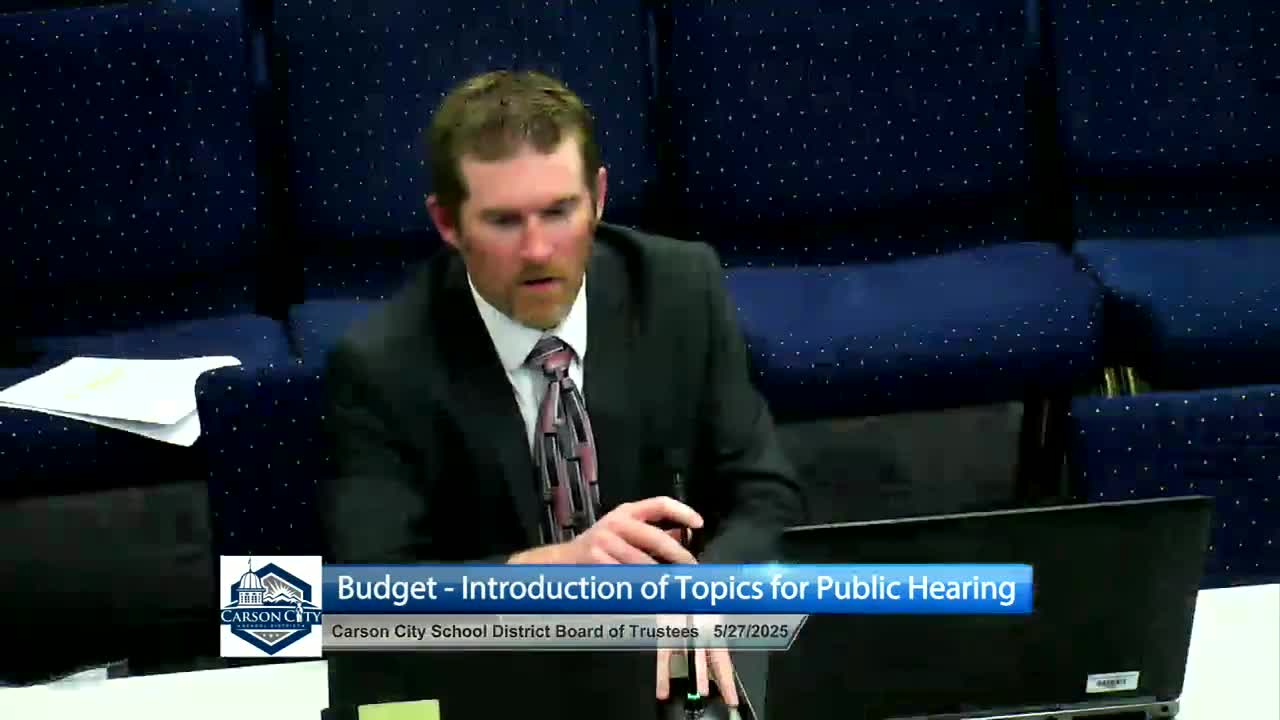
The Carson City School District Board of Trustees adopted the district’s final budget for fiscal year 2025–26 on May 27, approving a plan that reduces reserves to cover a projected budget shortfall.
District fiscal staff presented the final numbers: general fund revenues were listed at about $80.8 million and general fund expenditures at about $85.4 million, producing a taxation deficit of approximately $4.6 million. That figure includes a $1 million contingency and roughly $200,000 in carry‑forward authority; removing those items produces a structural deficit estimate of about $3.4 million, district staff said.
Director of Fiscal Services Spencer Windward walked trustees through the budget timeline and key assumptions, explaining the district’s approach to both near‑term and multi‑year planning. He stressed the continued enrollment decline that affects state‑per‑pupil funding: the packet projects enrollment falling from 7,427 (FY24) to an estimated 6,914 in the coming year. Windward said the district plans to use some reserves to maintain services while monitoring the situation for possible adjustments in December after legislative outcomes and fall enrollment updates.
Trustees pressed staff on the details. Trustee Richard asked about beginning balances and carryovers for capital projects; staff said carryover is substantial and much of the capital work spans fiscal years, which creates timing differences between appropriation and actual spend. Trustee Walt emphasized long‑term fiscal sustainability and urged that the board avoid ongoing deficits where possible.
Trustee Walt moved adoption of the final budget and instructed the director of fiscal services to file the transmittal letter required by state statute; Trustee Barner seconded. The board voted to adopt the final budget and to transmit the required documents to the Nevada Department of Taxation to comply with NRS Chapter 354.
Board materials note several items that could change the December amended budget: final legislative action (the session closed June 2), final federal funding decisions, and October/December enrollment counts. Windward also identified about $4.5 million in “pay‑as‑you‑go” funds available in the debt service fund that could be used for capital projects if the board chose to do so, but he cautioned that tapping that account could affect future bonding capacity.
Trustees asked for additional briefings on grants and on possible budget adjustments, and they requested a discussion about timeline alternatives so future budget hearings cause less strain on staff and trustees during holiday weeks.