Get Full Government Meeting Transcripts, Videos, & Alerts Forever!
Get email alerts on the Land Use Zoning topic
No spam. Unsubscribe anytime.
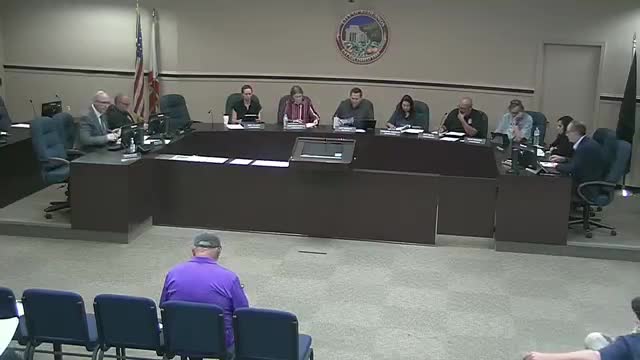
Redlands planning commission directs staff to study limits on new warehouses
Summary
After extended public comment and legal briefing, the Redlands Planning Commission voted 4–2 on May 27, 2025 to ask staff to return with detailed options on grandfathering, a future prohibition and strategic zoning (including buffers) for large warehouse and logistics uses.
The Redlands Planning Commission on May 27, 2025 voted to direct staff to prepare further analysis of options to limit new large warehouse and logistics development in the city, including a potential grandfathering approach, a future prohibition, and strategic zoning changes such as overlays or buffers.
The commission’s action follows a staff presentation and a legal briefing about options and risks. Planning staff said the city’s warehouse ordinance — adopted after a 2022 moratorium and effective May 18, 2023 — applies to buildings of 50,000 square feet or more or to buildings with six or more truck docks and to redevelopment that replaces more than 50% of a building’s reasonable replacement value. Staff identified six parcels that could still accommodate large warehouses; one (1101 California Street) is under construction and another (301 Tennessee Street) has a pending application.
The legal briefing, given by outside counsel Todd Leishman, emphasized the risk of immediate elimination of legally established warehouses without a long phase-out. “If the city moves to eliminate warehouse uses, including the existing legally established ones, immediately ... the city will almost certainly end up ... buried in an increase of compensable taking claims,” Leishman told the commission.
Members of the public urged stronger restrictions. “Residents’ opposition to more warehousing is overwhelming,” said Michael Pacener, who argued for a long amortization period or grandfather clause so existing operators could continue but not expand. Bruce Laycook and other speakers urged converting vacant or eligible parcels to housing, while others cautioned that new housing has not reduced rents and that manufacturing and office options should be considered.
After discussion the commission moved — Commissioner Elliott made the motion, seconded by Commissioner Wells — to direct staff to prepare additional analysis on a grandfathering option and a prohibition on future warehouses and to explore strategic zoning amendments, including buffers. The motion carried, four to two.
Staff said the next steps are to return with more specific examples showing how a grandfathering program, amortization schedules, overlays or rezones, and buffers would operate in practice, including legal and fiscal risk analysis. Staff also noted that a resubmittal of the Tennessee Street warehouse application is scheduled for a future meeting (anticipated June 24), and that any existing application filed before an adopted prohibition could be treated according to the filing date and current ordinance.
Why it matters: Commissioners and residents framed the issue as a balance between protecting neighborhoods and the environment and avoiding costly legal claims or unexpected impacts to property owners and jobs. The commission’s direction asks staff for concrete, legally informed options that the commission could later refine and recommend to the City Council.