Get Full Government Meeting Transcripts, Videos, & Alerts Forever!
Get email alerts on the City Budget topic
No spam. Unsubscribe anytime.
Finance committee begins 2026 budget review; members and staff flag pensions, tax-credit opportunities and elections costs
Summary
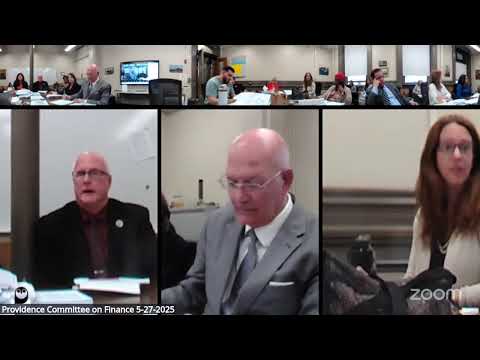
The Providence City Finance Committee began its fiscal year 2026 budget review on May 27, receiving department-by-department presentations on finance administration, the assessor and collector, the controller, retirement and elections.
The Providence City Finance Committee began its fiscal year 2026 budget review on May 27, hearing presentations from finance, the tax assessor, tax collection, the controller's office, the retirement board and the elections office.
Finance administration
Finance staff presented a proposed finance administration operating budget of $1,486,373 for fiscal 2026, an increase of $12,738 (0.86 percent) over the prior year. Salaries were listed at $856,324. The budget includes a $85,000 private-contractors allocation to pay external auditors and tax consultants for work on tax credits and related consulting; staff said the city filed its first tax return related to certain credits and expects roughly $79,000 in refundable credits tied to electric-vehicle and charging-station purchases. Committee members asked whether those credits would be recorded as general fund miscellaneous revenue and where any future credits would be budgeted; staff said revenue treatment was still being worked out with accounting and that the sustainability team was coordinating the longer-term plan.
Officials also requested funding set aside for a possible pension study and other third-party financial analyses. Committee members emphasized that fixed costs are growing and that the city faces a tight budget outlook in coming years.
Tax assessor and tax collection
The assessor's office presented a proposed budget of $2,147,594 for fiscal 2026 (a reported decrease from the prior year). The presentation outlined spending on subscriptions and databases (CoStar, AWS-hosted property data), printing, and private-contractor services. Staff said some reprioritized work (revaluation expenditures expected to post in FY25 while reimbursement will be received in FY26) explained year-over-year reductions in certain contract lines.
The tax collector/municipal collections office presented a $2,412,515 budget for fiscal 2026. The presentation noted revenue from tax-sale filing fees and other recovery activity and described line items including armored-car services, auctioneer fees for online tax-sale processing and postage and advertising costs.
Controller, retirement and elections
The controller's office reported a proposed budget of $1,081,782, including a small allocation for dividend earnings tied to a legacy life-insurance policy. The retirement office proposed $640,154 in expenditures; presenters said staff turnover and steps on salary tables explain some movement in the personnel budget and that the office uses audit services to verify obituaries and terminate pension payments when appropriate.
Committee members pressed retirement staff about the condition of paper-held pension files and asked what digitization would cost. Staff said digitization would likely require substantial investment (staff noted recent comparable digitization projects and estimated costs in the mid-six figures; another councilor recalled prior administration estimates that approached $1 million). Staff said the city had begun planning approaches but that statutory record-retention rules and the need to preserve paper copies for certain records complicate the program.
Elections staff described a reduced salary allocation for FY26 because no citywide elections were planned in the fiscal year, but noted the city must still budget for routine advertising and election-day costs. The office said the upcoming special/primary contests will involve only a small number of precincts and estimated direct costs (advertising, staffing) in the low tens of thousands of dollars for the short cycle; advertising remains the department's largest single expense for elections.
Committee discussion
Council members asked for additional detail on the private-contractor allocation, timing of IRA and federal tax-credit revenues, the rationale for line-item reductions in assessor contracts, and specific pension options including reamortization and the potential timing for a pension obligation bond should market conditions make that attractive. City staff described past bond closings and explained the constraints and risks of a pension-obligation-bond approach, including targeted interest-rate thresholds in prior legislation.
No committee votes were recorded on budget items at the May 27 meeting; the presentations will continue at subsequent committee meetings as the Finance Committee finalizes recommendations for the full City Council.