Get Full Government Meeting Transcripts, Videos, & Alerts Forever!
Get email alerts on the Housing Lead Health topic
No spam. Unsubscribe anytime.
Lancaster City expands Healthy Homes work after multi‑year HUD grant; $7 million more secured
Summary
City staff told Lancaster City Council the Office of Healthy Homes completed hundreds of lead, critical‑repair and healthy‑homes projects under a 2019 HUD grant and related funding, and said it has secured an additional $7 million for lead hazard control plus other funds to continue work citywide.
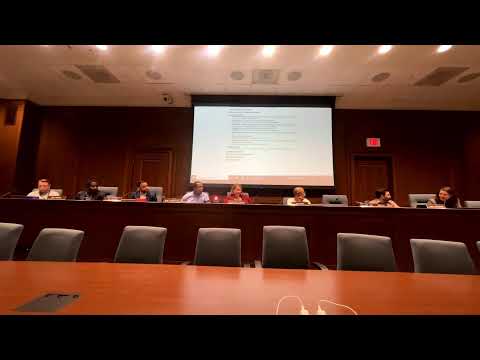
The Lancaster City Office of Healthy Homes told City Council on May 27 that its multi‑program effort has completed hundreds of lead‑hazard, critical‑repair and healthy‑homes projects since 2019 and that the city has obtained additional funding to continue and expand that work.
Rebecca Geiser, deputy director in Community Planning and Economic Development, introduced the presentation and said the office was rebranded from a narrow “lead” team to an Office of Healthy Homes to reflect broader work on safety and public‑health related housing issues.
The office said its work has included a HUD Lead Hazard Control grant awarded in 2019 for $9.7 million, supplemented by Pennsylvania Department of Health funds, community development block grant (CDBG) money and American Rescue Plan Act (ARPA) allocations. Elaine Lapesh, program manager for the Office of Healthy Homes, said the HUD grant included $700,000 specifically allocated to healthy‑homes work and that the team used that to address non‑lead hazards while performing lead remediation.
“Everyone deserves a safe and healthy home,” Geiser said, summarizing the team’s mission.
City staff gave several production figures. The presentation said the office completed 170 lead hazard control projects in the most recent 12‑month period and 40 critical‑repair projects funded through an ARPA allocation. Over the life of the HUD grant the team reported completing 403 lead remediation projects in targeted census tracts. Staff also said the Healthy Homes supplemental work covered 106 homes, with an average Healthy Homes cost of about $5,500 per house during the initial grant period.
Daniel Sosa, who presented project examples, described typical lead hazard control and healthy‑homes work: window and porch replacement, stabilization and repainting of trim, radon testing and mitigation, installation of smoke and carbon monoxide detectors, accessibility repairs such as handrails and ramps, pest management and moisture remediation. He showed before‑and‑after photos of porch replacements, window work, a collapsed roof that was replaced and heating‑system replacements.
Staff said recent HUD guidance encouraged the team to favor permanent abatement when feasible rather than interim controls, which increased per‑home costs and reduced the number of homes the grant would cover, but produced longer‑lasting results. The presentation said landlords are required to cover 10% of lead remediation costs, which staff said has leveraged nearly $500,000 in private contributions to housing stock improvements.
Geiser told council the office has improved outreach and enrollment processes — a data‑sharing agreement with the Pennsylvania Department of Health to receive child lead‑poisoning referrals, a streamlined eligibility pathway for Section 8 households through a partnership with Lancaster City Housing Authority, improved language access using an interpretation app, and administrative efficiencies such as electronic signatures and reduced duplicate paperwork for owners who enroll multiple properties.
Looking ahead, staff said they have secured a new $7,000,000 lead hazard control award and expect to complete roughly 300 additional lead remediation projects with that funding. They also reported approximately $100,000 in remaining ARPA funds for critical repair and a $2,750,000 Healthy Homes Production grant expected to fund about 80 projects. Councilors and the mayor expressed support and praise for the team’s work.
Council President Baker and several councilors applauded the numbers and the partnerships the office established. Councilor Royal thanked staff for outreach into neighborhoods; Councilor Hirsch highlighted the partnership with the Lancaster City Housing Authority; Mayor Seracchi noted Lancaster’s status as a high‑performing HUD grantee during the grant period.
Staff encouraged referrals and said brochures and contact information have been provided for residents to request assistance.
The Office of Healthy Homes presenters listed in the record were Rebecca Geiser (Deputy Director, Community Planning & Economic Development), Elaine Lapesh (Program Manager, Office of Healthy Homes), Daniel Sosa (Office of Healthy Homes) and Craig Walt (Health Bureau leadership; was unable to attend due to illness).