Get Full Government Meeting Transcripts, Videos, & Alerts Forever!
Get email alerts on the Land Use topic
No spam. Unsubscribe anytime.
Valley County commissioners set July 7 public hearing to adopt McCall impact‑area boundary and shift permitting to county
Summary
After extended debate, commissioners agreed Valley County will assume governance of the McCall impact area and will hold a public hearing July 7 on the boundary and related code changes. Staff were directed to prepare notices, maps and facts and conclusions to meet Idaho's 90-day request timeline from the City of McCall.
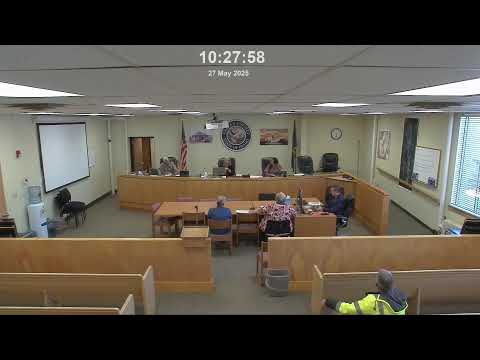
Valley County commissioners agreed May 27 to pursue adoption of a McCall impact‑area boundary and directed staff to notice a public hearing for July 7, beginning a multi-step process that would transfer local governance and permitting responsibility for the affected area from the City of McCall to Valley County.
The commissioners voted to set the July 7 public hearing after a multi-hour workshop in which commissioners, county planning staff and building department staff discussed the geographic scope of the proposed impact area, statutory deadlines, notice requirements and implementation steps. Planning and zoning staff told the board the county must follow Idaho Code notice and decision timelines because the City of McCall had requested a decision within 90 days.
Why it matters: The change would move land‑use governance, building‑permit authority and enforcement for most parcels in the defined impact area from city processes to Valley County codes and administration. County officials said doing so should reduce confusion residents reported about which entity handles permits and enforcement, but it will require coordinated ordinance updates, notice and potential short‑term protections while codes are updated.
Board discussion and direction County staff described a proposed map that includes parcels contiguous to McCall such as a 61‑acre parcel off Lehi Creek Road, land around Kron Lane and properties near the airport. Commissioners and staff repeatedly emphasized transportation and sewer service as determinative factors for growth and annexation; staff noted annexation requires contiguity and that sewer capacity limits commercial and residential expansion in many areas.
Commissioners directed staff to: publish and post the impact‑area map for the public hearing; coordinate required notices to political subdivisions and landowners; prepare the facts and conclusions that will support the decision; and prepare a parallel ordinance amendment to Title VI of the Valley County Code so the county's building department can assume permit review and inspections for the new impact area once the ordinance is adopted and published.
Statutory timeline and public notice County counsel and staff noted that once the county receives a formal letter from McCall invoking the 90‑day review, Idaho Code requires the county to issue a decision within that timeframe. Staff presented a timeline for hearings and for preparing facts and conclusions so the county can meet the statutory window; under that timeline, staff said, final facts and conclusions would be ready in late June or early July and the decision could be completed by mid‑August if notices and hearings follow the proposed schedule.
Moratorium, codes and interim protections Commissioners debated whether to impose a moratorium on new development in the area while county codes and the comprehensive plan are updated. Some commissioners said a moratorium should be reserved for demonstrable emergencies; others suggested a limited short window (for example 60 days) or targeted moratoriums focused on shoreline setbacks or applications likely to affect water quality, so county staff could finalize key protections before new permits are submitted. The board did not adopt a moratorium at the meeting; it asked building and planning staff to return if they determine urgent need for temporary restrictions.
Design guidance, water quality and scenic‑byway protections Commissioners asked staff to include requirements the county might keep or strengthen for the Scenic Byway corridor and water bodies: stronger landscape requirements along key arterials, modest architectural controls for commercial facades on the byway, and measures to protect streambanks and lakeshores. Staff raised a commonly proposed 50‑foot setback from water bodies (the transcript also includes discussion of 100‑foot alternatives and use of natural vegetation instead of turf near shorelines) and noted potential effects on existing lots where lot depth or size would make larger setbacks impracticable. Commissioners asked staff to work with the Planning & Zoning Commission and the affected cities to develop design guidelines and water‑quality protections to present at the public hearing process.
Next steps and implementation The board directed the clerk's office and planning staff to prepare and publish the public‑hearing notice and the map for the July 7 hearing, to alert political subdivisions and affected landowners as required by Idaho Code, and to prepare facts and conclusions for the board's deliberations. County staff also said they will prepare an ordinance amendment to remove the City of McCall impact‑area language from Title VI (building permits) so that, once the ordinance is published and effective, Valley County building officials would assume building‑permit review for the adopted area. Planning staff estimated the land‑use ordinance and comprehensive plan changes would follow and could proceed through the P&Z commission in July with county board action later in the summer.
Public‑facing materials and timeline Commissioners asked that the county post the proposed map and the city's letter on the county website before the hearing. Staff committed to prepare a public map and to place the city's request letter and the project timeline on the county website and in the public hearing packet.
What was not decided The board did not adopt a moratorium at the meeting and did not finalize changes to comprehensive‑plan text, setback distances, original‑parcel rules or scenic‑byway design guidelines. Commissioners left those items for subsequent P&Z review and later board deliberations.
Ending County staff will return with published notices, the map and prepared facts and conclusions ahead of the July 7 public hearing. Commissioners said they expect to present the public record and deliberate after the hearing according to the statutory timeline.