Get Full Government Meeting Transcripts, Videos, & Alerts Forever!
Get email alerts on the Elections Voting Equipment topic
No spam. Unsubscribe anytime.
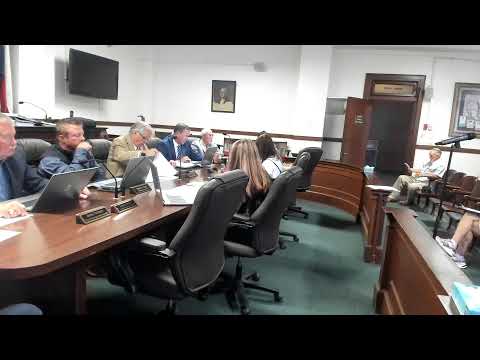
Limestone County officials discuss pilot of new electronic voting equipment, consolidation of polling sites and costs
Summary
County election staff described a state mandate to move to new electronic voting equipment and a plan to consolidate smaller polling places. Commissioners raised costs, travel distances for voters and timing concerns; staff said the mandate takes effect Sept. 1, 2026, and the county would pilot the system in November.
Limestone County election staff told commissioners the state has issued an unfunded mandate that will require the county to buy new electronic voting equipment, and staff proposed piloting the system during the November election while consolidating several small precinct polling places.
The proposal and follow-up discussion focused on cost, voter travel distances and ensuring a paper ballot trail. Jennifer, an elections staff member, said the mandate’s effective date is Sept. 1, 2026, and that the county “would actually pilot this program this November, so the county would have a chance to utilize it.” She told commissioners that the new system still produces a paper record: “The voter doesn’t take the ballot. It still goes into the ballot box and stays there.”
County staff estimated the equipment purchase will cost roughly half a million dollars spread over the next budget cycle. Commissioners asked for maps and turnout data for affected precincts and for clarification about which small sites staff proposed closing. Jennifer described several specific consolidations under consideration: closing Temple Baptist Church and other small locations and leaving two Mexia-area locations open for election day, and keeping the farthest location at Eastlake open to serve remote voters.
Several commissioners said they were concerned about travel distances for some voters. When staff provided an example distance from Westbury Baptist Church to central vote centers, the measurement given was 9.82 miles to the courthouse and 8.26 miles to Wesley Volunteer Park. Commissioners also pressed staff on how the changes would be publicized; staff said legal postings would be placed on county websites and that word-of-mouth and office outreach would be used.
Commissioners discussed timing of the cost and whether to add the expense to the current year’s budget or wait for the regular budget hearings in August and September. One commissioner argued the purchase should be budgeted rather than handled through contingency transfers, saying that a recurring annual cost would be triggered if the county adds the expense now. Another commissioner noted the state deadline and supported proceeding with a pilot this November.
At the close of the hearing, a motion and second were recorded "to approve this" (the proposal as presented), and the court moved on to the next agenda item. The transcript does not include a full roll-call vote tally for that motion.
Why it matters: The county faces an unfunded state requirement to replace voting equipment and must weigh near-term costs against voter convenience and access. Consolidating polling places can reduce staff and site expenses but raises questions about travel distances for rural voters and public notice.
What’s next: Staff said they will rely on the legal posting process and the county website to notify voters about consolidated locations and the pilot. Commissioners requested turnout maps and additional detail before final, larger-budget decisions are made.