Get Full Government Meeting Transcripts, Videos, & Alerts Forever!
Get email alerts on the Humanitarian Aid Gaza topic
No spam. Unsubscribe anytime.
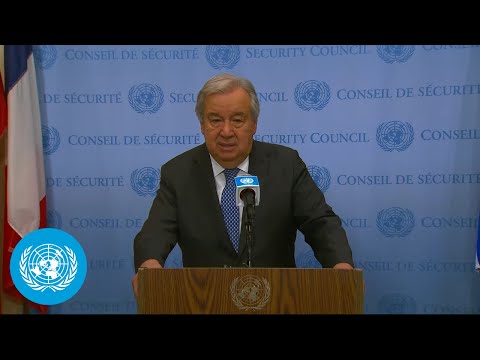
U.N. representative urges immediate, sustained aid to Gaza, warns of famine
Summary
A United Nations representative warned that Gaza faces mass hunger and called for immediate, sustained humanitarian access, saying only a fraction of needed supplies have reached civilians despite trucks being cleared at crossings.
A United Nations representative said Palestinians in Gaza are enduring “what may be the cruelest phase of this cruel conflict” and urged immediate, safe and sustained humanitarian access to avert mass deaths from hunger.
The U.N. representative told the meeting that Israeli restrictions have left supplies far short of needs: nearly 80 days into the conflict, a limited flow of aid has been allowed in but only a small portion has actually reached civilians. “A trickle of aid has crossed over,” the representative said, noting that almost 400 trucks were cleared for entry through the Kerem Shalom crossing but that supplies from only 115 trucks had been collected and that “nothing has reached the busy North.”
The warning came with specifics about items and scale: the U.N. reported distributing wheat, flour, baby food, nutrition supplements and medicines and said a few bakeries in southern and central Gaza were operating, but described that as “a teaspoon of aid when a flood of assistance is required.” The representative said 160,000 pallets of supplies — enough to fill nearly 9,000 trucks — are prepared and waiting for movement to people in need.
The representative described substantial operational obstacles, including “strict quotas” on goods, “unnecessary delay procedures,” and prohibitions on essentials such as fuel, shelter materials, cooking gas and water-purification supplies. Staff safety was raised as a concern: the representative said U.N. personnel face risk if convoys lack adequate security measures and if movement to distribute food parcels and wheat flour directly to people is prevented.
The speaker framed the scale of the problem: “Without rapid, reliable, safe, and sustained aid access, more people will die, and the long term consequences on the entire population will be profound.” The U.N. official said roughly 80% of Gaza has been designated either an Israeli militarized zone or an area where people were ordered to leave, creating “no-go” zones for civilians.
To address distribution, the representative described a detailed, five-stage operational plan supported by member states to inspect and scan aid at crossing points, transport aid from crossings to humanitarian facilities, prepare aid for onward distribution and transport aid to people in need. The U.N. official said the organization has “the personnel, the distribution networks, the systems and community relationships in place to act.”
The representative reiterated policy priorities tied to humanitarian access: a permanent ceasefire, the immediate and unconditional release of hostages, and full humanitarian access. The remarks closed with a direct appeal: “This is my appeal for life saving aid for the long suffering people of Gaza. Let’s do it right, and let’s do it right away.”
The speaker concluded by stressing adherence to humanitarian principles and international humanitarian law, saying the U.N. would not participate in schemes that fail to respect humanity, impartiality, independence and neutrality.