Get Full Government Meeting Transcripts, Videos, & Alerts Forever!
Get email alerts on the Business Permitting topic
No spam. Unsubscribe anytime.
Commission defers decision on reducing spacing requirement for tattoo establishments
Summary
A proposed ordinance to reduce the required spacing for tattoo establishments in the B-2 district from 1,000 feet to 750 feet drew extended debate; the commission voted to defer for two weeks to gather historical and policy context.
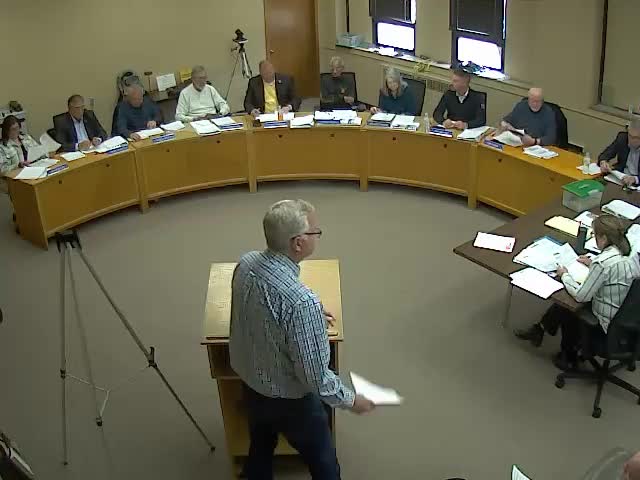
The plan commission on May 22 considered an Alderman-originated ordinance that would change location-spacing rules for tattoo establishments in the B-2 community business district, reducing the separation requirement from 1,000 feet to 750 feet (the 1,000-foot standard would remain in B-3 and along the interstate). Staff recommended denial and commissioners debated the ordinance’s history, public-safety rationale and precedent implications before voting to defer the item for two weeks.
Proposal and staff recommendation: Alderman Kenny Harper introduced the zoning-text amendment to change spacing in B-2. City planning staff said the amendment appeared driven by a single prospective business that would not meet the current 1,000-foot spacing; staff’s preference was not to change an ordinance to accommodate a single applicant and to avoid piecemeal changes that create precedents.
Public and commission debate: One member of the public, Rodney King Harbor, attended to answer questions from the commission. Commissioners questioned the original purpose of the 1,000-foot spacing requirement; staff explained the spacing dates to a period when tattoo parlors were commonly grouped with other adult-oriented uses and the standard was intended to prevent clustering of such businesses and to protect neighborhood character. Commissioners expressed differing views: some said the industry today is regulated by state and county health licensing and that appearance-and-safety standards may be a more targeted approach; others warned that incremental reductions could open the door to further exemptions and clustering of similar uses.
Action: After extended discussion the commission voted to defer the item for two weeks to allow staff and aldermen to compile the ordinance’s history, regulatory rationale and potential broader impacts. The item will return for further deliberation at the next meeting.