Get Full Government Meeting Transcripts, Videos, & Alerts Forever!
Get email alerts on the Airport Lease J1 Housing topic
No spam. Unsubscribe anytime.
Galveston council told airport hotel lease assignment could lead to J‑1 worker housing and future renegotiation
Summary
City staff asked council to approve assignment of a long‑running ground lease to a new operator while warning the new operator plans to pursue a separate lease to convert long‑term use to seasonal J‑1 worker housing; FAA grant‑assurance limits and revenue impacts were central concerns.
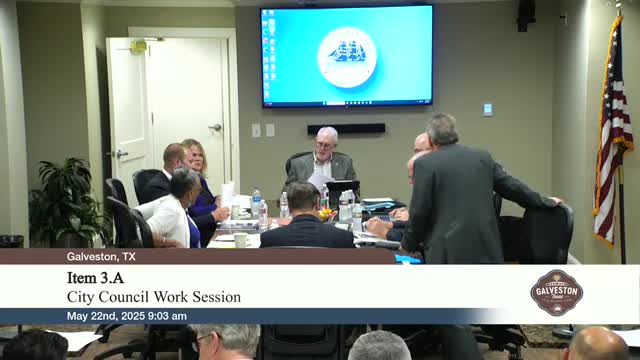
City staff told the Galveston City Council at its May 22 workshop that the current owner of an airport‑adjacent hotel wants to assign the existing ground lease to a new operator and later negotiate a new lease if the new operator seeks to change the long‑term use to housing for J‑1 visa workers.
The request before council would approve assignment of the existing lease with its remaining term and conditions, staff and airport officials said. City Port Director Mike (identified in staff remarks) said the existing lease is currently written for “hotel or other airport‑related use,” and the new assignee has said it will initially operate the property as a hotel but may later seek a new lease to allow year‑round or multi‑month occupancy for seasonal workers under J‑1 or similar programs.
Council and staff emphasized that a new lease would need to be negotiated at fair market value and would require FAA review because the airport’s ground leases and federal grant assurances limit how long and under what terms airport property may be leased. Port and airport staff said the current lease, after prior amendments, effectively totals more than 50 years, which the FAA treats as a taking if further extended without FAA approval. Counsel and staff advised the council that a renewal or extension that increased an existing lease term would risk FAA enforcement; a brand‑new negotiated lease could be done, but at market rates and with negotiation over the airport’s current equity in the hotel property.
Council members raised fiscal and operational questions: whether revenue shared with the airport would fall if rooms were rented to J‑1 workers at lower rates; how the hotel could fluctuate between seasonal J‑1 housing and market‑rate guests; who would be responsible for hot‑tax collection on extended stays; and how the city would enforce the hotel definition in the lease. Port staff said the existing lease rate is old (originating in 1991 for parts of the property and amended later) and described several commercial options for any future ground lease, including a higher ground rate, a revenue share, or a buyout to compensate the city/airport for its current equity.
Staff recommended the city approve assignment of the existing lease for the remaining roughly 23 years while noting that any future change in use (from hotel to multifamily or long‑term housing) would require a new lease and council approval. Some council members asked staff to seek more information from the potential assignee and flagged concerns about hot‑tax revenue, public safety, and whether the airport’s enterprise fund would be reduced if ground rent fell.
Airport staff and council members repeatedly noted that the FAA’s grant assurances (cited in staff discussion as Grant Assurance 5 and Grant Assurance 24) require fair market value where applicable and constrain lease renewals or extensions that increase a lease beyond the 50‑year threshold. City staff said they had discussed the situation with FAA contacts and believed an assignment of the current lease, without extension, would be acceptable but that any new long‑term lease would need FAA review and would be negotiated at market rates.
The council did not vote on the issue at the workshop; staff told members the assignee plans to appear at a later public meeting and that a final assignment and any subsequent new lease would return for formal action.
Ending: Council members asked staff to return with more details on the potential assignee’s intentions, revenue‑sharing scenarios, and FAA implications before approving any new long‑term lease; staff said the current request is narrowly to approve assignment of the existing lease and that any change of use would require a separate, market‑rate lease coming back to council.