Get Full Government Meeting Transcripts, Videos, & Alerts Forever!
Get email alerts on the Tobacco Vaping Nicotine Pouches topic
No spam. Unsubscribe anytime.
Revere public health staff warn of rising youth use of nicotine pouches, youth‑oriented vapes
Summary
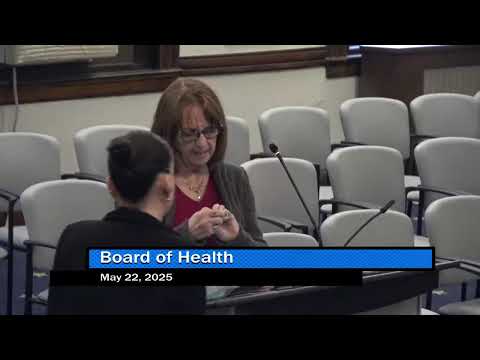
At the Revere Board of Health meeting in May, Bonnie Carroll of the Six City Tobacco Initiative described a surge in nicotine pouches and small electronic nicotine delivery devices that staff say are popular with young people and are difficult to detect. Carroll and board members discussed regulation, health risks and enforcement challenges.
Bonnie Carroll, director of the Six City Tobacco Initiative, told the Revere Board of Health that inspections across the city are finding a surge in nicotine pouches and small electronic nicotine delivery systems that she said are “flying under the radar” and are attractive to youth.
Carroll said nicotine pouches contain concentrated nicotine but no tobacco. “In a package of Marlboro cigarettes, an entire package, there's 127 milligrams of nicotine,” she said. “One of these pouches, there is 8 milligrams of nicotine, and there are 20 of these in a tin.” She added some pouches sold locally contain up to 18 milligrams per pouch. Carroll said some tins sell for about $5 and other single‑serving packs can cost roughly $1.99.
The board heard that these products are widely available behind store counters and that manufacturers market small, brightly colored devices and cartridges Carroll said appear geared to younger consumers. Carroll displayed a range of products to board members and described other small electronic devices shaped like toys, music players or video‑game consoles that can be used to vape.
Why it matters: Carroll and board members said the products combine high nicotine doses with concealability, increasing the risk that teenagers will become quickly dependent without obvious signs of use. Carroll noted these products often lack the visible vapor or smell associated with earlier vape products, saying that makes them easier to use discreetly in schools.
Carroll described enforcement and regulatory gaps. She said retailers in the collaborative have a minimum‑age sales policy of 21, but the products are not yet regulated by the U.S. Food and Drug Administration in the same way as cigarettes. “At the moment, they're not regulated,” she said, adding local inspections check for manufacturers’ letters that claim products are not flavored; Carroll said some letters appear questionable and inspectors suspect many products are effectively flavored even when labeled otherwise.
Board members asked about health effects, transitions to combustible cigarettes and hospitalizations. Carroll said long‑term and population‑level data are limited because the products are relatively new, but she agreed to follow up with research and provide the board with additional information. “The data is kind of a little bit behind at this point because it's relatively new,” Carroll said.
Board discussion emphasized addiction risks from nicotine itself. Viviana Catano, board member, recalled prior youth vaping trends and said nicotine is highly addictive — a point echoed by other members who noted potential cardiovascular and developmental harms.
Carroll said the Six City Tobacco Initiative is funded through the Massachusetts tobacco cessation program and that the program is shifting toward using the term “nicotine program” because many products no longer contain tobacco. She also said the initiative is increasing staffing and compliance checks: 23 compliance checks have been completed in Revere to date and the initiative has hired two youth workers to speed inspections.
Board members asked Carroll to return with follow‑up data on hospitalizations, transition risk from pouches to smoking, and product reuse/refillability. Carroll said she would research those items and report back.
Carroll concluded by urging continued enforcement and public education to reduce youth access and use.