Get Full Government Meeting Transcripts, Videos, & Alerts Forever!
Get email alerts on the Ems Budget topic
No spam. Unsubscribe anytime.
Durham County EMS cites rising call volume, revenue gap from Medicaid changes and asks for ambulances and staff
Summary
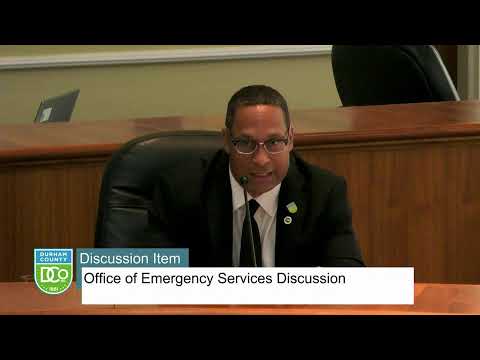
Office of Emergency Services Director Mark Lockhart told commissioners May 22 that EMS call volume has risen 24.7% since FY2018 and that a Medicaid program change has left about $2.3 million in claims pending. The office requested 12 clinical positions and five ambulances, and said radios and fleet deliveries face long lead times.
Mark Lockhart, director of Durham County’s Office of Emergency Services, told the Board of Commissioners on May 22 that EMS call volume and operating costs have grown steadily and that a state Medicaid billing change has reduced near‑term revenue.
Lockhart said the county’s EMS fleet modernization is underway — the county received five new Braun ambulances in January, with more units and SUVs on order — but production delays mean new ambulances still have 30‑ to 36‑month delivery windows. “We expect production right now to be still between 30 and 36 months, from the date of order,” Lockhart said, noting additional units are scheduled over the next three fiscal years.
Tracy DeShazo, senior administrative officer, explained how North Carolina’s Medicaid transformation and the introduction of “tailored plans” affected EMS billing. DeShazo told commissioners the county has roughly $2.3 million in EMS claims in a pipeline awaiting processing by the tailored‑plan administrator; she said those funds could appear as revenue in FY26 once claims are processed.
Why it matters: The combination of sustained annual call‑volume growth (Lockhart cited a 2–3% increase annually, 16% since FY21 and 24.7% since FY18), long ambulance lead times and a current revenue shortfall has led the office to request additional staff and vehicles to maintain response capacity and patient outcomes.
Key details
Staffing and vehicle requests: Lockhart said the FY26 request includes 12 clinical positions (six EMTs and six paramedics), five replacement ambulances (with an already long delivery lead time) and several SUVs. He said the county will need about 40 ambulances over time to support proper rotation and reserves; with current orders, 33 of 37 ambulances will be replaced by FY29 if recommended replacements are approved.
Call volume and response times: Lockhart provided multi‑year data showing emergent and total call volumes increasing year over year. He said average response times have been moving toward 10 minutes and noted industry focus is increasingly on patient outcomes rather than raw response time, though response time remains critical for conditions such as cardiac arrest and stroke. Emergent average response times have hovered near eight minutes, while 90th percentile response times have been closer to 13–16 minutes in recent years.
Revenue and billing: DeShazo described the Medicaid transformation’s tailored plans and said Durham EMS has roughly 2,183 tailored‑plan billable trips in the current year, rising to a projected 2,600 in FY26. She said the county has roughly $2.3 million in claims in the pipeline awaiting processing by the tailored‑plan administrator, Alliance, which she described as the principal reason for a FY25 revenue shortfall.
Operational pressures and programs: Lockhart also outlined broader emergency‑management work (including radios and interoperability upgrades), noted rising fleet costs and said EMS is holding low‑priority calls at times — about 4–5% weekly — while units are staged or unavailable. He described community paramedicine and a post‑overdose response team as programs that have improved care access; staff said the community paramedicine pilots have increased field staff interest and patient contacts.
Commissioner follow‑up items: Commissioners asked about recruiting challenges (noting Wake County’s hiring pace and pay competitiveness), the need to map development and service impact for planning, the timeline and inventory for vehicles, and whether HEART diversion of behavioral‑health calls has reduced EMS load. Lockhart and staff agreed to provide additional vehicle inventory and timeline data, and to work with planning staff on service‑impact mapping.
Ending note: Lockhart framed the requests as necessary to stabilize response capacity and to prepare for projected growth; commissioners asked staff to return with cost, staffing and vehicle delivery schedules to inform the budget process.