Lifetime Citizen Portal Access — AI Briefings, Alerts & Unlimited Follows
UN assembly spotlights culture as driver of sustainable development in digital era
Loading...
Summary
The President of the General Assembly convened a high-level interactive dialogue under General Assembly resolution 78/161 to examine how culture and digital transformation can advance sustainable development.
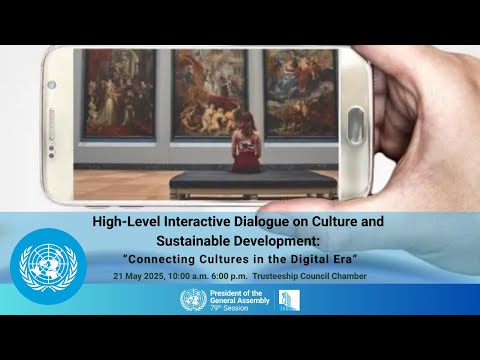
The President of the General Assembly called the session to order under General Assembly resolution 78/161 and opened a high-level interactive dialogue on culture and sustainable development with a focus on the digital era.
Speakers from United Nations agencies and more than two dozen member states said culture is an engine for sustainable development and urged action on digital inclusion, cultural rights, and governance of artificial intelligence in cultural spaces.
Ernesto O'Toni, Assistant Director-General for Culture at the United Nations Educational, Scientific and Cultural Organization (UNESCO), urged “a renewed global framework for culture in the digital era” built on three pillars — equity and access, ethics and governance, and diversity and innovation — and said UNESCO supports tools such as AI readiness assessments and digital capacity networks.
Ilsa Brands Keris, Assistant Secretary-General for Human Rights, said “culture and cultural rights are indispensable to sustainable development, peace, and stability,” and cited the 2005 UNESCO Convention on the Protection and Promotion of the Diversity of Cultural Expressions and UNESCO's 2021 Recommendation on the Ethics of Artificial Intelligence as normative anchors for protecting cultural rights online.
The Spanish State Secretary for Culture, Jody Matty Grow, invited delegates to participate in the World Conference on Cultural Policies and Sustainable Development (MondiACULT 2025) in Barcelona and described the summit’s planned focus on cultural rights, technology (including AI), and culture’s role in peacebuilding.
Delegations described national initiatives and priorities. Several recurring themes emerged: expanding meaningful connectivity and digital skills, protecting cultural identities and intellectual property in the digital environment, improving discoverability of local and minority cultural content on global platforms, and increasing public investment in the cultural and creative sectors.
UNESCO figures cited during the dialogue show cultural and creative industries account for about 3.1 percent of global gross domestic product and employ roughly 6.2 percent of the world’s workforce; multiple delegations referenced these data when urging public investment and international cooperation.
Countries gave examples of national programs: Cyprus highlighted a university Digital Heritage Research Lab and a UNESCO chair on digital cultural heritage; Portugal described a UN-Portugal Digital Fellowship for capacity building; Qatar pointed to investments such as the Qatar Digital Library and the Qatar Creates platform; Morocco outlined national targets to double the creative sector’s contribution to GDP and triple creative employment by 2035; Nigeria described a Creative Leap Acceleration Program, a creative economic development fund, and a goal to reach 70 percent broadband penetration.
Regional and multilingual concerns were raised by the International Organization of La Francophonie and the representative of the Democratic Republic of the Congo, both of which urged measures to improve the discoverability and visibility of cultural content from the global South and francophone countries on major digital platforms. The Francophonie said it is developing a rating system to evaluate platform commitments to discoverability.
Several delegations, including Rwanda, Fiji, Indonesia, and Guatemala, framed digital inclusion as a cultural or human right and called for targeted measures to preserve indigenous languages, intangible heritage, and traditional knowledge while ensuring communities benefit economically from digital cultural markets.
Speakers also warned that digital platforms and algorithmic concentration risk amplifying a small number of cultural sources at the expense of local voices, and many called for international cooperation, public–private partnerships, and regulatory measures that balance platform openness with protections for creators.
The plenary concluded with reminders about upcoming multilateral milestones — including MondiACULT 2025 in Barcelona, the fourth Financing for Development conference, and the second World Summit for Social Development — and with an invitation to a panel discussion later in the day.