Get Full Government Meeting Transcripts, Videos, & Alerts Forever!
Get email alerts on the Delta Conveyance topic
No spam. Unsubscribe anytime.
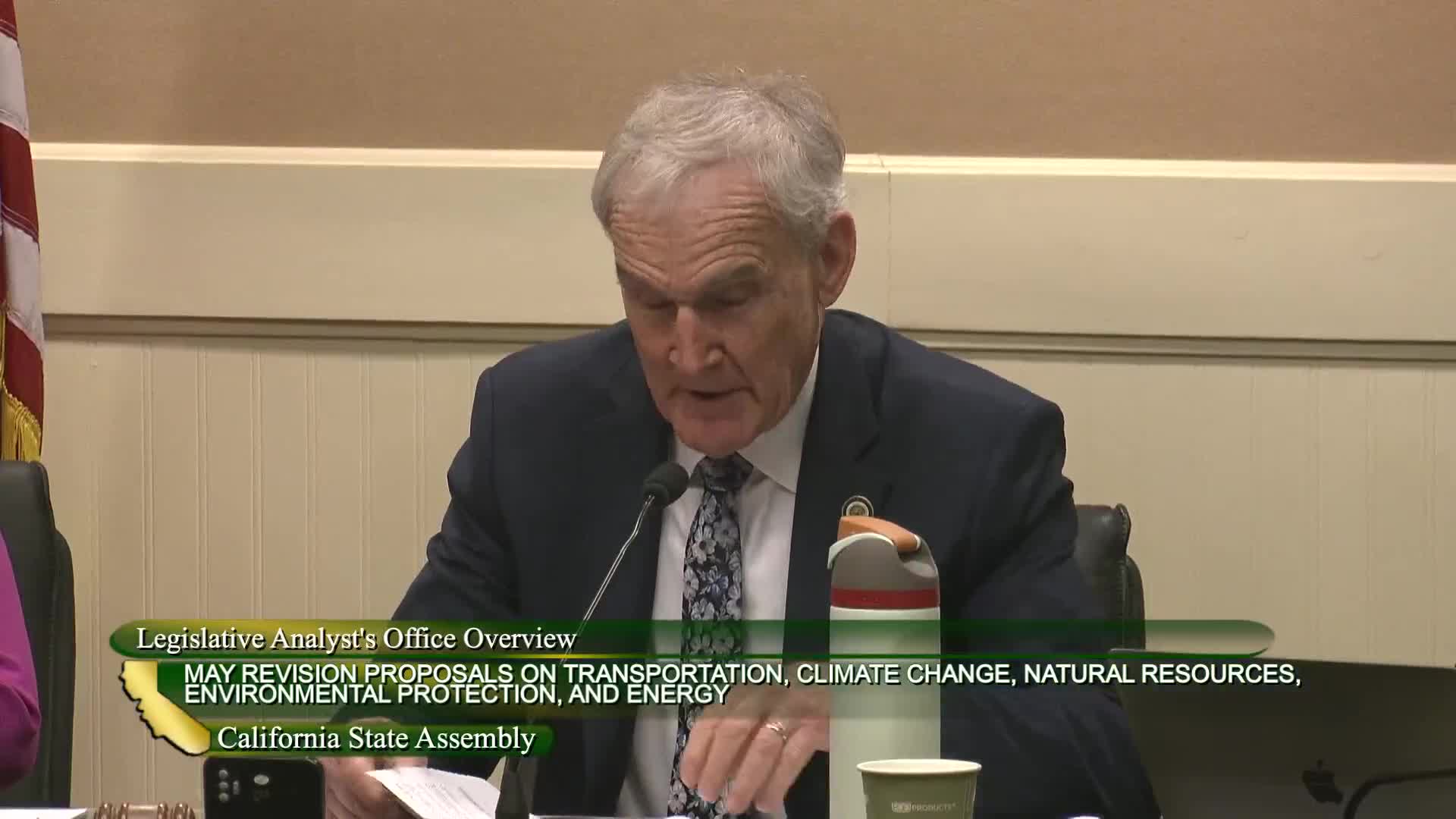
Assembly hearing draws sharp debate over Delta Conveyance trailer bills and proposed CEQA change
Summary
The Assembly Budget Subcommittee on the May Revision heard extensive testimony and public comment on administration trailer bills that would streamline review of the Delta Conveyance Project and exempt water‑quality plan amendments from CEQA; LAO and many lawmakers urged deferral to policy hearings.
The Assembly Budget Subcommittee on the May Revision heard extensive testimony and public comment on two linked trailer‑bill proposals: a Department of Water Resources (DWR) package to streamline proceedings tied to the Delta Conveyance Project and a State Water Resources Control Board bill that would exempt water quality control plan amendments from the California Environmental Quality Act. The subcommittee did not take a vote on either measure and members and analysts recommended deferral to a policy process with more time for review.
The hearing opened with legislative analysts and budget staff framing the May Revision context: the Legislative Analyst's Office (LAO) estimated a $12–$14 billion shortfall and urged caution on fast‑tracked, high‑impact policy changes released close to the budget deadline. "Our overarching recommendation is to defer without prejudice these major policy changes," LAO analyst Rachel Ehlers told members, saying the proposals were "highly complex issues" and not necessary to enact the budget.
DWR Director Carla Namath described the Delta Conveyance proposal as a set of process changes intended to reduce delay. "We do anticipate additional protests coming in ... these proposals do not weaken the environmental protections that must be placed on these projects," Namath said, adding that the department has a CEQA document and other permits for the project. She and Department of Finance staff said the administration also seeks statutory clarification that the State Water Project is in the public interest and validation that DWR has authority to issue bonds for the project.
The State Water Resources Control Board witness, Phil Wiles, said the water board seeks a categorical CEQA exemption for amendments to water quality control plans because the board's actions are "by definition ... designed to protect the beneficial uses of the waters of the state" and that the current process generates time‑consuming analysis of "secondary and tertiary" issues driven by public comments.
Several legislators and LAO representatives pushed back. Assemblymember (and subcommittee member) voiced concern that the trailer bills seek to convert broad policy decisions into budget language with insufficient time for review: "If they don't have to be done with the budget ... give yourselves the time you need," LAO staff Sonia Piddick said. Members repeatedly asked why these proposals were being advanced now rather than through regular policy committees.
Many members focused on three recurring concerns: (1) the scope of the proposed CEQA change for water quality control plans (the administration's language would apply to all state and regional water quality control plans, not only the Bay‑Delta update); (2) provisions altering protest and water‑rights procedures and streamlining judicial review, which critics said could limit access to review; and (3) language validating DWR's authority to issue bonds after a court ruling that had previously limited that authority.
DWR and its Office of General Counsel said the bond language would not shift costs to state taxpayers and that the State Water Project has historically been funded by water contractors through revenue bonds; Chris Butcher, DWR's general counsel, told the committee that "fair market value would be essentially the base" for property acquisitions and that the department was not seeking to take land without compensation.
Public comment extended for more than an hour and included dozens of witnesses. Supporters included trade unions and some water agencies who framed the proposal as an adaptation and reliability measure for 27 million Californians. "We're a seismic event away from a human and economic catastrophe in the Delta," Keith Dunn of the State Building Construction Trades Council said. Advocates for tribes, environmental groups, Delta counties and fishing and farming industries opposed the bills, calling the measures an inappropriate use of the budget process and warning of harm to the Delta's ecology and tribal cultural sites. "These trailer bills are an attempt to circumvent important due processes and public engagement," said Morgan Snyder, speaking for Restore the Delta and allied groups.
Lawmakers repeatedly cited the LAO's recommendation to "defer without prejudice" for both items and signaled reluctance to adopt major policy changes in the budget bill with little time for technical review, stakeholder engagement or assessment of downstream legal consequences. The committee paused the item only after hearing public comment and said it would reconvene on any remaining questions.
Discussion vs. decision: The hearing contained extended discussion and public comment but no formal committee actions or votes. Lawmakers and the LAO urged further policy‑committee review and more time to assess environmental, fiscal and legal consequences before any statutory changes are approved.
Why it matters: The bills would alter the rules that govern how California updates water‑quality standards and how a major water infrastructure project is reviewed, protested and financed—matters with environmental, tribal, economic and fiscal implications that many legislators said require fuller public and legislative review.
What’s next: The subcommittee did not adopt the trailer bills today. Multiple members said they expect further meetings with the administration and additional policy hearings before any legislative approval is sought.