Get Full Government Meeting Transcripts, Videos, & Alerts Forever!
Get email alerts on the Prison Closures Radios Ada Consultant topic
No spam. Unsubscribe anytime.
Committee presses CDCR on prison‑closure process after May revise withdraws radio and ADA funding
Summary
Lawmakers pressed CDCR and the administration for details after the May revision withdrew funding for public‑safety radio replacements and postponed ADA facility improvements; CDCR said no prison has been selected for a planned closure and identified an external consulting contract for operations savings.
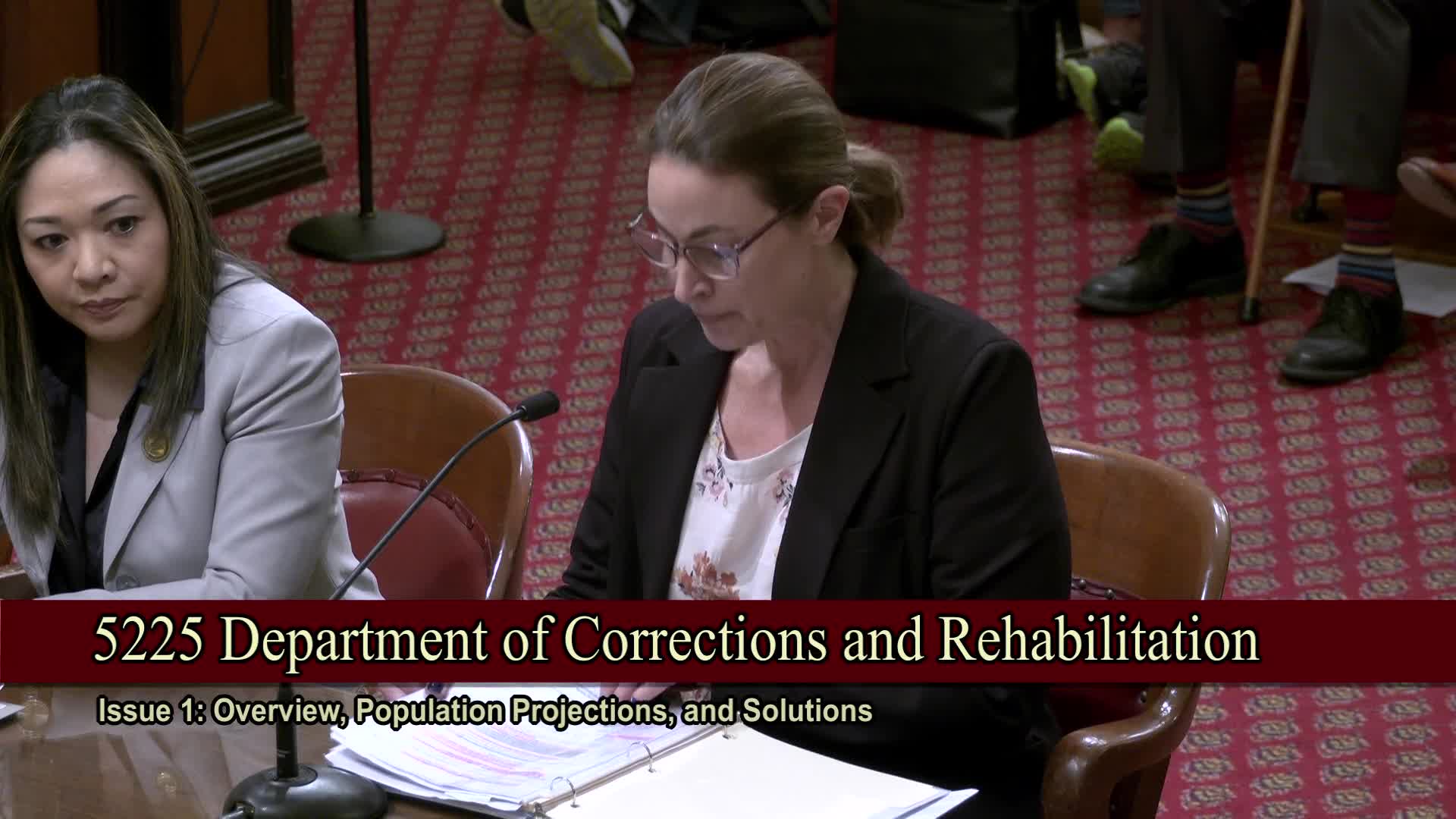
Cynthia Mendoza, deputy director of fiscal services for the California Department of Corrections and Rehabilitation, told the Senate Budget Subcommittee No. 5 that CDCR plans to close an additional prison by October 2026 and is working to mitigate impacts but had not selected a specific facility.
Mendoza said the department intends to align with an external consultant and has added a $125 million reduction in the budget year tied to a modernization and efficiency effort; details of the associated business‑process changes were not finalized.
Senators pressed the department on a separate decision in the May revision to withdraw a January request for roughly $19.8 million to establish a replacement cycle for public‑safety radios. Senator Anthony J. Sciarra (phonetic) told the panel that poor communications can pose significant safety risks and urged the committee to restore the radio funding; he said the $19.8 million request could grow to about $25 million if delayed two years.
The Legislative Analyst's Office advised the committee that delaying radio replacements is a deferral of costs, not elimination, and could raise safety risks because much of the equipment has exceeded its manufacturer‑expected life cycle and is no longer supported. The LAO recommended the legislature ask CDCR to report on the implications of delay.
Dave Lewis, CDCR director of facility planning and construction management, said the department is undertaking a comprehensive review of facilities and will not start new construction or major projects before deciding which prison will close to avoid spending on a site that might be shut. He also described reprioritized capital requests, reappropriation of roof projects and reductions in the size of an air‑cooling pilot from four institutions to three.
Department of Finance representatives described a three‑month scoping contract with Boston Consulting Group to identify where administrative efficiencies could be found, focusing on headquarters efficiencies, contract management, overtime management and health care service delivery. Department of Finance staff later said the administration proposed a further, larger contract to work side‑by‑side with departments and train staff on implementation.
The LAO told the subcommittee that the May revision also withdrew $22 million proposed in January for ADA accessibility improvements and said that, because ADA work can be required under ongoing litigation, the legislature should consider whether delaying those improvements increases legal risk. The LAO recommended the department describe the implications of delays and asked for reporting requirements on any consultant work.
Committee members requested CDCR provide options the subcommittee can review within 30 days on which prisons are being considered for closure, and alternatives for offsetting any restored radio funding. CDCR said a public announcement on a facility would be required by Oct. 26, 2026 to permit 12 months for closure operations.
Why this matters: Withdrawal of one‑time funding and planned facility closures have fiscal, community and public‑safety consequences. Committee members repeatedly asked for more detail and transparency from CDCR and the administration before making final budget decisions.