Get Full Government Meeting Transcripts, Videos, & Alerts Forever!
Get email alerts on the Public Safety topic
No spam. Unsubscribe anytime.
Houston Fire Department proposes $31.5 million cut for FY26, plans hires to reduce overtime
Summary
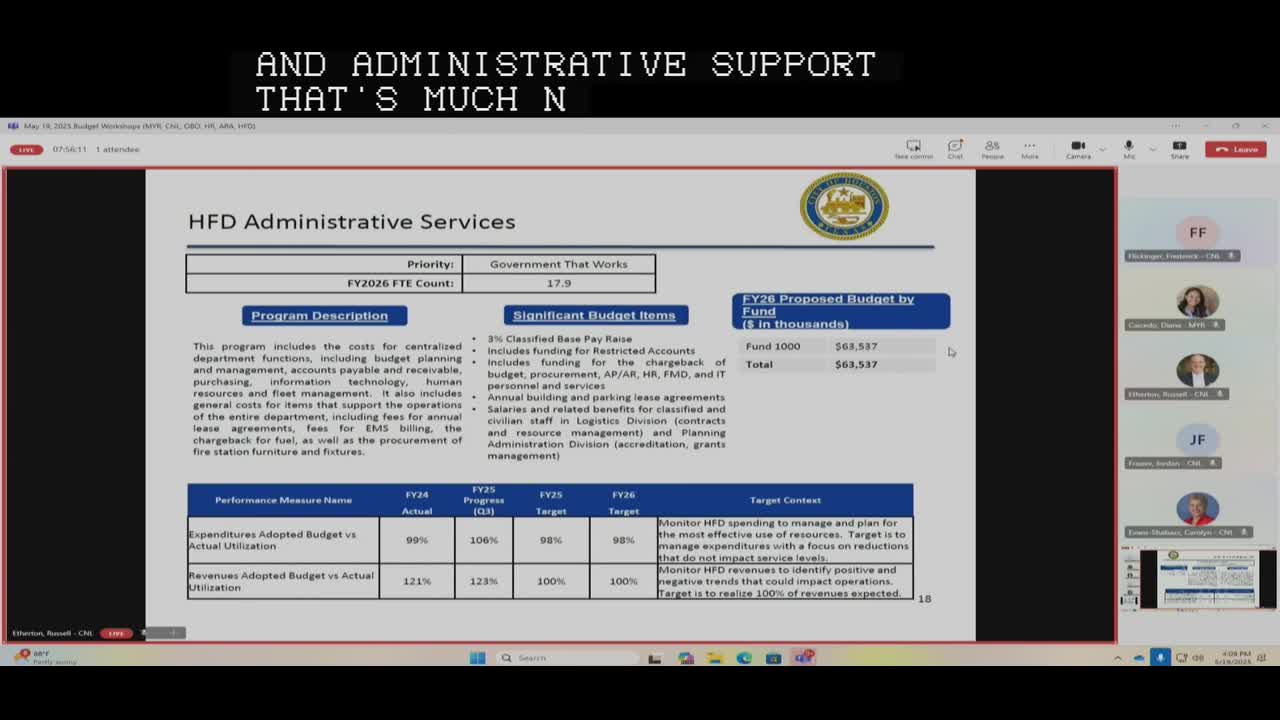
Fire Chief Tom Munoz told City Council the Houston Fire Department's FY26 proposed budget trims roughly $31.5 million from FY25 levels, relies on new hires to cut overtime, and faces up to a $13.3 million revenue risk if a state fee bill is not continued.
Houston Fire Chief Tom Munoz told the City Council that the Houston Fire Department's (HFD) proposed fiscal year 2026 budget reduces overall spending by about $31,500,000, or 5 percent, from the current year while aiming to increase classified hires to reduce costly overtime.
The proposal, presented during a council meeting, ties most HFD spending to public safety priorities. "The majority of our budget is — 87% — is dedicated to public safety," Munoz said, and the department plans to use increases in classified headcount to lower overtime costs that drove large overruns in the current year.
The staffing plan includes a near-term hiring ramp: Munoz reported the department expects a net increase of about 75 classified personnel in FY25 and an estimated net increase of 200 classified personnel in FY26. He said cadet-class attrition has improved — from about 45% in FY24 to an expected 34% this year and an anticipated 12% attrition rate for classes graduating in FY26 — and that multiple rehire classes have already returned former firefighters to the department.
Why it matters: the department attributes a large share of the proposed spending reduction to lower expected overtime, not cuts to firefighter base pay or emergency response capacity. In a line-item example cited by council members and HFD staff, budgeted overtime for emergency response falls from roughly $78,500,000 (FY25 estimate) to about $39,200,000 in the FY26 proposal.
HFD said it will use several strategies to manage event-related overtime, including requesting reimbursements from event organizers. The department expects about $375,000 in reimbursement revenue for FY25 tied to events such as Freedom Over Texas, Wings Over Houston, the Houston Marathon, Lights at the Heights and preliminary work for the World Cup. Munoz said HFD is working with FIFA and Houston First on reimbursement arrangements for World Cup activity, which he described as a 39-day slate of events.
The presentation also covered a voluntary municipal retirement payout offered to civilians. HFD reported 36 civilian employees were eligible for the payout; eight took the option, producing a net civilian headcount reduction of seven and an estimated one-time reduction in expenditures of $750,000. Munoz said the department's civilian headcount was 99 on April 30 and is now 91 after the payout program.
Revenue risk: HFD staff flagged a potential revenue shortfall tied to state legislation governing ambulance and transport fee payments. Rochelle McHenry, presenting revenue details for HFD, said passage of Senate Bill 2476 previously required commercial insurers to use the department's submitted rates; those rules reduced underpayment by insurers. McHenry told the council that if a successor to that law is not enacted, the budget could lose about $13,300,000 in ambulance-related revenue. "That $13,000,000 decrease is only if we don't get that bill," McHenry said.
Capital and equipment notes: Council members asked about vehicle and apparatus procurement timelines and costs. Munoz said ambulances run roughly $345,000 each on current pricing; he and fleet staff said lead times for transport units can be about 18 months and about two to 2.5 years for pumpers and ladder trucks.
Council concerns and follow-up requests: members asked for more precise estimates of federal grant reliance, the historical cost of disaster responses that were not reimbursed, and a written inventory of vehicle needs and timelines. Council Member Kamen and others pressed for a dollar estimate of how much HFD depends on federal grants such as UASI and AFG. Munoz and McHenry said staff would provide additional figures and back-up documentation on grants, disaster reimbursements and equipment wish lists.
No formal council action or vote on the HFD budget occurred during the presentation; the department concluded by taking questions from council members and said it would provide requested follow-up figures.