Wake County proposes 3–5 year performing arts framework with instrument library, scheduling task force
Summary
District staff proposed a multi-year performing-arts framework to expand equitable access, centralize resources (including a district instrument library), address scheduling barriers that reduce arts participation, and build community partnerships; staff sought the board’s endorsement to continue planning.
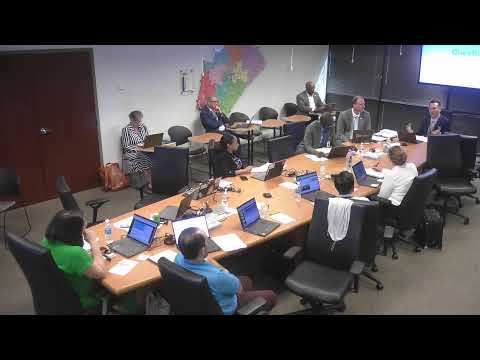
Wake County Schools staff presented a proposed three- to five-year visual and performing arts framework to the Student Achievement Committee on Oct. 21 that aims to increase equitable access, centralize resources and strengthen pathways from elementary through high school.
Jeremy Tucker, a district arts lead, said the framework is intended to be "more than a curriculum guide. It's a commitment to access, creativity, and student voice." The plan sets four strategic directions: invest in human and physical resources; align resources and leadership for growth; educate essential partners on the value of arts; and maximize student opportunities in the arts.
Key points from the presentation - Staffing and participation: Staff reported roughly 667 arts educators districtwide (about 285 elementary, 170 middle, and 212 high school arts teachers). They said roughly 56 percent of students take music courses and about 55 percent take visual-art courses; dance and theater each enroll a smaller share (roughly 8–9 percent). - Centralized resources: The framework proposes centralizing purchasing and creating a district instrument library to reduce cost barriers and standardize quality. Tucker said: "By building our own district wide instrument library, we're not just expanding access to music education, we do also reduce long term cost and standardized quality and support schools." He described economies of scale, bulk purchasing and a checkout model. - Scheduling task force: The district plans a scheduling task force to identify master-schedule barriers that prevent students from continuing arts courses from elementary to middle and high school, and to propose district scheduling models and guidelines that preserve arts pathways. - Arts designation and student voice: Staff proposed an arts designation schools could earn (similar to STEM or CTE designations) to recognize schools that provide broad arts pathways and community partnerships. Staff also proposed a Wake County student arts advisory panel to amplify student voice in planning. - Partnerships and funding: The presentation noted strong partnerships (for example, with the United Arts Council) and identified facilities, instruments and professional development as recurring needs. Staff reported many schools raise funds locally (from a few thousand to more than $50,000) to sustain arts programs.
Why it matters: Staff said arts participation declines between elementary and secondary grades, often because schedules do not protect elective time. The framework aims to increase sustained participation, improve facility and instrument equity and strengthen postsecondary and career connections for arts students.
Next steps: Staff requested committee feedback and an endorsement to continue implementation planning; they plan to assess needs, align funding and measure participation and pathway growth over the next 3–5 years.
AI generated
The text on this page is AI generated. Summaries, highlights, analysis, and video transcripts are all produced from the original source material.
AI can make mistakes, so if you spot one, and we will fix it for everyone.
Note: the source content is unaltered by us. Any content source we link to, be it a video, an audio recording, or a document, is presented exactly as its publisher released it. That publisher is usually a government body, sometimes an individual official or another organisation.