Get Full Government Meeting Transcripts, Videos, & Alerts Forever!
Get email alerts on the Roads And Infrastructure topic
No spam. Unsubscribe anytime.
San Patricio County commissioners debate shifting to road superintendent/unit road system
Summary
San Patricio County Commissioners Court spent extensive time discussing whether to convert its precinct-based road commissioner system to a road superintendent (unit road) system under Chapter 252 of the Texas Transportation Code, directing staff to prepare implementation documents for further consideration before the 2026 budget cycle.
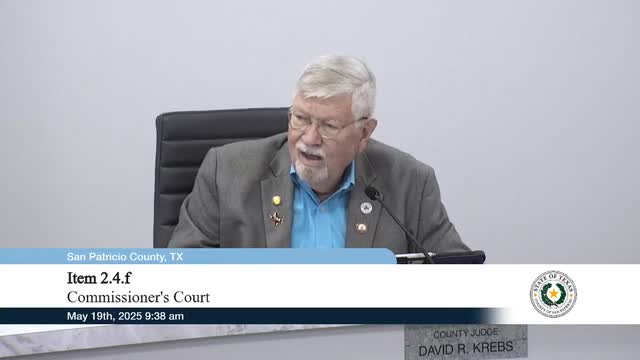
San Patricio County Commissioners Court debated whether to move from the existing precinct-based road commissioner system to a road superintendent (unit road) system during a lengthy discussion at Fisher's Court.
The discussion focused on Chapter 252 of the Texas Transportation Code, which the court reviewed in detail. County Attorney Chris Dorsey read duties allowed under Subchapter C, including that "a road superintendent shall . . . direct the laying out, constructing, changing and repairing of roads," and can be given broad responsibilities subject to the orders of the commissioners court. Dorsey advised that the court can adopt a road superintendent system by court action (subchapter C) without a countywide election, while the county road department/unit road option under subchapter D would require voter approval.
Proponents said a centralized system would let the county pool equipment and crews across precincts, increasing utilization of expensive machinery and reducing duplication. Commissioner Yardley told the court, "It's time to go forward. I'll rest my case." Several farmers and residents urged the change: Bob Reardon said "it makes too much sense to have a unit road system where all the equipment can be utilized wherever it's needed," and Charles Ring testified that centralized management could improve roadway maintenance across large rural areas.
Opponents and some commissioners raised implementation and political questions. Commissioners asked whether duties currently performed by precinct commissioners would be shifted away, whether commissioners' compensation should be adjusted if they relinquish road duties, and how staffing and reporting would be organized. One commissioner noted some constituents are satisfied with the current arrangement and cautioned the court to vet the change carefully.
Court staff and members reported outreach to other counties that have adopted unit or superintendent systems. Commissioners said they had contacted or visited Bee County, Uvalde County and Aransas County and spoken with road superintendents and engineers; those contacts generally reported few transition problems. County staff also noted that adopting a superintendent system before the budget process would allow the court to incorporate staffing and equipment changes into the 2026 budget.
After discussion, a commissioner moved that the court direct staff to research the option further, prepare draft orders and supporting documents (job descriptions, reporting requirements, and sample districting), and bring those materials back for the court's review so final decisions can be made prior to the 2026 budget process. The court agreed and asked staff to return with draft documents at an upcoming meeting.
The debate did not change the county's road governance during the meeting; commissioners directed staff to prepare implementation materials and to return them to the court for formal action later. The court emphasized that any formal adoption under subchapter D would require voter approval, while subchapter C could be adopted by court action.