Get Full Government Meeting Transcripts, Videos, & Alerts Forever!
Get email alerts on the Child Welfare And Cfap topic
No spam. Unsubscribe anytime.
May revision ties foster care tiered rates and CFAP expansion to fiscal "trigger"; legislators warn of system instability
Summary
The Department of Social Services and Department of Finance told the Senate subcommittee that the May revision makes implementation of several major CDSS expansions 'including the foster care tiered rate structure and the California Food Assistance Program (CFAP) expansion'subject to a spring 2027 "trigger" based on available general fund. Legisl
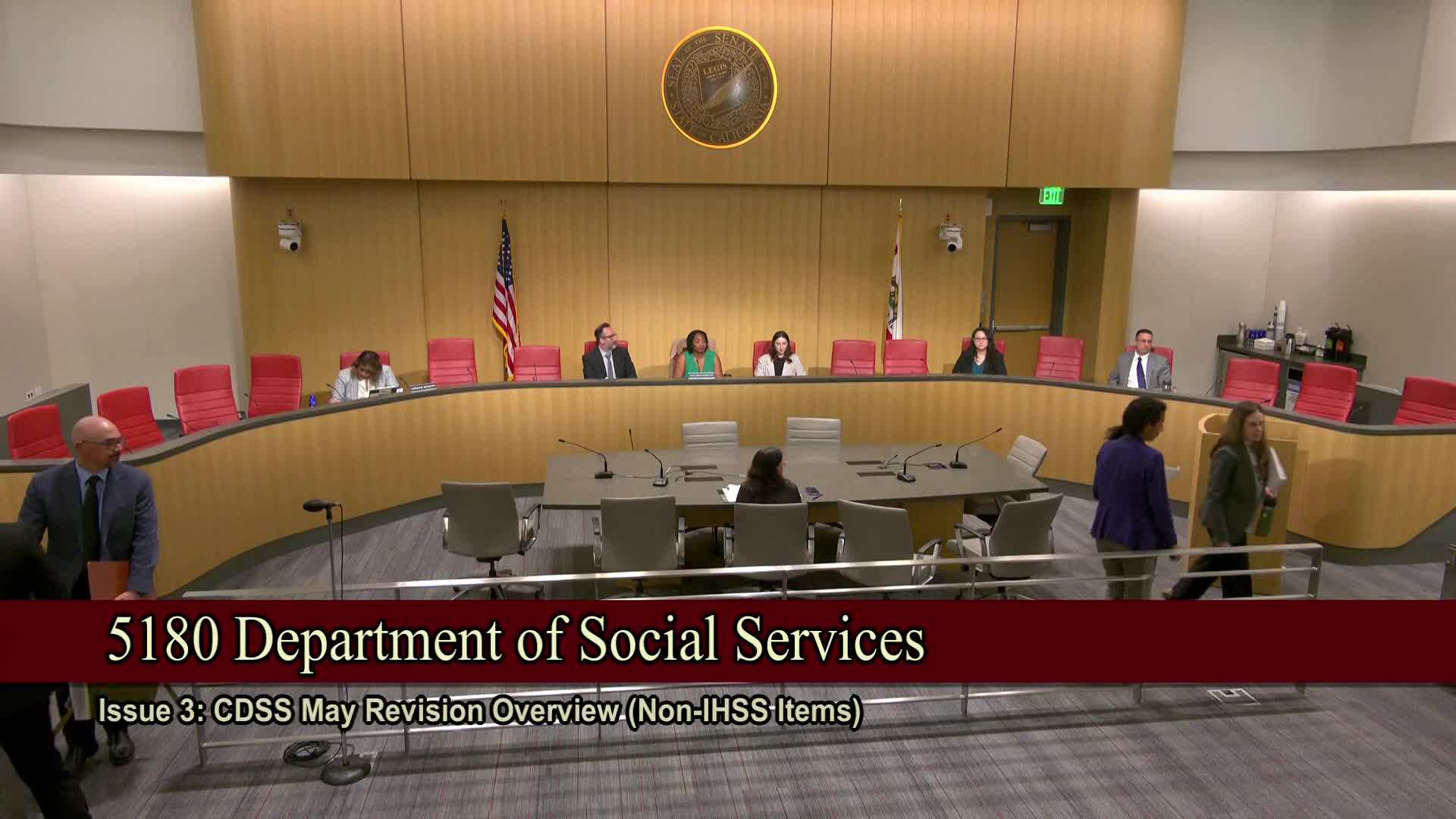
The Senate Budget Subcommittee No. 3 heard testimony on CDSS May revision proposals that would make two major program expansions subject to a spring 2027 funding "trigger." Jennifer Troia, director of the Department of Social Services, described statutory language proposed in trailer bills that would make implementation of the foster care tiered rate structure and expansion of the California Food Assistance Program (CFAP) contingent on the availability of general fund in spring 2027 as determined by the Department of Finance.
Why it matters: Both items involve program design and substantial out‑year costs. Legislators and stakeholders warned that conditional implementation could produce operational uncertainty for foster family agencies (FFAs), regional centers, counties, and older adults who would otherwise become newly eligible for CFAP.
What officials said
- Troia said the adoption of trigger language maintains funding for implementation activities (automation, county administration, state operations) but defers the increase to benefit rates until the trigger is met. For foster care, she said the budget maintains implementation work and includes $27.4 million in 25–26 for automation and related activities while the actual rate increase would be contingent on the 2027 determination.
- A Department of Finance official told the committee the trigger solution "helps address the state's fiscal condition as we look not only through the current year but into the out years" and that near‑term budget pressures drove the administration to consider making out‑year rate increases subject to the spring 2027 fiscal test.
Legislative and stakeholder concerns
- Senator Menjivar pressed the administration on the effect of an April/May 2027 decision that delayed or declined the trigger. She asked whether the result would be a one‑ or two‑year delay or indefinite postponement; DOF replied that if not triggered the existing rate structure would continue until the legislature made a later appropriation.
- Advocates and some members asked whether the trigger creates unnecessary instability for FFAs and foster parents. In public comment and committee exchanges, advocates warned that delay could accelerate FFA closures and increase costs of finding placements for children.
Other CDSS May revision adjustments discussed
- Troia also summarized other CDSS non‑IHSS adjustments: a $13,000,000 reduction in 25–26 to the Family Urgent Response System (FERS), leaving $17,000,000 ongoing; changes to adoption assistance statute to authorize wraparound payments; and various technical reallocations and workload staffing requests related to Sun Bucks (summer EBT), immigration services, and CARES project activities.
Discussion vs. decisions
These items were presented as budget proposals; no committee votes were recorded in the transcript. DOF and CDSS emphasized continuing implementation work for automation and readiness while leaving the out‑year rate increases subject to the 2027 appropriation test.
Ending note
Legislators asked CDSS and DOF to provide more detail on county and provider impacts if the trigger is not met, and to clarify scoring and timeline assumptions for the out‑year cost estimates.