Get Full Government Meeting Transcripts, Videos, & Alerts Forever!
Get email alerts on the Maternal And Infant Health topic
No spam. Unsubscribe anytime.
House subcommittee reviews maternal and infant health budget as officials flag rural hospital closures, disparities
Summary
Michigan House Subcommittee on Public Health heard a budget overview and program updates for the Healthy Moms, Healthy Babies initiative, including spending lines for WIC, prenatal outreach, doulas, home visiting and perinatal quality efforts; presenters urged sustained state funding to preserve recent gains and to match federal grants.
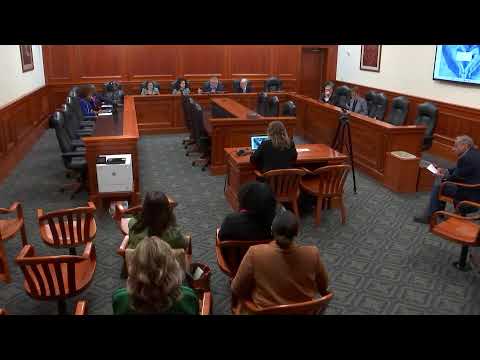
Lansing — The Michigan House Subcommittee on Public Health examined state spending and program activity for maternal and infant health on May 13, 2025, hearing department and community presenters who said recent state investments show progress but remain fragile without sustained funding.
House fiscal analyst Sydney Brown reviewed line-item appropriations and spending so far in fiscal 2025, and state maternal and infant health director Dawn (self-identified as the director of the Division of Maternal and Infant Health, Michigan Department of Health and Human Services) and health and community partners described outcomes and remaining gaps.
Brown told the committee that the Family, Maternal and Child Health Administration has 49 authorized FTEs and a gross appropriation of $10,300,000, with $3.6 million from the general fund. She summarized other lines: $15.8 million gross for family planning and local agreements (about $7.3 million general fund); a $43.4 million prenatal care outreach and service delivery line (19 authorized FTEs, $27.4 million general fund); and a $251.3 million WIC local agreements and food cost line, largely federal WIC funding plus formula-rebate revenue. Brown said WIC participation averaged about 189,226 women and children in 2023–24, down from roughly 205,875 the prior year. She also listed smaller lines for pregnancy prevention, special projects, sudden unexpected infant death prevention and other maternal-child services.
Dawn cited historic improvements in Michigan's infant mortality rate but emphasized geographic and racial disparities. "Infant mortality is defined as the death of a live born infant prior to their first birthday," she said, noting that Michigan recorded its lowest rates on record in recent years and that changes measured in decimals represent dozens of infants who lived to celebrate a first birthday. She told lawmakers that the state sees regional variation — the Alpena area (Prosperity Region 3) and the Great Lakes Bay Area (Region 5) had higher rates in her presentation, and Region 10 (Detroit) accounts for the largest raw counts.
Dawn described state-supported clinical and quality programs including Michigan AIM (the state implementation of the Alliance for Innovation on Maternal Health) and maternal levels-of-care verification. She said 89% of Michigan's 75 birthing hospitals participate in Michigan AIM and that funding for maternal levels of care was budgeted so hospitals can buy equipment, run drills and pull safety data; she said those efforts coincided with reductions in severe maternal morbidity for hemorrhage and hypertension since the AIM work began. She warned that maternity care deserts are growing: "When I started this position over 10 years ago, there were 85 birthing hospitals. We now have 75. We're soon gonna have 74," she said, and cited planned or recent birthing-unit closures in Keweenaw and Tawas.
Several presenters highlighted community-level programs and workforce expansion. Amy Zeigman, executive director of the Michigan Council for Maternal and Child Health, and local providers described growth in Michigan's doula registry and the expansion of CenteringPregnancy group prenatal care sites. Zeigman said the doula registry had grown from 298 doulas in January 2023 to about 750 doulas by mid-May 2025, with over 500 enrolled to accept Medicaid. She and others urged stable, ongoing funding rather than one-time grants so providers can plan long-term.
Representatives of Nurse Family Partnership programs described home visiting services that enroll first-time mothers in early pregnancy and continue through a child's second birthday. Katie Liebler, supervisor for the Nurse Family Partnership in Ingham County, said nurses on her five-person team each serve 20–25 families, conduct prenatal and postpartum assessments, and support breastfeeding, development screening and social services referrals.
Christina Harrington, local health officer for Saginaw County (Region 5), described the Be Well coalition and how local public health connects families with WIC, home visiting, prenatal programs and community partners. She told the committee that Saginaw still has among the state's highest infant mortality rates and that Black infants in the county die at about 3.5 times the rate of white infants. Harrington urged continued state support for infrastructure that lets local public health "connect the dots" between categorical programs and community needs.
Speakers repeatedly asked the legislature to sustain and, in some cases, increase state general-fund support so local programs can claim federal matches or keep federally funded programs whole. Amy Zeigman noted that federal home-visiting (MIECHV) awards require a state contribution to retain the full federal allotment and asked the subcommittee to consider raising a current state set-aside that supports choice of home-visiting models in rural areas from $2.75 million to $5 million. Dawn warned that proposed federal cuts could reverse progress and increase uncompensated care burdens on hospitals.
Committee members asked technical and policy questions. Representative Steele asked whether pregnancy-related deaths from car crashes or other external causes are included in maternal mortality counts; Dawn replied that such cases are included in the maternal death definition but said most maternal deaths in Michigan are attributable to medical complications and related causes. Representatives also asked about the sources of private funds in the WIC lines; Brown said most private funding cited in the WIC appropriation comes from infant-formula manufacturer rebates that are restricted to WIC use.
The subcommittee took two procedural actions: Vice Chair Price moved to approve the May 13, 2025 minutes; there were no objections and the minutes were approved by unanimous consent. Representative Steele later moved to excuse absent members; that motion also prevailed by unanimous consent.
Why it matters: lawmakers heard both statewide program-level metrics and local accounts showing progress on infant mortality and maternal morbidity but underscored persistent racial and geographic inequities and the fragility of gains if one-time funds or shifting federal support are not replaced by sustained state commitments.
What comes next: presenters and committee members said the department is publishing more public-facing data (including a map of birthing hospitals and maternal level-of-care designations) and that staff will follow up with specific fiscal tracking on some lines on request.