Get Full Government Meeting Transcripts, Videos, & Alerts Forever!
Get email alerts on the Solar Pilot topic
No spam. Unsubscribe anytime.
Town authorizes Board to negotiate PILOT for landfill solar project; residents raise revenue and land‑use questions
Summary
Town meeting authorized the Board of Selectmen to negotiate a payment‑in‑lieu‑of‑taxes agreement with Tangent Development LLC for a proposed solar array at the landfill; the vote authorizes negotiations but not project construction.
Town meeting authorized the Board of Selectmen to negotiate a payment‑in‑lieu‑of‑taxes (PILOT) agreement with Tangent Development LLC for a solar array proposed at the landfill at 370 Winter Street.
The Board of Selectmen presented the motion under Massachusetts General Laws chapter 59, section 38HB. “This is to not to approve the solar array, this is to approve the board having the negotiations on the agreement about it,” the motion said. The article authorized the board to enter the PILOT agreement; it did not by itself approve construction of the solar project.
Speakers at town meeting pressed for details about revenue, contract length and ownership. One resident summarized concerns about a 25‑year commitment and a projected annual PILOT of roughly $19,000, calling that “too low” for a long-term commitment. Town staff and the light department explained the structure: the town is negotiating a purchase‑power agreement to buy the power, and under the proposed arrangements the developer would own equipment during the contract but the town would take ownership of the equipment at the end of the 25‑year purchase‑power agreement. “At the end of the 25 years, we will own it,” said Kevin Shaughnessy, superintendent of the Light Department.
Town staff explained that in Massachusetts, large ground‑mounted solar fields are typically implemented through PILOT agreements rather than through standard property tax assessments, and the board’s authority is required to secure municipal revenue from equipment on town land. Town legal/staff noted that if the board lacked PILOT authority it could still license the land but the town might receive no revenue. Supporters argued a negotiated PILOT is preferable to receiving no payment at all.
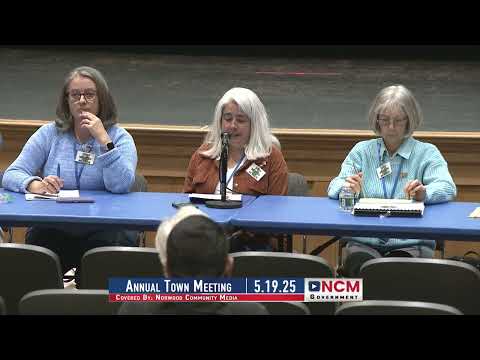
After a two‑thirds vote on the motion to move the question, town meeting voted to authorize the board to enter the PILOT; the moderator announced the vote as 128 in favor, 28 opposed with 3 abstentions.
The authorization allows selectmen to continue negotiations. The final PILOT, if negotiated, will return to the town for the agreed enforcement and to the light department and selectmen to implement and manage the purchase‑power and hosting agreements.