Get Full Government Meeting Transcripts, Videos, & Alerts Forever!
Get email alerts on the Airport Infrastructure topic
No spam. Unsubscribe anytime.
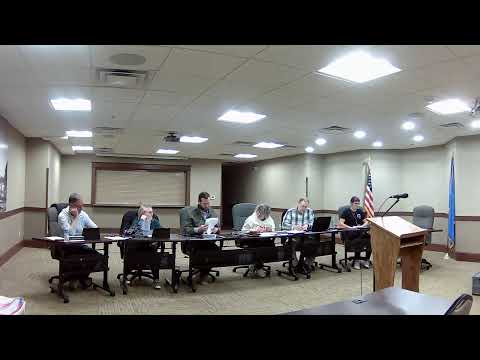
Canton council approves AIP grant support and moves forward with airport layout plan update
Summary
After a presentation from KLJ project engineer Aaron Storm, the Canton City Council voted to approve two portions of an Airport Improvement Program grant and asked the airport board to report quarterly as the city pursues an updated airport layout (master) plan that KLJ estimates will take about 18 months plus federal review.
The Canton City Council voted to approve two portions of a federal Airport Improvement Program (AIP/AIG) grant and authorized moving forward with an updated airport layout plan for Canton Municipal Airport after a presentation by Aaron Storm, project engineer with KLJ.
Storm told the council the airport is part of the National Plan of Integrated Airport Systems (NPIAS) and that consultants develop a capital improvement program (CIP) as part of planning work to identify projects that are typically eligible for FAA funding. “If your runway is starting to degrade a little bit, you may need to overlay the asphalt. If you build up FAA funds for five or 10 years, they pay 90 percent; you have to just match five percent,” Storm said, adding that the current project in discussion reflects a higher federal share in some cases (the meeting referenced 95 percent for a past reconstruction and noted 90 percent is the usual FAA share).
The council and airport stakeholders discussed the airport’s local economic role and physical constraints. Marshall, the airport manager, and local business operators such as Joey Johnson of Dakota Aviation described growing activity at the field: the council heard that based aircraft have increased from about nine to roughly 30 and that Dakota Aviation is expanding flight instruction capacity. Storm and other speakers said the airport supports agricultural spraying operations, flight training, transient fuel stops and occasional business travel — none of which usually makes an airport self‑sustaining as a revenue generator in the way a retail business might.
Council members pressed for practical, long‑range clarity about land use and fiscal exposure. Storm and other presenters explained the land‑use protections tied to airport safety and approach surfaces: the meeting cited a one‑thousand‑foot approach safety area off runway ends and lateral slope constraints (described in the discussion as a trapezoid safety area and a 7:1 slope in certain zones). Those restrictions limit the types and heights of development on some city‑owned parcels near the airport. Storm said the airport layout plan will map all airport‑adjacent property to identify what can and cannot be developed under FAA safety criteria.
Storm outlined the schedule and scope for the airport layout plan: KLJ will perform surveying and alternatives drawings, involve stakeholders (including business owners and commissioners), and deliver an updated plan that the consultant estimated will take about 18 months to prepare with an additional review period by the FAA, meaning a roughly two‑year process from start to closeout. The plan will include alternatives for hangar locations, updated safety area drawings, and a blueprint for adding infrastructure such as a new fuel system.
Councilors and staff also discussed local revenue and operations details raised during the meeting. Presenters said the city’s direct share of sales taxes generated by airport activity was relatively small in recent years (the meeting referenced roughly $3,000 for one year), but that numbers of based aircraft, new hangar construction, and expanded maintenance and instruction services could increase local receipts over time. The council heard that leases typically include automatic annual adjustments tied to property tax changes and that some leases run long to accommodate private financing for hangar construction.
After the discussion the council moved to approve the two grant portions presented (referred to in the meeting as split portions of 52% and 48% for the same AIP project) and to ask that an airport board representative present to the council quarterly. The motions passed on roll call in favor of approval.
The council asked KLJ and airport staff to return with maps and stakeholder outreach plans as the airport layout plan work begins. Storm said KLJ will keep commissioners informed as the work progresses and will include local stakeholders — including the airport manager, operators such as Dakota Aviation, and business representatives — in plan development.
Next steps: KLJ will begin survey work and layout alternatives, the city will coordinate stakeholder membership for the plan committee, and the council will expect periodic updates and quarterly reports from the airport board during the planning process.