Get Full Government Meeting Transcripts, Videos, & Alerts Forever!
Get email alerts on the Student Meals topic
No spam. Unsubscribe anytime.
Food services director seeks community donations to address student meal debt; board hears $18k–$24k delinquency range
Summary
The district food services director reported roughly $24,000 in cumulative student meal debt that recent donations have reduced to about $18,000, and asked the board to invite community and business partners to help cover balances. The director reminded the board federal rules prohibit denying a meal to a student at point of service.
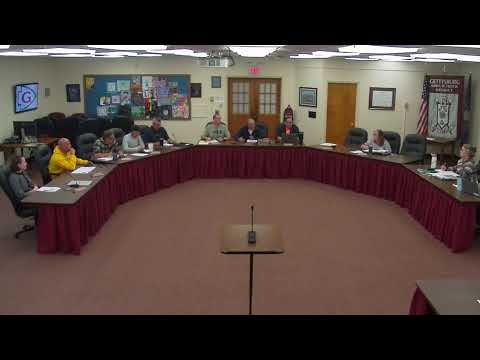
Gettysburg — Gettysburg Area School District food services staff told the board May 20 that unpaid student meal balances have accumulated and asked the district to invite community donors and local businesses to contribute to a district-managed donation account.
Food services director Jeff Malone (presenter) told the board the department served more than 340,000 meals in the 2024–25 school year and that unpaid student meal debt has grown in recent years. Malone said approximately 1,100 students qualify for free meals (about 38% of the district's students) and roughly 120 students qualify for reduced-price meals, leaving about 45% of all students classified as economically disadvantaged by free/reduced metrics.
Malone said federal Child Nutrition Program rules established under the Healthy Hunger-Free Kids Act of 2010 prohibit denying a school lunch to a student who requests one but lacks payment at the point of sale. He said the food service department accepts donations and maintains a separate donation account so funds are not commingled with federal and state reimbursements or food-service sales.
Numbers and donations
- Malone reported the food-service delinquent balance at about $24,000 before recent donations; the department had received roughly $5,000 from Giant Foods and additional private donations of about $6,000, which he said should reduce the outstanding balance to around $18,000 by the end of the school year. - The department also received more than $11,000 in donations during the 2024–25 school year that were applied to student meal accounts, Malone said, while cumulative receivables have risen in recent years. - The most recent audited result for the food-service fund showed net income of about $75,000 for the 2024 audit year, Malone said; the district, however, records unpaid meal balances as a due-to/due-from between the general fund and food service because the food-service fund cannot operate in a deficit.
Board questions and operational notes
Board members asked whether the $18,000 balance represents multiple years; Malone said the balances include amounts carried forward over multiple years and that the district has seen higher delinquencies in prior years (for example, about $35,000 previously).
Members also asked about how the district can motivate families with unpaid balances; Malone said the district sends end-of-year letters to seniors and works with families on payment plans, but federal rules prevent denying meals and there are limited enforcement mechanisms tied to meal accounts. District staff said they do collect other items (library books, textbooks, laptops) prior to graduation where necessary.
Next steps
Malone asked for board support to run a community campaign, using social media, direct outreach and partnering fundraising platforms to solicit voluntary donations for the district account that offsets unpaid meal balances. The board did not take formal action on the request at the May 20 meeting but discussed supporting donations and noted existing programs such as a Giant Foods "round-up" program and jeans-day fundraisers that already contributed modest amounts.
Ending note
Board members and staff emphasized the distinction between the food-service fund's accounting treatment and the district's ultimate responsibility: while the food-service fund operates separately, unpaid balances can become a general-fund issue at year end and the district works with families and community partners to mitigate those balances.