Get Full Government Meeting Transcripts, Videos, & Alerts Forever!
Get email alerts on the Land Use Housing topic
No spam. Unsubscribe anytime.
Commissioners continue debate on North & South Park Area 1 master site plan; housing, fencing and phasing remain unresolved
Summary
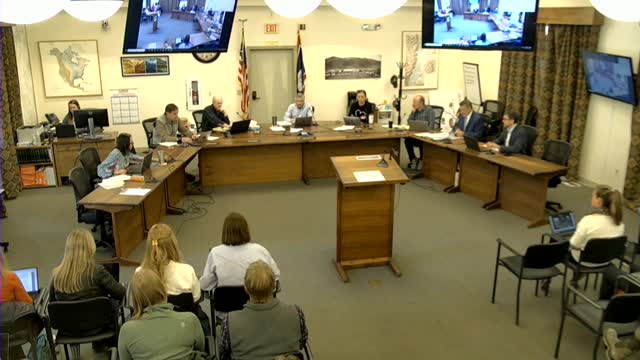
Teton County commissioners continued debate May 19 on MSC 2020-437, the North and South Park Area 1 master site plan, after extended discussion of housing conveyance, phasing, transportation mitigation and fencing rules intended to preserve wildlife permeability.
Teton County commissioners continued a lengthy discussion on May 19 of MSC 2020-437, the North and South Park Area 1 master site plan application, focusing on detailed conditions related to transportation mitigation, open-space fencing and wildlife permeability, housing phasing and the method and assurances for delivering deed-restricted housing.
Staff update and process: Chandler Windham, senior planner, said the staff report and findings were unchanged from the prior meeting but that a memo included updated conditions based on earlier board discussions. Commissioners asked staff and the applicant to refine condition language and to return the item to a future meeting for final action.
Transportation and mitigation language: Commissioner Karlman and staff proposed edits to make transportation-condition language more precise and narrowly targeted. Commissioners emphasized that required financial contributions or off-site infrastructure improvements should be "proportionate to the development's traffic that will trigger the need for transportation infrastructure improvements" and limited to the West Jackson Transportation Study Area so mitigation funds address local impacts rather than countywide roads.
Open space and wildlife permeability: Commissioners debated a proposed condition that would prohibit "exclusionary fencing exemptions" (fences that would not meet wildlife-friendly standards under the county land development regulations) on lots east of Park 5 and south of Park 6. Commissioners sought to allow small exceptions such as a single dog run not exceeding 200 square feet and to permit beehive, garden and composting fences while maintaining wildlife permeability. County staff and a public-works project manager said the aim is to avoid attracting wildlife into landscaped areas and to ensure escape routes so animals that enter residential areas can leave. Some commissioners suggested leaving detailed fencing standards for development-plan review rather than embedding prescriptive language at the master site plan stage.
Phasing and housing requirements: Commissioners reviewed conditions that require the applicant to provide phasing agreements and to demonstrate that conveyed land is sufficient to support deed-restricted housing. Commissioner Macker urged language that preserves the county's ability to require orderly development without over-prescribing design. Commissioner Gardner sought stronger assurances that deed-restricted housing will be built and proposed alternative mechanisms, including a real estate transfer fee administered by a housing trust to fund construction if needed. County legal staff cautioned that the board cannot use master-site-plan conditions to effectively amend or replace the land development regulations (LDRs) and that some proposals could constitute negotiation or "contract zoning," which Wyoming county practice does not permit.
Acreage and conveyance questions: Commissioners and staff discussed earlier public statements and press reports that the applicants had offered 45 acres for deed-restricted housing. Staff ran block-by-block numbers based on the application table and LDR exactions and estimated roughly 16.32 acres (after required park and school exactions and road area) would be available under the minimal acreage scenario for deed-restricted housing. Staff and the applicant stressed that the master site plan includes a table of block-level minimums and maximums and that development plans, subdivision plats and conceptual site plans will be used to demonstrate sufficiency of conveyed land when individual blocks come forward.
Legal constraints and next steps: Senior deputy county attorneys advised commissioners that conditions may ensure compliance with existing LDR standards but cannot be used to create or replace LDR requirements that are not in the code. Several commissioners asked staff and the applicant to draft narrower, legally consistent condition language for inclusion in a final motion. The board recessed and planned to resume the contested-case hearing and the master-site-plan continuation later in the day; no final approval or denial occurred May 19.
Ending: The master site plan discussion remains open. Staff and the applicant will refine condition language addressing phasing, housing assurances, transportation mitigation boundaries and open-space fencing and return the matter for additional consideration and a final vote at a later meeting.