Get Full Government Meeting Transcripts, Videos, & Alerts Forever!
Get email alerts on the Infrastructure Facilities topic
No spam. Unsubscribe anytime.
Commissioners discuss moving coroner and EMA to address cramped, unsanitary workspace; $300,000 estimate and ARP-use questions raised
Summary
County officials flagged substandard workspace for the coroner and emergency management and discussed a possible $300,000 relocation and upgrades. Commissioners asked whether American Rescue Plan (ARP) funds could be reallocated to cover the move and directed staff to pursue formal clarification from the U.S. Treasury.
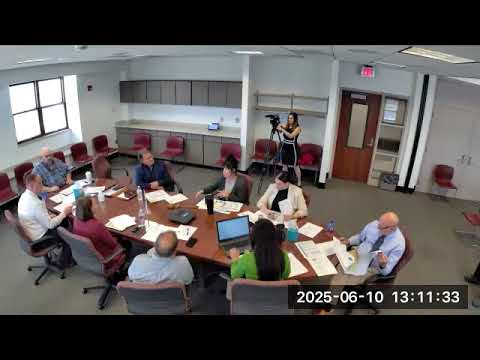
Trumbull County commissioners spent part of the budget meeting discussing poor working conditions in several county facilities and an option to relocate the coroner’s office and parts of emergency management to improve ventilation, workspace and operations.
Commissioners and department staff described the coroner’s current workspace as inadequate — one speaker said the coroner sometimes works “in a garage” because of building conditions — and discussed an option to move the coroner to an upgraded nearby facility at an estimated cost of roughly $300,000. County staff said the move would allow the coroner to operate in a ventilated workspace while the county later addresses longer-term building upgrades such as ventilation retrofits.
The proposal included logistical questions about housing a county command vehicle, radio communications, and whether existing equipment (for example, sheriff’s equipment stored in certain garages) could be relocated to make room. Commissioners and staff discussed using a command vehicle’s communications capability, placing antennas on existing structures (for example, the Cortland water tower or another tall structure), and leasing future tower space to recoup costs over time.
A central constraint the board noted was funding rules for federal ARP allocations. Commissioners said they had sent or planned to send letters to the Treasury or to the department handling ARP administration to ask whether ARP funds could be reallocated for the coroner move. One commissioner also referenced contacting counterpart attorneys in other counties (Columbia was mentioned) to review legal options and precedent.
No funding transfer or formal appropriation occurred at the meeting. Commissioners instructed staff to pursue written guidance on ARP eligibility, to aggregate outstanding ARP obligations and unspent balances, and to report back. One staff member offered to put the county in touch with an outside attorney who had advised another county on ARP reallocation needs.
County staff also flagged ancillary logistical issues that would need resolution before any move: tower coverage for radio communications, parking/driveway repairs at potential host fire stations, and whether other functions such as motor vehicle tag services would need to be relocated to avoid odor or space conflicts after a refit. Officials discussed various site options and noted prior rough estimates for a new tower (in the $1.5–$2.0 million range) and the potential to recover tower costs through leases to wireless carriers over time.
The board asked staff to gather formal legal guidance and to inventory ARP commitments and outstanding payments to determine how much discretionary ARP funding — if any — might be available.