Get Full Government Meeting Transcripts, Videos, & Alerts Forever!
Get email alerts on the Governance topic
No spam. Unsubscribe anytime.
Commission discusses contract-delegation policy; seeks revisions and plans vote in September
Summary
Commissioners debated proposed changes to Public Works' contract-delegation policy, discussed whether the commission should continue to review grant awards, and asked staff to refine a policy amendment for a September vote.
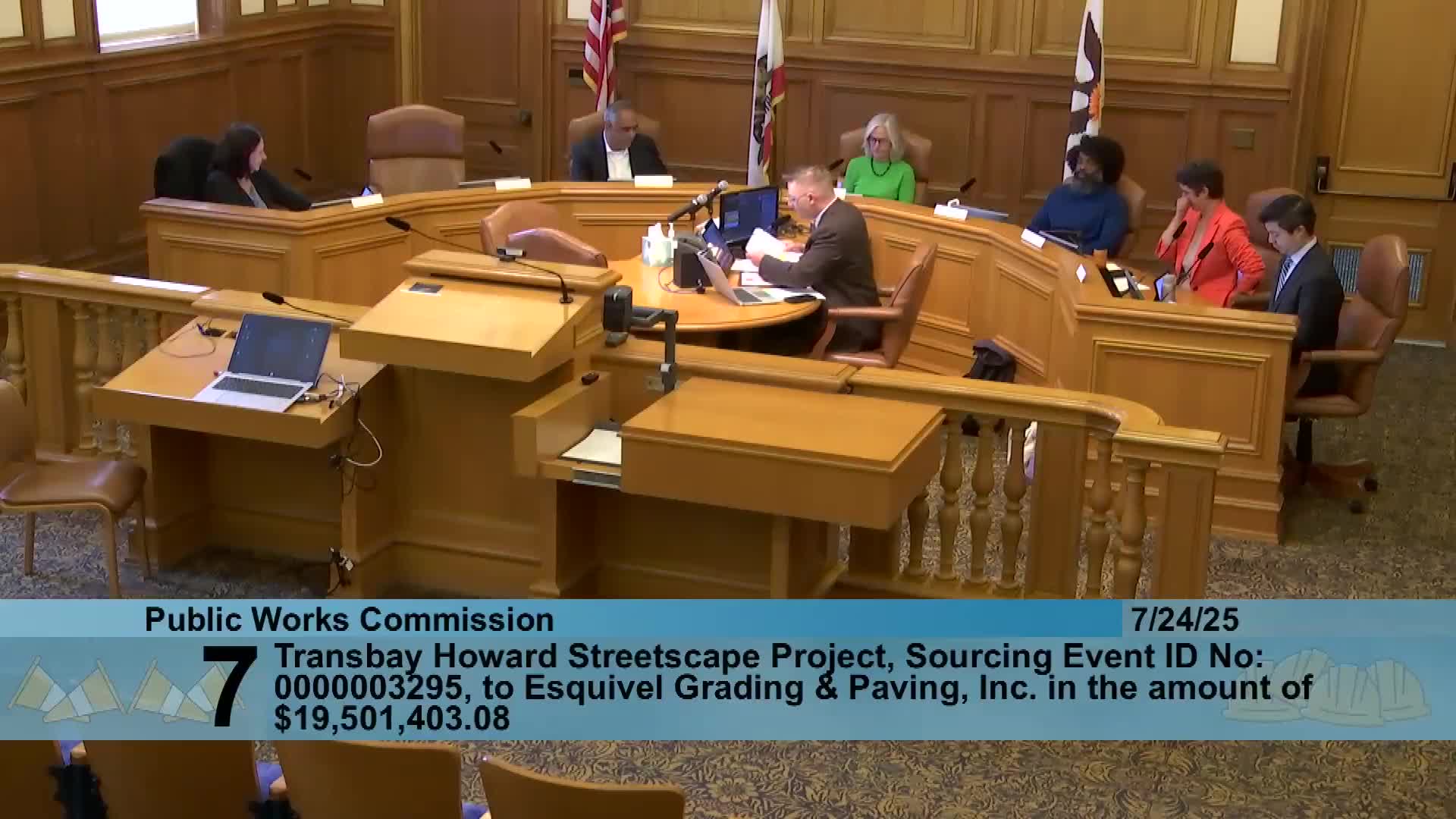
At the July 24 meeting the Public Works Commission heard an informational presentation on proposed amendments to the commission’s contract‑delegation policy intended to reduce the number of contract approvals that appear on the regular agenda and to delegate certain approvals to the consent calendar or to the Public Works Director.
Chair Lauren Post described the review as an efficiency measure: the commission spends substantial meeting time on contract approvals, many of which follow established procurement procedures. Secretary Fuller and staff presented data on contracts the commission has approved and identified categories the department recommended for delegated approval or higher consent thresholds. The goal, staff said, is to shorten meeting durations while preserving oversight: any consent item can still be pulled for full commission review and the charter and city law constraints remain in force.
Commissioners debated how to treat grant awards to nonprofit organizations. Several commissioners — including Gerald Turner and Fatty Zabe — said the public forum where grantees describe their work is useful and recommended preserving at least annual opportunities for grantees to report to the commission. Commissioner Bloom emphasized she would prefer the commission retain the authority to approve grants rather than delegate them entirely, while others suggested folding grant approvals into the annual budgetary process and keeping a requirement for periodic public reporting.
Staff and the deputy city attorney said the changes are partly constrained by charter requirements and that some delegation can be accomplished by adjusting monetary thresholds and formalizing reporting and notice back to the commission. Commissioners asked staff to prepare a revised policy that formalizes how (and when) staff will report delegated actions back to the commission, to clarify thresholds and to include a process for the commission to request special meetings if urgent contract awards are needed between regular meetings.
The commission did not vote on policy language at the July 24 hearing. Chair Post directed Secretary Fuller and staff to produce a revised policy for adoption at the next meeting in September. Several commissioners asked that the revised draft include an explicit description of the commission’s continuing oversight role for grant and nonprofit awards, and details about how and when grantees would appear in public budget hearings or annual updates.
Why it matters: the proposed delegation would streamline staff operations and shorten meeting runtimes but commissioners signaled they want clear mechanisms for transparency, particularly for grant awards and for notifying the commission when delegated approvals have been made.
Next steps: staff will circulate a revised policy incorporating the commission’s direction; the commission expects to vote on the amendment at its September meeting (scheduled for Sept. 11, 2025, at 11:00 a.m.).