Get Full Government Meeting Transcripts, Videos, & Alerts Forever!
Get email alerts on the Public Safety Fire Rescue topic
No spam. Unsubscribe anytime.
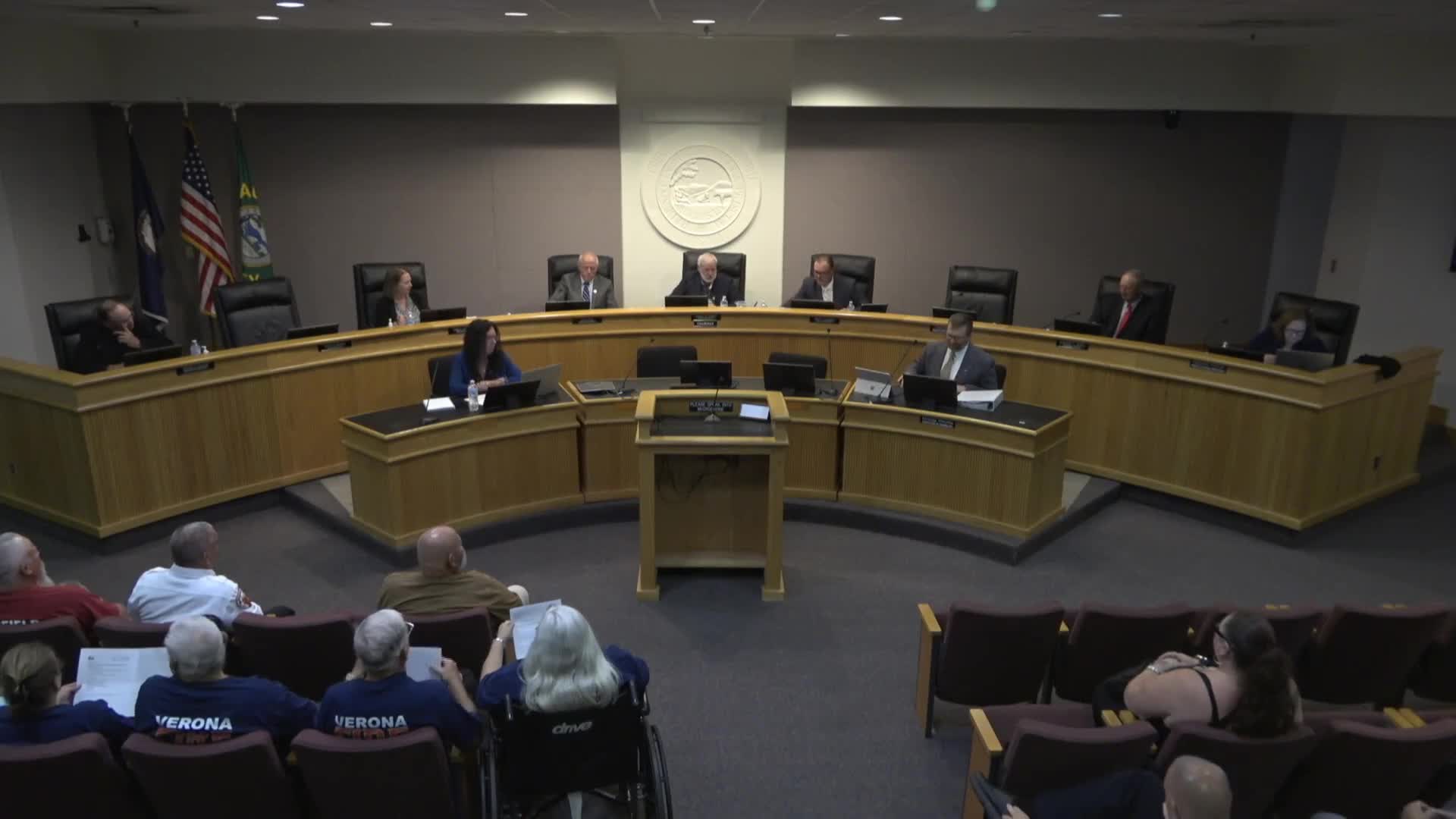
Augusta County board approves $52,640 feasibility and site‑plan study for Churchville fire hub
Summary
The Augusta County Board of Supervisors voted to pay Lineage Architects $52,640 to complete a feasibility study and site‑plan work for a proposed Churchville fire and rescue hub.
The Augusta County Board of Supervisors voted to pay Lineage Architects $52,640 to complete a feasibility study and an associated site plan for a proposed Churchville fire and rescue hub, the board decided during its regular meeting.
County staff presented the contract as two parts: a $42,240 feasibility study to establish building type, size, layout and preliminary costs, and a $10,400 add‑on to advance a site plan for the selected property. “The total amount [would] be $52,640,” county staff said while introducing the item. Supervisors approved using available infrastructure funds to cover the work; board members also agreed to split part of the charge among several supervisors.
Why it matters: county officials said a study is necessary to move beyond rough estimates that have ranged widely during prior talks — from roughly $5 million for a modest “hub” to figures as high as $10 million — and to identify realistic costs, phasing and equipment needs before the county commits to construction.
What the study will do: staff told the board Lineage will produce a plan that examines the building footprint, the number and size of apparatus bays, living and support spaces, and preliminary cost estimates. The site‑plan work is intended to address local constraints at the Churchville property, including existing grades and flood‑plain considerations that staff said helped drive a two‑story design for the site.
Board debate and concerns: several supervisors said they support finding a durable solution for the county’s aging volunteer and career fire infrastructure but pressed for clearer cost comparisons and a countywide funding plan before building multiple hubs. One supervisor said the original hub concept was for relatively modest support stations, “maybe being around $5,000,000,” and noted the conversations had shifted toward larger rebuilds. Another said cost estimates have grown from $5 million to $8 million to $10 million during discussions and warned that proceeding without a funding strategy could leave other stations without resources.
Fire officials and volunteer representatives urged the board to move forward with the study so the county can have accurate numbers. A Churchville volunteer representative told the board the project had the membership’s support and described the existing station as cramped: “It is very challenged,” the representative said, adding volunteers and career staff had agreed the station needs replacement.
Operational planning and phasing: staff and Lineage representatives described a two‑phase approach if the board ultimately decides to replace the existing Churchville structure: build a new apparatus and living module first so vehicles can be housed in a climate‑controlled space, then demolish the remainder of the old building. Staff said that temporary housing and storage, phasing and apparatus needs will affect total project cost beyond the building footprint.
Funding and next steps: the board approved payment from an infrastructure allocation to start the study; one supervisor said she would front funds while other supervisors committed contributions, creating a three‑way split on the initial payment. The feasibility study will return to the board for further consideration of design, cost and funding once Lineage delivers its report.
Voices from the meeting: County staff who introduced the contract noted the split figures and explained the site‑plan rationale; fire leadership emphasized the operational need and described how the plan would preserve volunteer assets while providing county‑owned facilities; multiple supervisors asked for comparative cost estimates and broader planning to ensure other localities in the county are not shortchanged by rising costs at the first hub.
What was not decided: the board did not approve a construction contract or a final site; it approved only the initial study and site‑plan work. The board also did not set a final funding source for any future construction beyond the infrastructure funds used to pay Lineage for the study.
Votes at a glance: the motion to pay Lineage Architects $52,640 from infrastructure funds for a feasibility study and site plan was moved and seconded and carried; the meeting transcript records multiple supervisors voting in favor but does not provide a full roll call tally in the public record excerpt.
Looking ahead: staff will return with Lineage’s study and site plan, at which point the board said it intends to review cost estimates, phasing and funding options before deciding whether to authorize construction or additional steps.