Get email alerts on the School Safety topic
No spam. Unsubscribe anytime.
Frederick County supervisors approve $852,557 for school weapons-detection systems after divided debate
Summary
Frederick County supervisors voted 5-2 on June 11 to approve a capital-fund transfer of $852,557 to buy weapons‑detection equipment for Frederick County Public Schools following extended public comment and divided board debate.
Frederick County supervisors voted 5-2 on June 11 to approve a capital fund transfer of $852,557 for weapons-detection systems for Frederick County Public Schools.
The item, requested by the school division, drew extended public comment and hours of discussion among supervisors about school safety, budget priorities and whether the schools had already received enough capital funding to cover the expense.
Why it matters: Supporters said the equipment would add another “layer” of protection for students and staff; critics said the school division had existing capital funds and rollover dollars and should re-prioritize before asking the county for an out-of-cycle appropriation. Both sides said they wanted school safety, but they disagreed about timing, implementation and budget trade‑offs.
The board’s debate and vote: The board first considered a motion to deny the transfer. That motion failed. A subsequent motion to approve the transfer passed 5-2. The successful vote in favor was recorded as Supervisor Leerro (aye), Vice Chair (aye), Supervisor Wells (aye), Supervisor Dunn (aye) and Supervisor Jewell (aye); Supervisors Lockridge and the chair voted no.
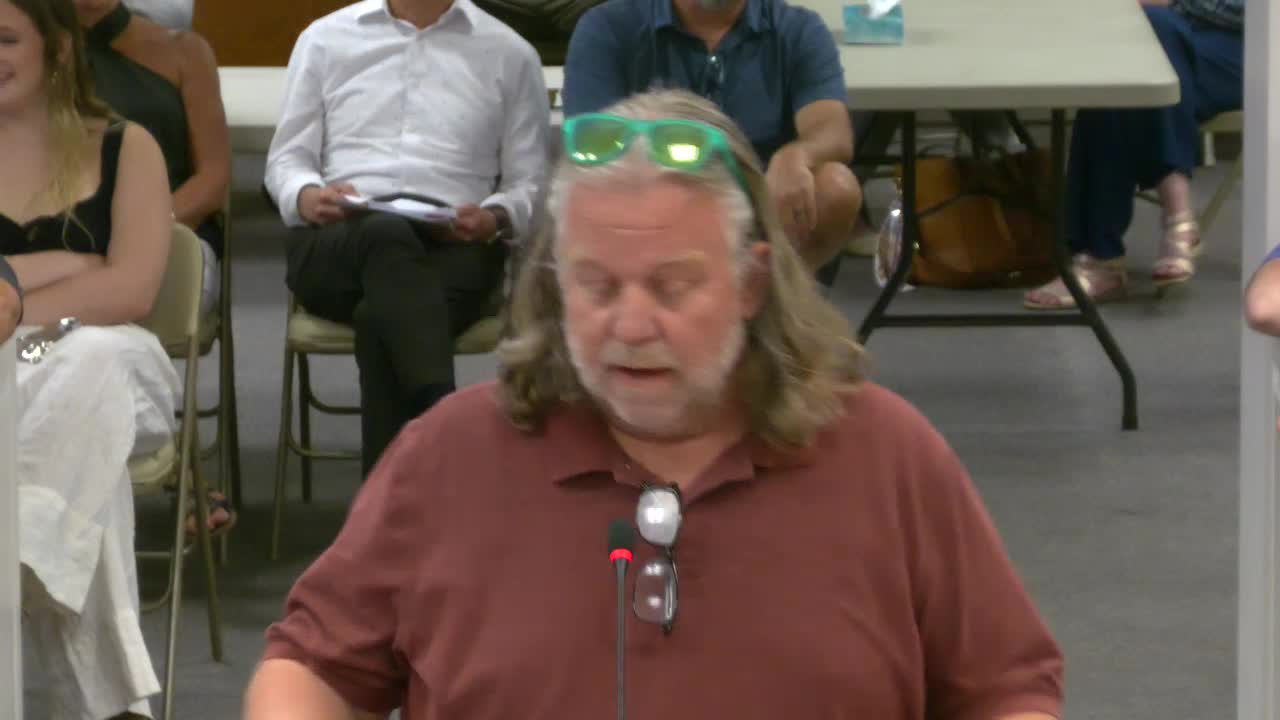
Supporters at the meeting included parents, teachers and school employees who urged quick action after recent incidents in local and nearby schools. “We need them now,” one teacher said during the citizen‑comment period, citing a March incident at an elementary school in which a young student brought a gun to campus. Multiple speakers asked the board to fund detection equipment before the next school year.
Opponents and fiscal concerns: Supervisors who opposed the extra appropriation said the school division already had roughly $4 million in FY26 capital funding and an unspent rollover approaching $2 million and could buy the devices within its existing capital allocation or reprioritize planned projects (several elementary playground refurbishments were cited). Finance committee members also said they had received inconsistent vendor information, including whether quoted prices included installation and training; one supervisor said a vendor later told the county training would cost about $3,000 per school.
Implementation questions and safety context: Board members repeatedly described the plan as part of a “layered” safety approach — along with cameras, locks, school resource officers and building controls — and not a single fix. Dr. Hummer, the school superintendent, told the board there had been one weapons incident in Frederick County this year and that the school division had been pursuing a combination of grants, pilot programs at high schools and other measures. The county sheriff described the proposed system as “a good system” and suitable for some public facilities.
What the appropriation covers: The $852,557 would pay for weapons‑detection devices and associated equipment for additional schools beyond those already covered at the high‑school level, according to presentations to the board. The school division has previously installed screening equipment at several high schools and has applied for grants to expand coverage.
Next steps and oversight: The appropriation was made as a capital fund transfer. Several supervisors asked that future purchases come with fully itemized quotes, documented training plans, and clearer implementation details. Some supervisors also urged a presentation to the board’s public safety committee so school resource officers and other safety professionals could describe how the equipment would integrate with other security measures.
Votes at a glance: The denial motion failed; the final approval passed 5-2. A record of roll‑call votes was read into the minutes at the meeting.
Community context: Speakers during citizen comment included teachers and parents from multiple magisterial districts who asked for timely investment in safety measures. Board members noted the tensions between immediate safety concerns and long‑term capital planning.
The county’s capital planning and the schools’ budget process will guide how the devices are purchased and installed; board members asked staff for clearer vendor quotes and training commitments before implementation.
AI generated
The text on this page is AI generated. Summaries, highlights, analysis, and video transcripts are all produced from the original source material.
AI can make mistakes, so if you spot one, and we will fix it for everyone.
Note: the source content is unaltered by us. Any content source we link to, be it a video, an audio recording, or a document, is presented exactly as its publisher released it. That publisher is usually a government body, sometimes an individual official or another organisation.