
Pittsburgh Public Schools projects $32.4 million 2026 budget deficit; board weighs consolidation savings, millage and tax reassessment
Get AI-powered insights, summaries, and transcripts
Subscribe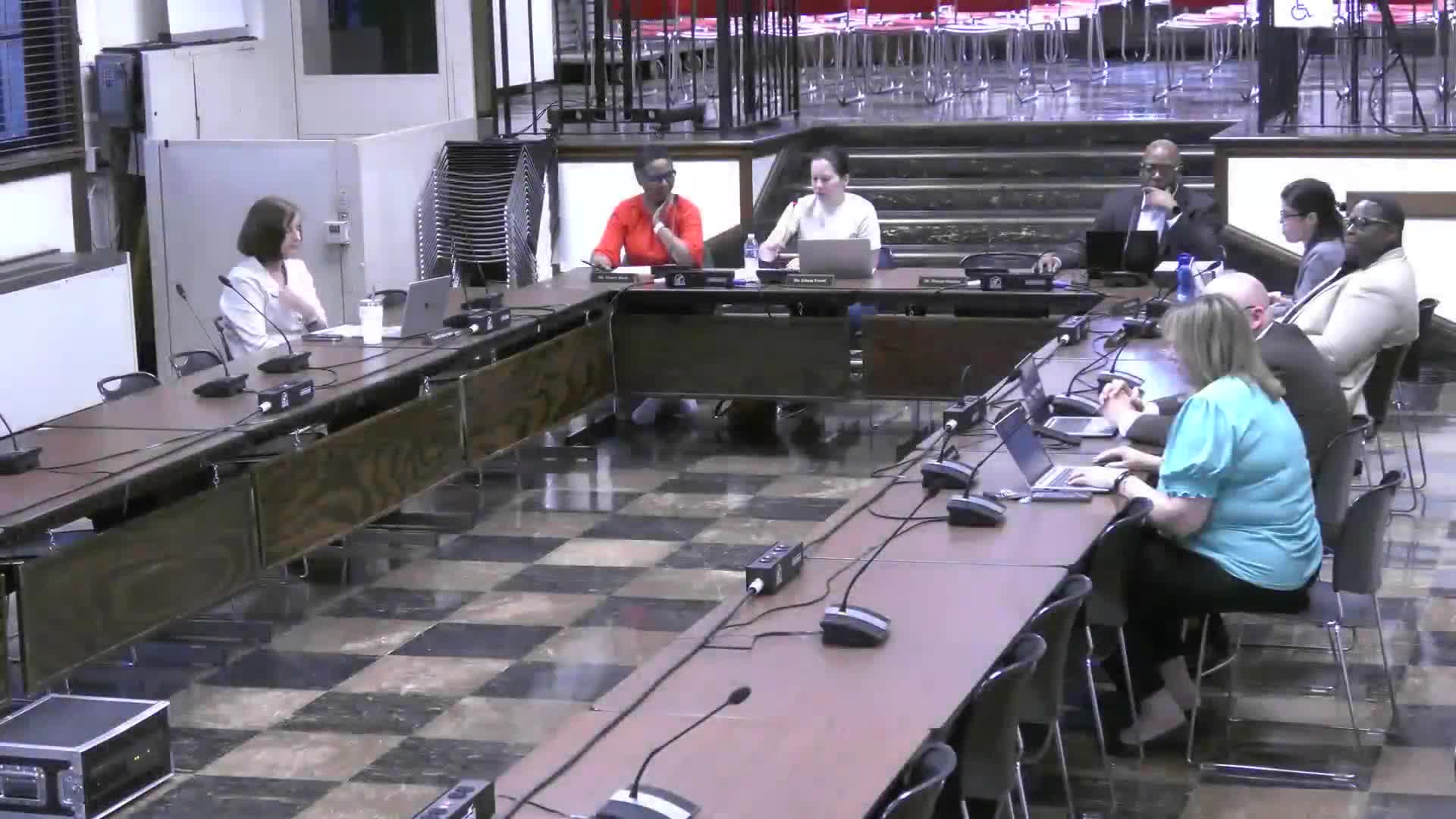
Summary
Pittsburgh Public Schools finance staff told the district’s Business and Finance Committee on June 2 that the district is projecting a $32.4 million operating deficit for fiscal 2026 and outlined a mix of revenue, expenditure and program changes the administration says could narrow that gap.
Pittsburgh Public Schools finance staff told the district’s Business and Finance Committee on June 2 that the district is projecting a $32.4 million operating deficit for fiscal 2026 and outlined a mix of revenue, expenditure and program changes the administration says could narrow that gap.
The presentation by Ronald Joseph, who identified himself as the meeting’s finance presenter, covered year-to-date 2025 financials, key revenue drivers and a preliminary 2026 budget forecast. Joseph said declining assessed real estate values and large property tax appeals downtown are weighing on local tax revenue even as earned-income tax receipts remain strong.
The forecast and discussion matter because the deficit will affect staffing, programs and school operations across the district. Board members pressed for clearer priorities and guardrails — including commitments not to cut arts, STEM, sports and professional development — and asked for more analysis on salary composition, transportation impacts and facility disposition timelines.
Joseph told the committee the district expects roughly $728.1 million in revenue for the 2026 budget year and a $32.4 million shortfall under current assumptions. He said earned-income tax collections continue to “prop up” the budget while current real estate tax receipts are down, a trend he attributed in part to ongoing large property appeals in the central business district and an increase in the state homestead property tax relief allocation.
On expenditures, Joseph reported several drivers of higher spending in the current year: salary costs are about $3 million higher year to date, partly because retroactive contract payments were paid in April; charter school tuition costs are roughly $2 million higher; benefits have increased in line with salaries; and utilities are expected to rise substantially next year — Joseph estimated utility costs could increase by about $2 million, driven in part by new electricity capacity charges.
Joseph also described several potential cost reductions tied to the district’s updated feasibility work on school consolidation and delivery-model changes. The administration’s preferred delivery model emphasizes reinvestment in school-based programs and produces a modest net reduction (shown in the presentation as roughly $2.3 million in the first-year, partial implementation scenario). Additional transportation-related savings were presented at about $5.4 million if the district can capture full routing and magnet/center-transport efficiencies. Joseph cautioned that because many changes would take effect midyear, the district expects to capture only about 40 percent of those recurring savings in the first year, with larger annual savings in 2027 and beyond.
Board members asked for detail and pushed for guardrails. Director Silk sought a formal board discussion to convert the individual board-member priorities Joseph summarized into a collective set of priorities and constraints. Doctor Reid (board member) requested a guardrail to protect professional development for teachers; other board members asked to preserve arts, STEM and sports funding levels and to include students with exceptionalities in any prioritization decisions.
Legal counsel provided an update on a county property-assessment lawsuit that board members said contributes to budget uncertainty. Mr. Wise, legal counsel for the district, said the lawsuit is moving through discovery and that a final resolution is unlikely to provide immediate additional revenue. He explained the state’s anti-windfall rules: after a reassessment, districts generally must reduce millage so they do not immediately collect more revenue from reassessments than in the prior year, meaning any revenue stabilization from reassessment is likely to be realized over several years rather than immediately.
The committee also discussed a possible millage increase. Joseph explained the Act 1 index cap and the mechanics the administration used in the presentation: the district’s current millage is 10.25 mills; under the Act 1 index for the 2025–26 budget year the district could increase the millage by up to 4 percent without exceptions, to 10.66 mills (a 0.41-mill increase). Joseph said, per the presentation, that this 4% increase was estimated to generate about $77,000,000 in revenue in the district’s example; the presentation framed that as a tool to improve longer-term forecasts but noted additional decisions would still be necessary to fully balance the budget in 2027.
Board members asked staff for several follow-ups ahead of the next workshop: a high-level analysis of salary expenditure drivers (to distinguish vacancies from changes in staff seniority), a transportation analysis showing how the current and proposed configurations change the number of students requiring busing versus walking, and more digestible presentations that separate spending on direct learning supports from other object-level expenditures and that make capital investments clearer for the public.
Joseph outlined the near-term schedule: department budgets were due May 19; district leadership will review submissions and identify candidate reductions; and an updated 2026 budget will be returned to the board at the September 20 budget workshop. Board members also discussed beginning disposition work for three currently vacant facilities and agreed to discuss facility disposition and timing at a future committee meeting.
The committee did not take any formal votes at the workshop. The presentation and the board’s questions set the items the administration said it will refine—budget reductions, delivery-model assumptions, transportation routing and detailed salary analysis—before the September workshop.
"I'm Ronald Joseph. I'm here to guide you through the second of our... budget workshops that are mandated by board resolution, now board policy," Joseph said during his opening presentation.
"The lawsuit is moving forward," Mr. Wise said during the committee's legal update. "The county has not filed any preliminary objections..." (attorney attribution per meeting remarks.)
Next steps include district leadership review of department budgets, targeted follow-up analyses requested by board members, and the board’s September 20 budget workshop. The committee chair said the board will continue to refine priorities and guardrails — including protections for arts, STEM, professional development and sports — as staff present updated, more detailed budget scenarios.