Get Full Government Meeting Transcripts, Videos, & Alerts Forever!
Get email alerts on the Zoning Public Hearing topic
No spam. Unsubscribe anytime.
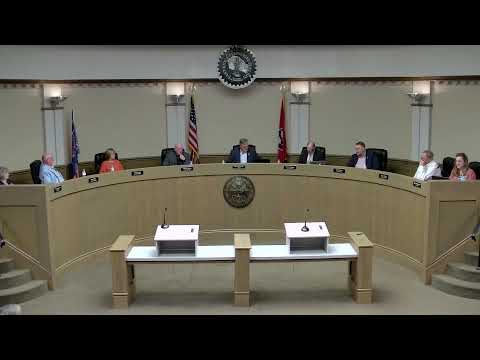
Council denies rezoning request to allow school‑bus storage after public hearing
Summary
After a public hearing and extended debate, the council denied a rezoning request to allow school‑bus storage at 3210 Arden Trail; neighbors and the applicant both spoke, and councilors discussed enforcement, precedent and possible grandfathering options.
The East Ridge City Council voted to deny a rezoning request that would have changed 3210 Arden Trail from R‑1 Residential District to C‑2 General Commercial District, a change sought to allow storage of multiple school buses at the property.
The item came to council after a code enforcement complaint regarding commercial vehicles parked on residential property. At a public hearing, the property owner’s attorney, Buddy Presley, said buses had been parked on the site for more than 20 years and argued the buses benefit the community and emergency response; he provided letters from Hamilton County Emergency Services and the Hamilton County School Board supporting local availability of buses. Neighbors who spoke were split: some neighbors who live adjacent to the property urged the council to allow continued use, saying the operators had invested in aesthetics and security; a neighbor who filed the complaint said the community majority did not object.
Planning staff recommended denial, citing the risk of spot zoning and a lack of surrounding commercial uses; the staff presentation referenced the city’s planning policy (Resolution 35‑17) that emphasizes preserving residential character and discourages up‑zoning that increases intensity in established neighborhoods.
Council debate included: whether rezoning would set a precedent for additional commercial uses in residential areas; whether the city’s prior failure to enforce earlier parking constituted selective enforcement; whether conditions could be attached to a rezoning (legal counsel explained conditions typically run with the land and are not easily limited to a single owner); and whether a permit or a limited grandfathering approach would be appropriate. Several council members said enforcement should be complaint‑driven and that the council should not create a commercial pocket in an otherwise residential area.
Motion and vote: Councilmember Andrea Witt moved to deny Ordinance 12‑24 (first reading). Vice Mayor Tyler seconded. On roll call the motion to deny carried 3–2 (yes: Vice Mayor Tyler, Councilmember Andrea Witt, Mayor Williams; no: Councilmember Cagle and Councilmember Christopher Ezell). Following the vote, staff and council said enforcement of the vehicle‑parking ordinance would proceed as complaints are received, and council asked staff to explore options — including possible permit approaches — to address similar situations in the future.
Why this matters: the decision keeps the property in residential zoning and preserves the existing R‑1 designation; it also highlights enforcement gaps, neighborhood differences of opinion and legal limits on conditioned rezones. Several council members expressed sympathy for the bus operators while stressing the council’s responsibility to maintain the integrity of residential zones.
Ending: Councilmembers directed staff to continue code‑enforcement work on complaint cases and to return with options for addressing long‑standing commercial‑in‑residential occurrences, rather than approving a rezoning that would change the neighborhood’s zoning pattern.