Get Full Government Meeting Transcripts, Videos, & Alerts Forever!
Get email alerts on the Municipal Budgeting topic
No spam. Unsubscribe anytime.
Nolensville adopts 34-cent property tax rate after weeks of debate; funds police and fire hires
Summary
After weeks of public comment and last-minute amendments, the Town of Nolensville on June 5 adopted Ordinance 25-21 setting the 2025–26 town property tax rate at 34 cents, moving to fund three police officers and three firefighters beginning July 1 and adjusting debt timing for the recently built fire station.
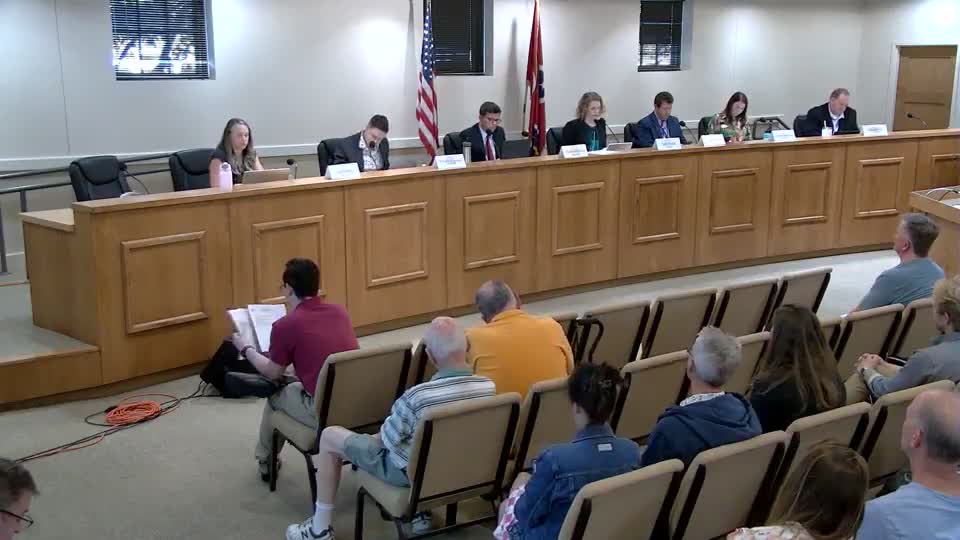
The Town of Nolensville Board of Commissioners voted June 5 to adopt Ordinance 25-21, setting the town's fiscal year 2025-26 property tax rate at 34 cents per $100 of assessed value and approving the town's annual budget, after several hours of public comment and a contentious amendment process.
The measure, introduced for a second reading, was moved by Commissioner Jessica Gill and seconded by Vice Mayor Tyler Salameda. Gill said at the meeting, "I will move that we adopt a tax rate of 34' for the coming fiscal year for the town of Nolensville," framing the rate as a compromise that fully funds the police and fire staffing items in the proposed budget while leaving room to plan for larger capital projects in the next 12 months.
Why it matters: The adopted rate funds immediate hires the town identified as the highest priority this year. The budget adds three full-time police officers and three firefighters to the town's staffing complement beginning July 1, 2025, and moves some debt-service timing for the town's recently completed fire station from a seven-year to a ten-year transition to reduce near-term debt-service pressure.
Board debate and amendments: Commissioners debated multiple alternative rates in public discussion and during the vote on amendments. An amendment to set the tax rate at 34 cents passed by voice vote 3-2. The board also voted 4-1 to extend the fire station debt transition from seven to ten years; staff said the change reduces the immediate annual debt-service load by roughly $29,000. After amendment votes and clarifying motions, the board completed the ordinance's second reading and adopted the budget as amended.
Public comment and context: Dozens of residents spoke during the public hearing and citizen comment periods, with views split between asking for smaller increases and urging prompt funding for public safety and infrastructure. Rob Burrell urged setting the rate at 29 cents and suggested cuts to specific positions and a phased hiring approach. Caitlin Lucek urged the board to "take another look at your funding rather than looking at your expenses." Kevin Donovan and other speakers pressed for greater transparency about budget spreadsheets and enforcement practices; Donovan referenced hidden or protected spreadsheet cells and raised concerns about how revenue assumptions were presented.
Staff notes and contingencies: Town Manager Victor noted several revenue assumptions are conservative in the budget and that anticipated new retail (including the proposed Publix) is modeled conservatively for FY2026. Town staff and department chiefs told the board the SAFER federal grant funding for six grant-funded firefighters ends this year; the budget decision and potential grant applications affect whether those positions transition to town-funded employees. Town Attorney Charles reported pending litigation about impact fees that could materially affect future revenues; the outcome remains uncertain.
Next steps: The board directed staff to continue detailed planning for a police facility and to return with refined cost estimates and possible financing options so future boards and voters can consider specific, time-limited funding mechanisms for capital projects. Commissioner Gill and other supporters described the 34-cent vote as funding operations and buying the board time to produce concrete capital plans before asking voters for any dedicated capital levies.
Ending note: The board completed the budget vote after weeks of meetings and a public Q&A session; officials said they intend to monitor actual revenues from new retail openings and to revisit capital funding decisions as clearer data arrive.