Get Full Government Meeting Transcripts, Videos, & Alerts Forever!
Get email alerts on the Foreign Influence Security topic
No spam. Unsubscribe anytime.
Witnesses and lawmakers press security questions over CATL ties as committees review Marshall battery project
Summary
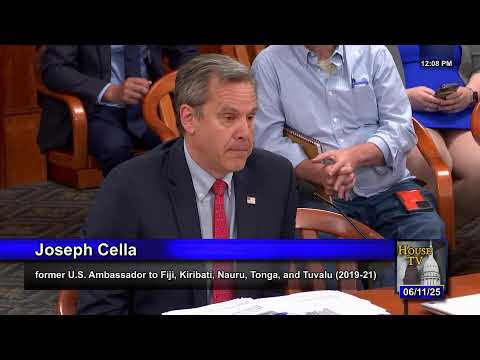
Former U.S. Ambassador Joe Sella and several lawmakers told the House Homeland Security and Foreign Influence Committee they have security concerns about supplier ties to CATL in the Marshall battery project and urged federal vetting and stronger state‑level safeguards.
Former U.S. Ambassador Joe Sella, testifying to the House Committee on Homeland Security and Foreign Influence, warned that the Blue Oval Battery project and its supplier relationships raise national security concerns and called the transaction "ready, fire, aim." Sella said he co‑founded the Michigan China Economic and Security Review Group to monitor and report such risks and urged stronger federal‑state coordination on vetting.
"This is a grand high‑tech and manufacturing high‑risk experiment settled on the back of Michigan taxpayers," Joe Sella said, describing his view that the project was rushed and insufficiently scrutinized. He testified that CATL — Contemporary Amperex Technology Co. Limited — has organizational ties to the Chinese Communist Party and said U.S. intelligence and defense actions taken elsewhere (including a Camp Lejeune disconnection and federal procurement restrictions) show how some CATL activity has been treated as a security risk.
Committee members repeatedly asked whether any federal Committee on Foreign Investment in the United States (CFIUS) review had been requested or completed for the Marshall project. MEDC representatives said CFIUS is not a process their office runs and that they would follow up with the committee on what federal reviews, if any, occurred. "As to a CFIUS, I'll have to get back to you on that," Kristen said in response to a direct question from Representative Shriver.
Members raised additional examples and questions during the hearing: references were made to a Reuters report and congressional inquiries into CATL's corporate structure and shareholder changes, to federal provisions banning DOD procurement of certain CATL batteries, and to public reporting about training and hires tied to CATL affiliates. Joe Sella told the panel he believed CATL executives and party branches were closely entwined and argued that state leaders had not been given full information about such ties prior to approving incentives and contracts.
MEDC representatives responded to security questions by noting contractual restrictions on grant use and said that grant disbursements, when made, will go to Blue Oval Battery Michigan, not directly to suppliers. Josh said a licensing agreement remains between Ford and suppliers but that licensing fees are not eligible for reimbursement under the state's CIP grant. MEDC officials emphasized they view the project as bringing manufacturing to Michigan and reducing dependence on imports, a point that legislators both challenged and supported in different questions.
Witnesses and committee members proposed oversight steps. Representative Brock asked what legislative measures could help avoid similar risks in future deals; Joe Sella recommended requiring CFIUS review for projects involving entities from "countries of concern" (he listed China, Iran, Russia, Venezuela, Cuba and North Korea) and said deals lacking CFIUS safe harbor should not proceed. Committee members asked MEDC for follow‑up reports on due diligence and the office's interactions with federal agencies.
Ending: The committee did not vote on policy changes at the hearing but requested follow‑up information from MEDC on federal reviews and due diligence. The national‑security testimony underscored existing legislative interest in tighter vetting of foreign involvement in large state‑supported projects.